Category Archives: dialogue

1

Royalty rate questions from the interns

I’ve looked over so many royalty statements that sometimes it’s easy to forget that not everyone understands them. And believe me, there are times when royalty statements are very, very hard to understand. But I realized the necessity of this post when going over royalty statements with a few interns, and they had the same basic questions I first had.

How do publishers determine royalty rates?

Fair question. The answer is that they don’t. Not alone, at least. Royalty rates are outlined in the author’s contract, and if the author has an agent, it’s his or her job to negotiate the terms of this contract on behalf of their client, including the royalty rates. This also partially answered their second question.

Are hardcover royalties handled differently than e-book royalties? And what about audio royalties?

Well, yes, they are, and kudos to the interns for inadvertently asking a contentious question concerning a longtime issue in the publishing industry ever since the ascent of e-books. Although all royalty rates are outlined in each individual author’s contract, the industry standard generally dictates a royalty rate around 10-15% of the list price (retail price) for hardcover editions of a book–7.5% for trade paperback and 8%-10% for mass market. E-book rates hover around 25% of the net, meaning 25% of the publisher’s profits. Although the latter might seem more beneficial for authors, e-books are priced lower than print editions and have significantly lower production costs, which if we were to do the math, results in less earnings per unit.

And if considering a wide range of royalty rates for multiple editions of a book isn’t enough, many contracts have royalty escalators and different rates for exports, foreign sales, and subsidiary rights.

Confused yet? Want to know more? Well then let me hear your thoughts: post your question in comments section!
1

An Immodest Proposal

My life changed forever when I came across this little piece.

Of course! It all clicked into place with this helpful little checklist.

Do I have a tendency to overanalyze things? You betcha!

Do new places and experiences give me anxiety? Uhuh.

Are my expectations too high? I’ll answer that question with one of my own. What’s wrong with holding out for that someone special who has the body of a supermodel and personality of a saint halfway through canonization, but, you know, who is still living?

Has it been said that I like neat resolutions? Well, sure. I mean, who doesn’t? The “How I Met Your Mother” series finale sent me into an absolute tailspin last night. How could they do that with

***SPOILER ALERT***

The next thing I knew it was 2 am and I was outside and cold and had apparently wandered into traffic. And I don’t even watch “How I Met Your Mother.”

How could it be, you ask, that someone as amazing as me has had a few dating problems? Simple: I’m a book lover.

Does any of this sound familiar? Has reading ruined your life or storytelling given you unrealistic expectations and the inability to cope with loose ends?

Then, for our own well being, I prescribe that we stop reading, starting now.

THE END

(Afterword for those still reading despite my proposal: if this doesn’t work we may have to eat our children. Let’s call that Plan B.)

0

Some tips on query letters

I will never understand sloppy query letters. It’s a familiar song and dance at this point: author writes manuscript, revises manuscript, generally pours heart and soul into manuscript, and then misspells agent’s name on query letter—or even worse, author opens with “Dear Agent.”

Why?

Your book might ooze literary genius, but a generic, lazily written query could put you at a serious disadvantage. It’s a first impression, so make it good, because agents might not give you a second chance. At the very least, show that you put some effort into the query by following some simple advice, courtesy of a couple DGLM interns.

Ashley believes that you should “try to keep your query to a neat and trim four paragraphs: the first two paragraphs being a short, concise summary of your book with a great hook at the beginning, the third paragraph being why you chose DGLM and the particular agent, and the last paragraph should be about you, your writing history, and your credentials. Be polite, be sure to check your grammar on your query (and your manuscript!), and be patient.”

Kelsey advises writers “to be original but not over-the-top.  We have to read through a lot of submissions so it’s important to keep queries simple and straightforward.  Also, do not compare your work to bestsellers and classic works of literature.  Your query is not going to be taken seriously if you compare yourself to someone like Shakespeare.  Overall, when writing your query, aim to portray your work in an honest and concise manner.”

For those interested in querying a particular agent here, please refer to our newly revised submission guidelines. You worked hard on that manuscript. Make sure your query letter reflects that.

1

When it’s okay to use bad grammar

When shuffling through query letters, bad grammar is often a loud warning bell. Literary agents tend to be wary when reading material from the prospective, unpublished author. Nothing will make an agent drop a query into the reject pile faster than poor grammar.

However, incorrect grammar can often be utilized as a literary style. Nearly every accomplished author does so—to one degree or another. Sentence fragments. Abbreviated words. Missing punctuation. Misspelled words and incomplete sentences. Literature is abundant with poor grammar.

So, how then can you determine when to ignore all those rules drilled into you by your elementary school teachers?

What is your writing for? Writing is purposeful. You don’t pick up a pen and commit words to paper accidentally. Is this a blog? An academic piece? A query letter? A creative piece? Resume? Knowing your audience is a time-tested lesson in writing, so for formal prose, always go the safe route and edit your piece to perfection to ensure perfect, “proper” grammar.

On the other hand, for creative pieces, bad grammar can help the author illustrate his or her point. The form your writing takes should match its tone.

Cormac McCarthy is known for his stark, bare prose and his distaste for commas and other forms of punctuation, such as the quotation mark. His writing not only complements the often-bleak tone of his work, but also adheres to a simplistic style for the sake of clarity and rhythm. He believes that punctuation can often disrupt the flow of a sentence and is usually superfluous.

Hope this was enlightening. I encourage those interested to read more on the topic. Here are some semi-related links to check out on the topic of grammar:

http://opinionator.blogs.nytimes.com/2012/07/09/a-matter-of-fashion/?_php=true&_type=blogs&_r=0

http://grammar.about.com/od/rhetoricstyle/a/effectivefrag.htm

http://andthatswhyyouresingle.com/2013/03/12/does-bad-grammar-punctuation-turn-you-off/

0

“Why are librarians so lonely?”

“They’re always by them shelves…”

Sorry about that. I thought I’d start this blog off with a little joke to break the ice, because what I’m about to write is a little nerdy—and to be honest, I’m a little nervous.

I love libraries.

Some people can read anywhere. In the subway. Walking down the street. Even at the gym while taking a stroll on the treadmill. I can’t. Or to be more accurate, I can—I just prefer not to.

Reading can be a powerful thing. Stories have the ability to transport us to a different place, a different time, allow us to experience life through the eyes of another and make us see the world in a whole new way.

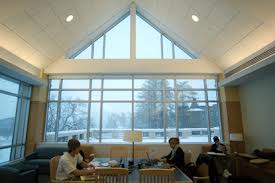
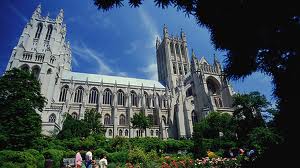
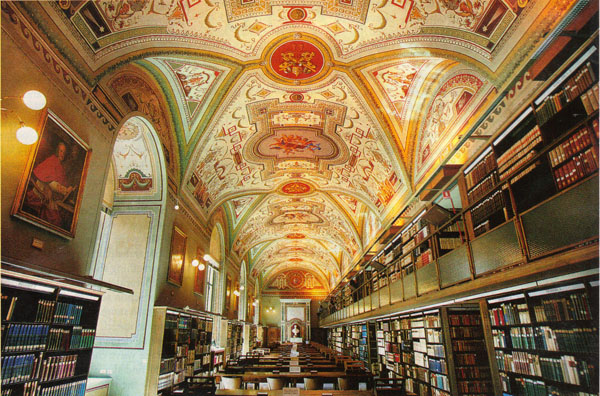
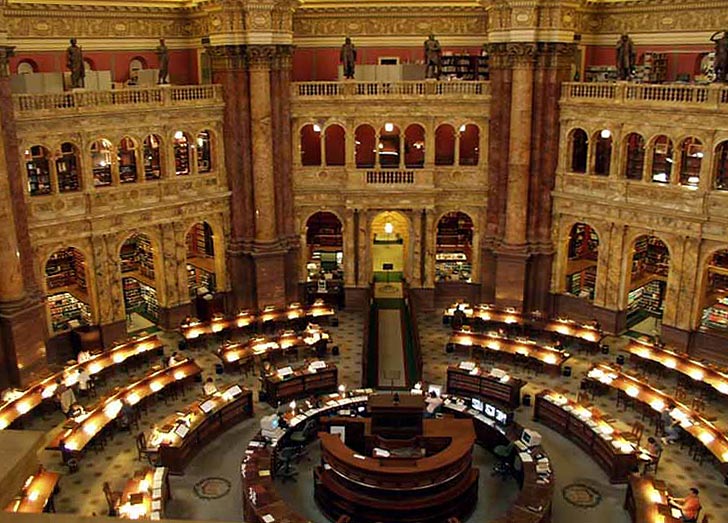
And where we read has an impact as well. The world around us influences everything we experience, and in some of the more beautiful libraries, surrounded by rich mahogany and windows that let the sunlight of the world beyond slip through, in that quiet stillness, we are at peace and can truly absorb the words on the page in front of us.

Here are some snapshots of that type of elegant serenity I’m talking about:


Some more of the world’s most beautiful libraries: http://www.lovethiscitytv.com/top-10-most-amazing-libraries-in-the-world/


Oh, and on a lighter note, some more jokes for your reading pleasure: 

“Want to hear a joke about a library?”

“Sur-”

“SHHHH!”


“Why did the librarian slip and fall?”

“Because she was in the non-friction section.”


So, I was working in a library and this guy comes up to me and asks, “Do you have a bookmark?”

I said, “Yes, we have hundreds…but my name’s Mike.”

4

Literary letdowns

I’ve recently heard from some friends who have been disappointed with critically-acclaimed, wildly popular books. In some cases, I’ve recommended the book on the wrong end of a vicious verbal barrage. Imagine this:


Toss in a few more obscenities for good measure and now you get what I’ve been dealing with recently. First it’s THE CORRECTIONS by Jonathan Franzen. Next, it’s INFINITE JEST. Even a couple of my most memorable childhood books have been slandered during this, the merriest time of year. If one more person puts down ENDER’S GAME or HATCHET

At first I thought my friends were being a little too harsh. They couldn’t see any of the, ahem, silver linings, in the aforementioned books. Then I thought back to those times I too had experienced that hollow feeling that follows the breaking of high expectations. We’ve all been there. Every one of us has cracked open a book hoping to turn that last page, clap the back cover closed, and look up to a new world with a fresh perspective.

It rarely happens. And we’re let down. Now’s the time to share. Let’s get all of the whining out the way right now and enjoy the rest of the holiday season. What books didn’t live up to your expectations?

0

Best part of the holiday season

It’s Thanksgiving already. And it’s certainly cold enough to be winter. There’s no denying it: holiday season is upon us!


Happy Thanksgiving!


The holidays mean different things to different people, and I’d like to take this opportunity to tell you what I love the most about the season of giving.

Yep, it’s not the Thanksgiving turkey or the piles of gifts or even the general merry cheer that permeates the air, but the opportunity to relax and read a book. In fact, reading is how I bond with my family: my nose in a book and completely shut down from everything around me. They talk, I don’t listen. Call it a family tradition. And don’t get me wrong, I love my family, but the holidays are when it’s my time to get some serious reading done. In fact, I’ve read some of my favorite books by the Christmas tree.


So, that’s enough about me. What do you guys enjoy the most about the holidays? Oh, and by the way, not everyone loves Thanksgiving.

3

Holiday gift ideas

Today it snowed in Manhattan for the first time this season. You know what that means? The holidays are here.

It may not officially be holiday season until Black Friday hits stores, transforming shoppers across the country into characters straight out of Lord of the Flies, but it’s never a bad idea to get a head start. In fact, rather than wait in an endless line for the new iPad, try giving a book as a gift. I always enjoy unwrapping a good story, and I’m sure I’m not the only one.

The key is to choose the right book. That’s why I’m coming to you. I need suggestions. And don’t be afraid to get creative. In fact, it’s encouraged. Nothing says “I didn’t really try” like buying someone a bestseller they’ve already read (although I suppose that asking for ideas over the internet comes close).

What you need to know

Dad: likes legal thrillers, sports books, military history

Mom: likes any controversial nonfiction (especially something health-related), thrillers, romance

Sister: likes everything from YA to literary fiction to books on psychology, no science fiction or fantasy though

So get in the Christmas spirit! Share your suggestions!

2

Memorable characters

One of the greatest television shows of all time ended Sunday night. Breaking Bad wasn’t incredible because of its cinematography, its acting, or its storyline—though all contributed to the brilliance of the show. It was its characters, one in particular.

Walter White. Heisenberg.

It’s not a new story. Well, not completely. Breaking Bad is, at its core, the story of a man who, little by little, loses himself to the darkness within. The progression is always gradual, and the trick is making it seem natural, but some of the greatest (and by greatest, I mean my favorite) characters in literature wage this type of internal struggle. As readers, we love emotional turmoil. We can relate to it. It’s what defines us as human beings.

Some of my favorites:

Rand al’Thor from Robert Jordan’s THE WHEEL OF TIME series is driven insane as the series progresses.

Sir Arthur Conan Doyle’s Sherlock Holmes is literature’s greatest detective, yet Holmes is a struggling drug addict and habitual tobacco user, habits that threaten his trademark deductive capabilities.

LORD OF THE FLIES by William Golding. Pick a character, any character.

There’s a few. Let’s hear others. Who are your favorite characters?

Why are the books always better?

I watched Gatsby the other day. Excuse me, let me clarify. I tried to watch yet another disappointing movie adaptation, another beloved-book-turned-train-wreck-of-a-movie. And I’ve never once gushed over F. Scott Fitzgerald’s magnum opus like so many do. No, I went in with reasonable expectations. Expectations even Leonardo DiCaprio with all his talent and all his movie-star swag couldn’t help the movie live up to.

So cheers to good books that can’t be experienced any other way than through the written word. Gatsby was flawed from the start. People have tried to make the movie before…and all have failed. Some other good examples of poor movie adaptations:


The Road by Cormac McCarthy: The man’s a genius. Again, another flawed project from the start—it was near impossible for this movie to live up to the book. Nobody does McCarthy better than McCarthy.


Any one of the Harry Potter movies: I know a lot of people liked these movies, but as someone who read the books, I can tell you that they don’t compare. So much was missing. Great parts were inevitably left out, and I was inevitably let down.


Lemony Snicket’s A Series of Unfortunate Events: This was truly the worst adaptation of a book I’ve ever seen. The whole film was one unfortunate event after another. Someone during my show time screamed out, “My eyes!” and ran crying from theater only twenty minutes in.

My question to you is: why? Why are the books always better? What does the written word evoke that motion pictures can’t? Is it simply the element of surprise or something more? Can you think of a movie that defies this unwritten rule and surpasses its source material?