Category Archives: book to film

From page to screen, more ways than one

I have a few books I’m working on book-to-film deals at the moment, and for several years before I became an agent I worked in NYC in film and tv development. Which means I looked for books to be adapted into movies. So I guess you can say I got my start in books by reading to see what might translate to film. I still find I read this way, and relate to books that I can visualize as movies.

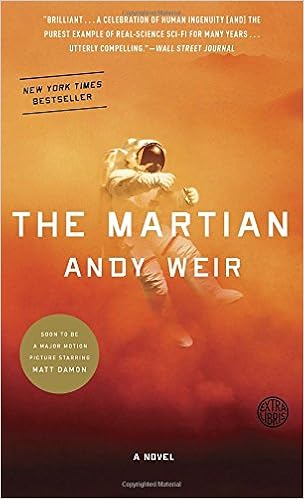
So I’ve been taking note of several recent book-to-film deals that have sort of interesting stories behind them. I’m fascinated that The Martian by Andy Weir, which was initially self-pubbed. This article from Variety.com talks about its path from publication to big screen. It’s nothing short of amazing! He had no luck attracting an agent or publisher so he self-published the book and it started to gain some momentum. Eventually, publishers and film companies started approaching him and very lucrative deals were signed. He has a deep fear of flying so never met any of the people he was doing business with. The way he describes it, it was all so surreal he actually thought it was a scam.
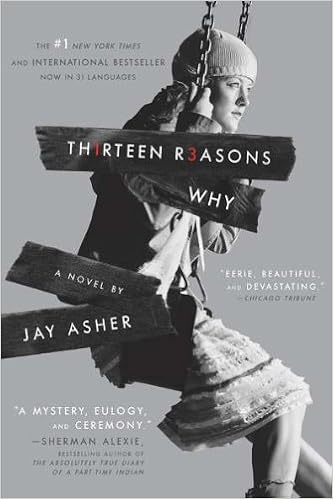
Then I saw another piece about a bestselling YA book, 13 Reasons Why, that is now going to be turned into a tv series for Netflix starring Selena Gomez. That’s interesting because the book was initially published back in 2007 and then became a bestseller in paperback in 2011. It’s taken years to get it from page to screen!
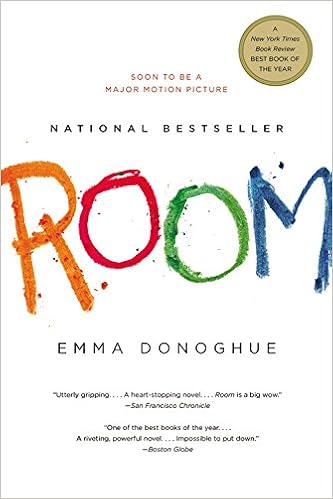
Finally, there’s the much hyped adaptation of the bestseller Room, which was adapted by the book author. She drafted the screenplay even before she knew it was going to be optioned and made for film. An interview from Publisher’s Weekly about that process you can find here.
To me they all have interesting back stories and histories and the takeaway is that you never really know what’s going to happen with your book, or when. In each of these cases you have examples where a book property started life as something else and then went on to become not only a published book, but a film or tv show after the fact, in the case of 13 Reasons Why, years after the fact. Keep on writing and working toward success in your endeavors. You never know when someone will find your book and turn it into something else. If you have any other fun book-to-film stories, please share them with us!
2

Timing is everything

I was reading about the big auction for film rights this week in Variety.com to Lynsey Addario’s recently published IT’S WHAT I DO. It’s a memoir by the award-winning war photojournalist and has been promoted by Gwyneth Paltrow on goop.com, excerpted in the New York Times Magazine, and picked as a best book by Amazon for February. What’s interesting to me is that the book is selling pretty modestly according to Bookscan, but Hollywood jumped all over it. Why? I’d say in large part because of the recent success at the box office of another wartime memoir, AMERICAN SNIPER. This time it will be Steven Spielberg making the movie and Jennifer Lawrence starring in it. Those kinds of deals in Hollywood can take months or years to set up, but when you have a hot topic, a book like this practically sells itself, even if it’s not a big bestseller.

I see examples of the power of timing all the time in my work. I once sold a book to an editor who I met for coffee who told me she was looking for a memoir about a young person with bipolar disorder, and I happened to be going out that day with a  mother/daughter memoir about just that. That editor bought the book, PERFECT CHAOS by Linea and Cinda Johnson.

Sometimes it goes the other way too. One time I submitted a proposal for a project that I thought was unique in the marketplace but it turns out a similar book was published almost at the same time my submission went out. That one wasn’t meant to be so we reworked it and sold it as something entirely different.

When things aren’t going your way or you’re feeling frustrated by the rejection pile or low sales on your books, just remember that your time might not be now but if you keep putting yourself out there and working hard and pounding the pavement, that time will come. And when it does, it will be a good reminder that timing is everything, or at least a big piece of the publishing puzzle.

2

From book to stage, and beyond

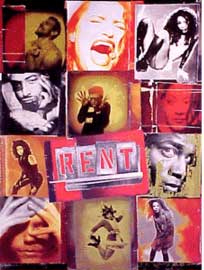
I’m not sure if I’ve mentioned here before that in addition to books, I also love the theater (along with my colleague, Jim McCarthy, with whom I share stories of good and bad plays for sport). I think there’s something so magical about a good theatrical experience. I’m proud to say that I saw the original production of Rent off Broadway at The New York Theater Workshop in 1994. It was a profound experience that the few of us lucky enough to see the show with the original cast in that tiny space will never forget.

Rentpostera.jpg

It got me to thinking about books as plays. We often talk about books as films, but plays are so expensive to produce and so often don’t work that the number of shows from books is a lot more limited. What translates to the page doesn’t always translate to the stage. I’ve always loved Les Mis, although I’ve not yet seen the new production, and I recently saw and really enjoyed Matilda, both based on books.

Matilda

A lot of other Broadway shows I’m thinking of are based on films, like Rocky (couldn’t live up to the source material), Kinky Boots (loved the show, didn’t see the movie), and Billy Elliot (saw at a regional theater in Maine this summer). This is a lot more obvious a transition because it’s already a visual medium.

Image result for kinky boots

What books would you like to see adapted for the big stage? Would you turn your favorites into a musical or a dramatic adaptation? Gone Girl, the Musical! So many fun ideas to consider, I don’t even know where to begin!

1

Before the camera rolls

There is a book. Well, not always. But the other day surfing Netflix I realized just how many movies are based on books. There was an entire category devoted to them. And most were movies I had never realized were based on books.

So what’s the process behind turning a book into a movie?

One of the cooler things we do here at DGLM is meet with people in the film industry—production companies, packagers—basically anyone in development. In other words, we meet with people in the film industry who are looking for ideas, which they then bring to the studio, producer, or actor they’re representing.

In a very broad sense, these meetings are always the same. The producer is looking for great storytelling, there is a brief pause, and then we hear what the producer is actually looking for. Memoirs written by ordinary people who’ve lived through extraordinary things. Something geared toward an audience of middle-aged women. Something with a lot of action that can be done on a budget under $X. We then go back and forth with the producer explaining the various projects we have that might be of interest.

My point is that most people would be surprised how much the market dictates which movies eventually get to the “roll the camera” stage. Market and monetary constraints are king. So if there is a book you really, really want to see get made into a movie, be loud about it. If there’s a market, there’ll be a movie.

If you need further evidence, take The Fault in Our Stars, The Giver, and If I Stay, all films which were developed, in part, because of fan support.

So how about it? What do you want to see on the big screen?

Why are the books always better?

I watched Gatsby the other day. Excuse me, let me clarify. I tried to watch yet another disappointing movie adaptation, another beloved-book-turned-train-wreck-of-a-movie. And I’ve never once gushed over F. Scott Fitzgerald’s magnum opus like so many do. No, I went in with reasonable expectations. Expectations even Leonardo DiCaprio with all his talent and all his movie-star swag couldn’t help the movie live up to.

So cheers to good books that can’t be experienced any other way than through the written word. Gatsby was flawed from the start. People have tried to make the movie before…and all have failed. Some other good examples of poor movie adaptations:


The Road by Cormac McCarthy: The man’s a genius. Again, another flawed project from the start—it was near impossible for this movie to live up to the book. Nobody does McCarthy better than McCarthy.


Any one of the Harry Potter movies: I know a lot of people liked these movies, but as someone who read the books, I can tell you that they don’t compare. So much was missing. Great parts were inevitably left out, and I was inevitably let down.


Lemony Snicket’s A Series of Unfortunate Events: This was truly the worst adaptation of a book I’ve ever seen. The whole film was one unfortunate event after another. Someone during my show time screamed out, “My eyes!” and ran crying from theater only twenty minutes in.

My question to you is: why? Why are the books always better? What does the written word evoke that motion pictures can’t? Is it simply the element of surprise or something more? Can you think of a movie that defies this unwritten rule and surpasses its source material?

12

Film-to-book

I’ve been on a movie kick recently. I’m not a huge fan of going to the movies these days, as I don’t like crowds and hate having to deal with other people talking, coughing, chewing, kicking my seat, texting, etc. But I’ve been making more of a point to go, because there are still some things I want to see on the big screen. I was very eager to see The Master, Paul Thomas Anderson’s latest epic. I’m a fan of his work (except I absolutely hated Punch Drunk Love, though I feel like I may need to see it again), and especially loved There Will Be Blood, which was, in my opinion, the best American film of the last decade (and one of the greatest movies ever made, period). I’m still sorting through my reaction to the movie, and like a really good book, I actually want to go see it all over again to view it differently and see what new conclusions I can draw. Plus, it’s one of the most beautiful movies, having been shot in 65mm, and I want to see it again at that scale. I also finally saw Weekend, a great, small indie film about a relationship that takes place over the course of a weekend. I watched that one at home, and the setting somehow felt right for the intimate, cramped feel of the film. I’m not dying to see this one again–I think I got what I needed in one viewing–but it’s the kind of simple storytelling that packs a punch.

I go through these movies phases about once a year, and I find it’s always the time when the most book ideas come to me, too. Though reading other books and listening to music can have a similar effect, there’s something in my brain that reacts very strongly to moving images, and it gets my creative juices flowing. I have an author who’s the same way and sees just about every movie imaginable. And, like me, he gets really inspired by them, and often comes up with fantastic new ideas after seeing a great movie. But in the end, he and I take those ideas and bring them back to book form–the opposite of how it usually goes, when books are adapted for the screen. 

I’m curious if any of you are as inspired by the film world as you are the book world. Or is there some other art form that inspires your writing? 

4

Television and Novels: A Love Story

I came across this fascinating article in The Chronicle of Higher Education and simply had to share it. It  accounts for the evolution of arc television (ex. Breaking Bad, Mad Men, Boardwalk Empire, Game of Thrones) and highlights the similarities between these types of shows and other creative media. I have to admit, the title, “Storied TV: Cable Is the New Novel,” threw me for a loop at first. I thought this piece was going to propose that these wildly popular and critically acclaimed series are on the road to replacing novels, but after reading it, I don’t think this is what the author intends to suggest (even if some of the people who commented disagree). In fact, it seems that the author is comparing the television vs. motion picture dispute (until now, films have undoubtedly beat television in terms of status, merit, and praise) to that of the new journalism vs. novel debate from the 70s.

In fact, the author of the piece, Thomas Doherty (a writer, among other things) points out what makes these television shows as enthralling as a great novel: “Like the bulky tomes of Dickens and Dreiser, Trollope and Wharton, the series are thick on character and dense in plot line, spanning generations and tribal networks and crisscrossing the currents of personal life and professional duty.” In the comments, someone even points out that several of these shows were actually based on novels. This brings me to my question for you, the readers: Think about your favorite novel. Would you rather see it as a television show following the format described above or as a big screen debut?

2

A Tale of Two Cities disguised as The Dark Knight Rises

As the details of the Aurora, CO, tragedy emerge, I’d like to point Batman fans to something that will get their minds off this dreadfulness. Surprisingly, I haven’t heard much about Christopher Nolan’s comments that this latest Batman installment was inspired by Charles Dickens. That is, until this article on Slate. (Warning: Do NOT read this article if you haven’t seen the movie yet!)

Take a moment to consider this. There’s the location—the corrupt, crime-ridden city; the orphans as principal characters; the lower class uprisings. You may even notice (full disclosure here: I didn’t) that the novel itself makes an appearance in the film. As we all know, there are a handful of stories that have been told and re-told throughout the centuries. Some people just happen to be better at re-telling those stories in new and unusual ways—like Christopher Nolan—than others. Yes, other film directors that have come out with a new superhero movie lately, I’m thinking of you.

We’ve been seeing interpretations a lot more than usual recently—or maybe I’ve just been noticing it more—from Hawthorne’s Scarlet Letter being the basis of Easy A to the influx of modern day fairy tales at the multiplex. What classic tales would you like to see re-told and in what way?

9

Screenwriter (finally) turns book author

Charlie Kaufman has sold his first novel to Grand Central, with no plot revealed, not even a hint.

And it’s about time! For those of you who have been living under a rock, the super talented screenwriter is best known for Adaptation, Eternal Sunshine of the Spotless Mind, and Being John Malcovich. Frankly, I’m surprised it’s taken him this long to dip his toes into book publishing. His screenplays are some of the most powerful I’ve ever read, and I really can’t wait to see what he does with a new format.

Oh, and check out this clever article from the AV Club!

We’re always talking about books being turned into movies – but what about the other way around? What movies would you like to see turned into books? Or better yet, what screenwriters would you like to see write their first novel?

1

Kizmet in the Land of Hollywood

I guess summer is a good time for movies, which might explain why we’ve recently been posting about them. I got a good response to my post, so I thought I’d follow it up with a look at the inner workings of a bestselling book-to-film adaptation. This piece from National Post is really cool because it talks about how a relatively unknown director got the job for this huge Hollywood movie through some very strong personal connections to the book author. Here’s another piece that talks about how they’ve been friends since kindergarten!

Turns out Tate Taylor actually optioned the book long before it sold to a publisher, envisioning it as a low-budget movie that might actually help get it sold as a book after having been rejected by over 50 literary agents.

Having worked on the outskirts of Hollywood for a number of years, I know this kind of back road to getting a movie made without big Hollywood names attached is practically unheard of, for a few reasons. First, Hollywood likes to reward success with money, in the form of job offers, and they don’t like risk, which is why there are barely more than a handful of A-list Hollywood writers out there. The same writers get all the big jobs. Also, they like to separate the writing and directing process, leaving the best of each to do their jobs (there are exceptions to this, like Clint Eastwood and Woody Allen). Another reason, and the reason I love this story that much more, is that the book writer is often essentially left out of the adaptation process completely since they rarely have screenplay experience and therefore create a higher risk for the project. Not always, but often, the screenwriters come in and do the adaptation, and the process unfolds with very little and sometimes no involvement from the creator of the book that the movie is based on.

Talk about a Hollywood success story that breaks all the rules (and in the book author’s favor!). This kind of synergy is practically unheard of today. Seems so easy that childhood friends should work together to create a blockbuster film from a bestselling book, yet in Hollywood this is a really rare occurrence. What do you think about this insider track for the movie version of The Help? I haven’t seen it yet, but from what I’ve heard and read, it’s quite good. Maybe Hollywood will take notice and start listening to the writers of the film’s source material more often. Hope so!