Category Archives: audience

1

Books with a side of awesomeness

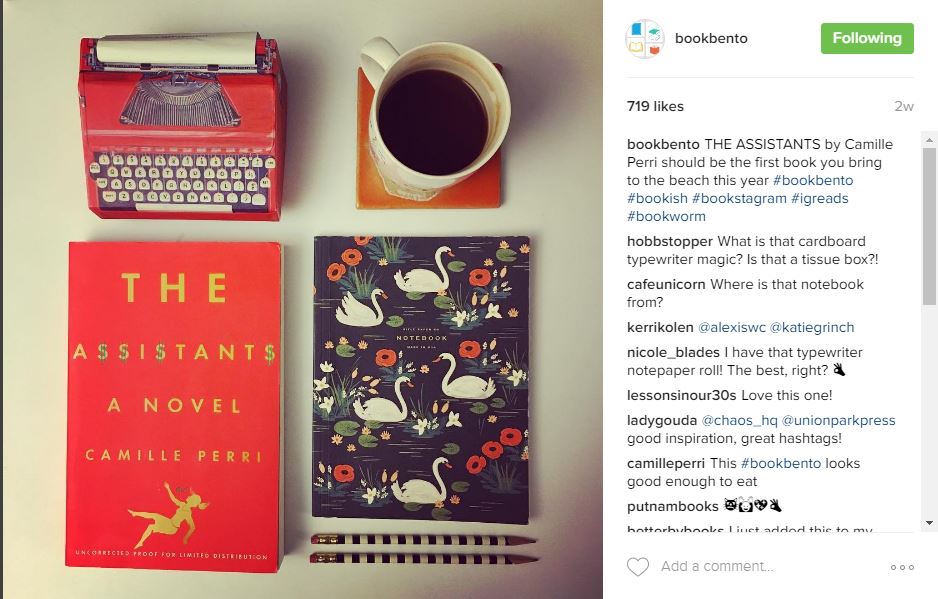
I recently stumbled upon an Instagram account called @bookbento, that’s run by Read it Forward, and then fell in love with its content. It satisfies pretty much every part of me that loves books, good design, pretty knick-knacky things, and the many Instagram filters available. Essentially, @bookbento pairs a book (recent ones include THE ASSISTANTS by Camille Perri, THE GIRLS by Emma Cline, A LITTLE LIFE by Hanya Yanagihara, and ME BEFORE YOU by Jojo Moyes) with items that match elements of the book, set against a striking background. For example, THE ASSISTANTS was paired with a typewriter, a day planner, two pencils, and a cup of coffee. This Instagram makes me want to go out and read all of these books immediately, proving that good visuals can be important!

With social media becoming an ever important way to reach an audience, I think something like @bookbento is an incredible way to draw readers in and maybe convince them to go out and buy a copy of the book. It’s aesthetically pleasing enough that viewers might stop for a closer look, and the elements surrounding the book hint at what might be inside. There were a few books that I certainly Googled afterwards, to see a summary, and then put on my “to-read list.”

What other clever social media accounts about books have you found? What effect do you think they have on both avid readers and readers who might only pick up a book or two a year

Who is your reader?

One of the critical questions I ask my clients to address in their proposals is who their reader is.  They not only need to define them demographically, but also statistically.  This is to show the editor considering the material that the author understands their audience and is aiming his or her book directly at them.

For example, last week I received a cookbook proposal on a very strong idea.  The problem with this was that though the idea was unique, the author had completely neglected who the reader should be and in so doing, the contents of the proposed book didn’t work at all.  Back to the drawing board.

In another instance, I spoke with a client at the very beginning of her proposal writing and addressed how important it would be to the eventual sale of her book that the potential reader be very clearly defined.

Both of the above have to do with non-fiction.  When you are writing fiction, you also need to keep your reader in mind.  Decide where he or she would look for your book in the bookstore and if at all possible, try not to mix in elements from other genres to such a degree that you cross categories (you might turn off a whole group of potential fans).

So often, I find that the author overlooks this, but I cannot stress how important this question is to answer—it not only helps the editor considering the material but, in the case of nonfiction, it also helps the writer as they proceed with putting together their manuscript.

Whether you are writing non-fiction or fiction, being totally clear about who your audience is is vitally important.

I would love to hear your thoughts on this issue.

1

To know them is to love them

As a middle schooler and beyond, I had some very serious crushes on fictional characters. Considering that I spent the majority of my free time wrapped up in a fictional world, this probably comes as no surprise. In college (and to this day, to be quite honest), Jamie Fraser from Diana Gabaldon’s Outlander was my huge fictional crush. (The Starz series with Sam Heughan starring as Jamie only made it worse.)  I also had a big thing for Numair from Tamara Pierce’s The Immortals series and pretty much all of Jane Austen’s male characters. The thing that made me love all of these characters was their soft spots. They might be brusque on the outside, with some very major flaws, but at the end of the day, they were deeply caring and perfect gentlemen.
In the spirit of some lighthearted Friday fun, I decided to poll the DGLM office and find out who were the fictional characters they were most attracted to. Results below!

  • ​Michael: Mr. Rochester from Charlotte Bronte’s Jane Eyre, for his unattainable nature.
  • Lauren: Laurie from Louisa May Alcott’s Little Women, for his impetuous and willful spirit.
  • Mike: Louisa from Jojo Moyes’s Me Before You for her sweet, tough, and caring character.
  • Sharon: Gilbert Blythe from L.M. Montgomery’s Anne of Green Gables, for being in love with Anne for her personality and ideas, not just her looks—and the fact that his feelings for her didn’t get in the way of being a good friend.
  • Kemi: George Knightley from Jane Austen’s Emma, for his compassionate character and his long friendship with her, despite his romantic feelings.
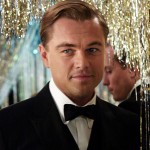
And lastly, one of our interns, Chrissy chose Jay Gatsby, from F. Scott Fitzgerald’s The Great Gatsby for his wealth, his passionate love for Daisy, and his attraction to Nick (and also, because Leonardo DiCaprio).
Who’s the most attractive fictional character in your opinion? What do you think makes a fictional character attractive? What specific traits make our hearts melt every time we read about them?
1

The Sticking Power of Harry Potter


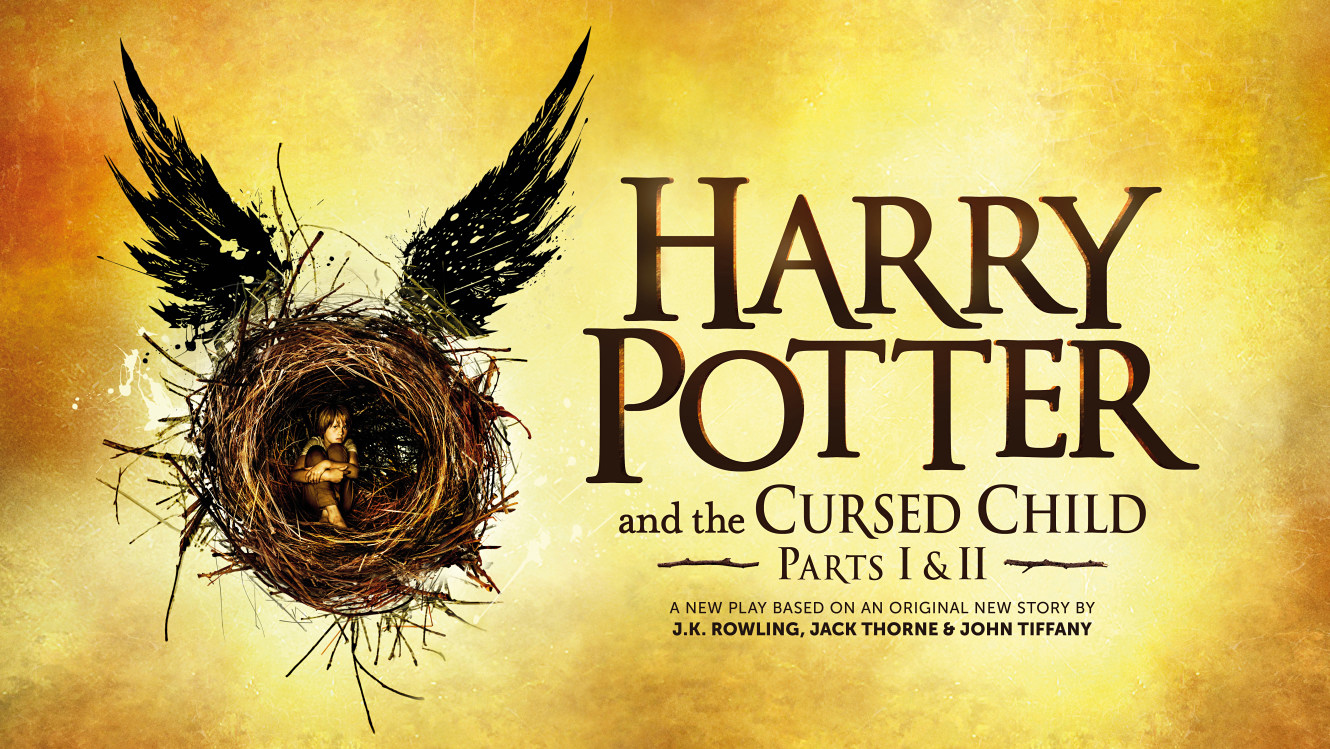
My Twitter and Facebook feeds have blown up with the announcement that the new West End play, Harry Potter and the Cursed Child, was going to be “a fullblown sequel” to Harry Potter and the Deathly Hallows. Eighteen years after Harry Potter and the Sorcerer’s Stone was published, the Harry Potter fandom (which my generation was raised on) is still going strong. I’ve heard many accounts of parents saying that this was the book that finally got their kids to read and even friends who said they weren’t big readers until they discovered the Harry Potter series.

cursed-child

I remember many people being disappointed when they turned eleven and hadn’t received their letter from Hogwarts. The rush to every midnight premiere of a Harry Potter movie was insane and Pottermore is still going strong. Clearly, all these years later, we’re still enchanted by Harry, Ron, Hermione, and the promise of Hogwarts.

So I’m wondering: what makes a book this universally powerful? And even more so: what creates the staying power of a book through generations? What do you think, dear readers?


7

The non-fiction book proposal

Most writers who are hoping to sell a non-fiction book know that in order to do so it is necessary to create a book proposal. This document can be critical not only to the sale of the book but to the size of the publisher’s offer.  I often tell prospective clients that doing the proposal is an unnatural act—it can actually be more difficult to create a good one than to write the book itself.  Our website describes exactly what is required to be in the proposal clearly and concisely (see “Nonfiction Proposal Guidelines”).

These days, I am consistently trying to push writers to create proposals that are well focused and that clearly define the different readerships, both demographically and statistically.  Inevitably, as I learned last week, a writer will try to “game” the system—describing his or her book as neither fish nor fowl and thus confusing the reader (the editor).  The result is a rejection letter instead of an offer.  So I am stressing here that it is extremely important for the writer proposing a work of non-fiction to clearly define exactly what he or she wants to do in his or her book in a keynote sentence or two. That keynote is so very important!  If a sale is made, the proposal goes from the writer, to the editor who buys the book, to the publisher, to the person who creates both the catalog and cover copy and, finally, to the sales person who is selling the book in to the accounts.  It has to be right.

And, sometimes, for it to be “right” takes time.  The other thing that was brought home to me again this last week is that rushing a book proposal never pays.  It results in shoddy work which can be misinterpreted by the editor considering the material.  I use the saying “better late than lousy” so often these days—and it is very important to remember.  Doing the proposal the right way can make all the difference in the world.

Of course, as always, I would be interested in hearing your thoughts and experiences on the subject of proposal writing.

2

Youth is wasted on the young. Or is it?

Every “semester” we have an office lunch for the purpose of getting to know our current batch of interns and to answer any questions they might have about the, undoubtedly, bizarre goings-on in publishing (and in our office).  Yesterday, over a Middle Eastern spread (the baba ganoush was delicious!) we asked everyone to tell us what they read for pleasure.  Overwhelmingly, the response was YA.  And, for some reason, that surprised me and even made me a little wistful for the days when youngsters couldn’t wait to get their grubby little hands on “adult” literature.

I still remember when, in seventh grade, a beat up copy of The Other Side of Midnight (which was already a decade old at the time, in case you were wondering about the timeline) was surreptitiously passed around at my school.  The book, of course, opened naturally to the “sexy” parts and we would have all been mortified if our parents had caught us reading it.  By the time I was a young adult, myself, my peeps and I were interested in SERIOUS fiction that dealt with IMPORTANT subjects, and if you wanted some sex and scandal, you turned to grown-up bestsellers like Marguerite Duras’ The Lover  or Josephine Hart’s Damage.  You know, stories about older people behaving badly….

The thing is that, traditionally,  YA was considered “aspirational”—kids younger than those depicted in the books were the primary market for it. Now, I know that YA literature has exploded as a genre and that, in many ways, it’s tackling tough subjects in ways  sometimes more inventive and provocative than we’ve seen in what is considered adult fiction.  That said, is it narcissism, solipsism or fear of growing up that accounts for young adults actually preferring YA books in general?  In recent years, with blockbusters like  the Harry Potter  and Twilight series playing havoc with readership demographics (as evidenced by 40-something moms reading YA and NA alongside their tweens and teenagers), it seems that the category now even appeals to its own namesakes.   Crazy, huh?

How do you account for this shift?  Are there broader cultural implications that I’m missing here or is this trend just a function of how sophisticated the category has become?


1

Before the camera rolls

There is a book. Well, not always. But the other day surfing Netflix I realized just how many movies are based on books. There was an entire category devoted to them. And most were movies I had never realized were based on books.

So what’s the process behind turning a book into a movie?

One of the cooler things we do here at DGLM is meet with people in the film industry—production companies, packagers—basically anyone in development. In other words, we meet with people in the film industry who are looking for ideas, which they then bring to the studio, producer, or actor they’re representing.

In a very broad sense, these meetings are always the same. The producer is looking for great storytelling, there is a brief pause, and then we hear what the producer is actually looking for. Memoirs written by ordinary people who’ve lived through extraordinary things. Something geared toward an audience of middle-aged women. Something with a lot of action that can be done on a budget under $X. We then go back and forth with the producer explaining the various projects we have that might be of interest.

My point is that most people would be surprised how much the market dictates which movies eventually get to the “roll the camera” stage. Market and monetary constraints are king. So if there is a book you really, really want to see get made into a movie, be loud about it. If there’s a market, there’ll be a movie.

If you need further evidence, take The Fault in Our Stars, The Giver, and If I Stay, all films which were developed, in part, because of fan support.

So how about it? What do you want to see on the big screen?

Why are the books always better?

I watched Gatsby the other day. Excuse me, let me clarify. I tried to watch yet another disappointing movie adaptation, another beloved-book-turned-train-wreck-of-a-movie. And I’ve never once gushed over F. Scott Fitzgerald’s magnum opus like so many do. No, I went in with reasonable expectations. Expectations even Leonardo DiCaprio with all his talent and all his movie-star swag couldn’t help the movie live up to.

So cheers to good books that can’t be experienced any other way than through the written word. Gatsby was flawed from the start. People have tried to make the movie before…and all have failed. Some other good examples of poor movie adaptations:


The Road by Cormac McCarthy: The man’s a genius. Again, another flawed project from the start—it was near impossible for this movie to live up to the book. Nobody does McCarthy better than McCarthy.


Any one of the Harry Potter movies: I know a lot of people liked these movies, but as someone who read the books, I can tell you that they don’t compare. So much was missing. Great parts were inevitably left out, and I was inevitably let down.


Lemony Snicket’s A Series of Unfortunate Events: This was truly the worst adaptation of a book I’ve ever seen. The whole film was one unfortunate event after another. Someone during my show time screamed out, “My eyes!” and ran crying from theater only twenty minutes in.

My question to you is: why? Why are the books always better? What does the written word evoke that motion pictures can’t? Is it simply the element of surprise or something more? Can you think of a movie that defies this unwritten rule and surpasses its source material?

2

There’s a lacerating but effective essay in this week’s New Yorker by Giles Harvey.  In “Cry Me a River:  The Rise of the Failure Memoir” Harvey writes “a growing batch of memoirs by literary screw ups and also rans suggests that mistakes, the bigger and more luridly described the better, might be a portal to success, or at the very least solvency, that eluded their authors the first time around. The formula is simple: when all else fails, write about your failure.”

His piece surveys a number of books, but his immediate target is Benjamin Anastas’s TOO GOOD TO BE TRUE, which chronicles the painful decline of a once-promising novelist’s literary career. Anastas published his debut novel when he was 28, and three years later published a follow up work. Both books were well received and he (cue warning music) quits his day job to write full time. Things go south from there: Anastas cannot sell his third novel in the US, he cheats on his fiancée, confesses, she marries him anyway, only to leave him shortly thereafter for another man while pregnant with Anastas’ child.  And yes, Anastas is bitter.

Much as he disapproves of the “mawkish exhibitionism” displayed by Anastas and his ilk,  Giles reserves some of his contempt for the publishing industry. “Anastas is a casualty of the a new publishing model, whereby editors, instead of allowing novelists to evolve and build an audience in the course of several books, bet big on debut writers and hope for overnight success. Those who don’t turn a profit are often shut out… the memoir provides a back door into print.”

I think Giles makes some good points in his piece. He’s quite right that houses are keen on the tabula rasa that new writers represent, reluctant to publish books by authors whose numbers have the “wrong kind of momentum” (i.e. a declining sales record) but I am not sure that I see memoir as a back door into print. In my experience, literary memoir can be as tough a sell as literary fiction, sometimes tougher, since the conventions of nonfiction publishing often require authors to have platforms. Literary novelists are still, for the most part, granted a pass.   It’s also hard to lay the blame at the feet of editors, who tend to advocate for their authors regardless of the sales. Indeed, I know several who advocated themselves right out their jobs.  So who do we blame? The profit-minded publishers whom the editors report? The marketing and publicity teams who are accused of having undue influence on publishers? The media conglomerates who own (and often sell) their book divisions? The reading public who fails to reward talented writers by buying their work? The antiquated return system that allows booksellers to ship back any unsold quantities? Amazon, who is underselling the competition and challenging the pricing structure? I could go on, but I’d only run out of fingers to point.

It is, however, worth noting that Anastas’ new publisher, New Harvest, is the Harcourt Houghton imprint fed by Amazon’s publishing arm. There’s an extra little frisson (or knife twist) in that Anastas’ critique of establishment publishing is the work of the very company that is, for good or ill, threatening to remake it.

What do you think? I’ve not yet read Anastas’ book and once I do, my opinion may change. But it seems to me that plenty of good memoirs have been generated out of other sorts of failure stories—romantic, familial, financial—so I’m not sure I see anything especially ignoble about this particular variety.

5

Ch-ch-ch-changes

I’m here in New York this week, experiencing the lovely weather.  It doesn’t quite feel like fall at the moment, but it’s nice to see some trees changing, and the nights are a bit brisk.

It seems fitting that our book club meeting tonight is all about women’s fiction, which we read over the summer.  Women’s fiction, during the summer, at least, seems to be all about the beach.  The book I read involves four friends in their thirties renting a beach house, where they drink wine and share secrets, leading to better understandings of one another–and themselves.  I think a few of the books that other people read have similar set ups. Though I didn’t like my book (for a number of reasons), I do have to say that I enjoy a good beach read during the summer, as I know many people do.  Summer books seem to be lighter, more easily digestible, but perhaps a bit disposable.  They’re like the summer flings: enjoyable but fleeting.

But now comes fall and the “serious” books.  For our next book club, we’re all reading a heralded literary novel, one with stellar reviews and blurbs.  This book is quieter and slower, and will not be read in an afternoon.  Maybe it’ll feel a bit like going back to school.  My own reading patterns tend to follow the seasons, though I wonder if that has to do with my mood or what publishers are releasing.  Do I read the lighter books over the summer because I’m feeling light, or because that’s what’s dominating the shelves?  Now that I live in the land of eternal sunshine, I’m beginning to think it’s the latter!

What about you?  Do you read different types of books depending on the season?  Or are you able to ignore the marketing?