Category Archives: commercial

1

What’s in a name?

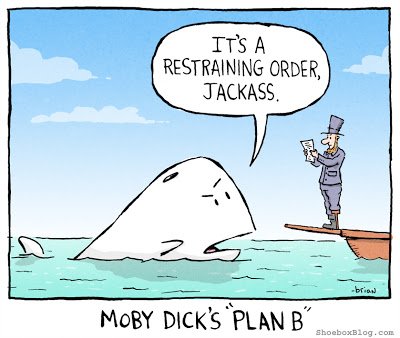
Yesterday, I tweeted this piece about how reading literary fiction (vs. popular fiction) develops our ability to understand and decipher social cues that power our relationships with other people.   My initial reaction to the article was, “Hmmm, interesting.  Makes sense.”  I think all self-respecting bookworms would agree that books teach us much more than facts and big words, they teach us human behavior.   So, of course literary fiction would sharpen our abilities to identify emotional and intellectual motivations and apply them to ourselves and our real-world dilemmas.  After all, wasn’t that the point of all those tedious essays we wrote in high school and college about why Emma Bovary was so delusional or why Ahab couldn’t just leave that dumb whale alone?
 

But something about the piece troubled me, and my “Aha!” moment came when I read this slightly different take on the New School study.  In the first article the examples of popular fiction were Danielle Steel’s The Sins of the Mother and Gillian Flynn’s Gone Girl.  Literary fiction, on the other hand was represented by Tea Obreht’s The Tiger’s Wife, Don DeLillo and Anton Chekhov.  Okaaay, who decided that Gillian Flynn is more popular than literary or that she should be featured in the same sentence as Danielle Steel?  Before you Steel fans get all worked up, I am not casting aspersions on that author’s prodigious body of work.  I am merely saying that just because a book sells a lot of copies and hangs out on the bestseller lists for a while does not make it “popular fiction” as the literary snobs among us think of it any more than tiny print runs and fewer sales make something “literary.”  And so claiming that Flynn’s brilliantly crafted, psychological thriller is for the purposes of this study less literary than Obreht’s book* seems to point to a major fault in the findings if, in fact, that is the criteria for judgment.

All of this, of course, takes us to the old publishing pastime of arguing over whether something is literary or commercial.  If sales are the basis for categorization, then Cormac McCarthy, Phillip Roth, and, yes, Mr. Dickens would all be labeled popular fiction authors.  Of course, the study makes the point that a “literary” work is one that is more concerned with its characters’ internal processes and less with plot and action, thus forcing us to work harder at deciphering motivation.   But haven’t we all read many plot driven novels that have been raised to the literary canon?  Ahem, Mr. Dickens, again.

Personally, I think that most fiction flexes our mental muscles.  Even formula romance (or mystery, or science fiction) forces us to look for motivation and emotional cause and effect.  Maybe some books make us work harder and, therefore, give us the brain equivalent of a six-pack, but my sense is that I’ve learned a thing or two even from wildly popular fiction that I may not have by reading only highbrow stuff.

What do you think?  Is it possible that the bias in this study is “literary”?  Can you think of samples of popular fiction that forced you to bring out  your empathy/social decoding tools?


___________________________________

*In the interest of full disclosure, I hated that book.

Why are the books always better?

I watched Gatsby the other day. Excuse me, let me clarify. I tried to watch yet another disappointing movie adaptation, another beloved-book-turned-train-wreck-of-a-movie. And I’ve never once gushed over F. Scott Fitzgerald’s magnum opus like so many do. No, I went in with reasonable expectations. Expectations even Leonardo DiCaprio with all his talent and all his movie-star swag couldn’t help the movie live up to.

So cheers to good books that can’t be experienced any other way than through the written word. Gatsby was flawed from the start. People have tried to make the movie before…and all have failed. Some other good examples of poor movie adaptations:


The Road by Cormac McCarthy: The man’s a genius. Again, another flawed project from the start—it was near impossible for this movie to live up to the book. Nobody does McCarthy better than McCarthy.


Any one of the Harry Potter movies: I know a lot of people liked these movies, but as someone who read the books, I can tell you that they don’t compare. So much was missing. Great parts were inevitably left out, and I was inevitably let down.


Lemony Snicket’s A Series of Unfortunate Events: This was truly the worst adaptation of a book I’ve ever seen. The whole film was one unfortunate event after another. Someone during my show time screamed out, “My eyes!” and ran crying from theater only twenty minutes in.

My question to you is: why? Why are the books always better? What does the written word evoke that motion pictures can’t? Is it simply the element of surprise or something more? Can you think of a movie that defies this unwritten rule and surpasses its source material?

11

Art and Commerce

Last week I came across an op-ed piece, K’naan, on Censoring Himself For Success – NYTimes.com that really stuck with me. In his essay, Somali born rapper and musician K’naan discussed a down-side of his considerable success, the pressure he felt to court and retain a mainstream audience. His record label was keen to see his lyrics, which had been steeped in the politics and history of his home country, “all the baggage of Somalia — of my grandfather’s poetry, of pounding rhythms, of the war, of being an immigrant, of being an artist” to be more accessible, familiar, American.

“If this was censorship, I thought, it was a new kind — one I had to do to myself. The label wasn’t telling me what to do. No, it was just giving me choices and information, about my audience — 15-year-old American girls, mostly, who knew little of Somalia. How much better to sing them songs about Americans.”

I realize that K’naan’s dilemma is no perfect analogue, and that the book business and the music business are different in a thousand substantive ways. In book publishing, I think the field is both broader and more fractured and the financial stakes lower, but the author’s central dilemma, tugged between the countervailing poles of personal expression and the broader marketplace, between remaining true to an inner voice and figuring out how best to broadcast it, is probably familiar to many writers. In an era when publishers and agents exhort writers to build a platform, create a brand and market yourselves, to what degree do you think these pressures affect the creative process? Do you find that marketing concerns influence the content of what you write? Or do you think that there is no inherent contradiction in writing a book and then figuring out how, and to whom, to sell it?

Not about middle grade

I have to apologize that this week’s post isn’t a continuation of my middle grade conversation with Molly O’Neill (you can find posts here and here). We’ve both had some fun recently, being sick on back-to-back weeks (me earlier this week), and we just haven’t had the time to connect and get you the conclusion to our conversation. But we’ll bring you more informative goodness next week, and we really appreciate all your comments–it’s been a fun experience for both of us!

Since I’m not talking about children’s books, I thought this might be a good time to remind blog readers that I also represent projects on the adult side of the business. And, at the moment, I’m very actively seeking new adult projects, both fiction and nonfiction. As for novels, I’d love to find a compelling thriller with a fresh point of view, maybe even something a bit more literary that the usual. And I’m always in the market for something that’s upmarket trashy, like A Secret History (and yes, “upmarket trashy” is a compliment–A Secret History is in my top 5 books). I love those books that have compelling (and even provocative) plots, but also have a little more going on. Dark and psychological never hurts, either, and things that border on horror (but don’t quite get all the way there) definitely appeal to me.

On the nonfiction side, I’m always on the hunt for great memoir. I love authors with a sense of humor about themselves, even in the toughest of circumstances. Though addiction and affliction memoirs are probably tough at this point, adversity seems to be at the core of most of the books I’ve sold, and having a strong personal conflict is an important piece of the puzzle. I’m not as drawn to political books as I once was, probably due to the 24-hour news cycle, but I do enjoy investigative reporting about political issues, both at home and abroad. I especially appreciate writers who can explain the big issues through smaller, more personal stories; it’s hard to sell a book when there isn’t an individual story at the heart of it. I’m particularly interested in finding science writers who can distill complex concepts into something people like me can understand; if you’re the next Neil deGrasse Tyson, please find your way to my inbox.

So in addition to sending me your amazing middle grade and young adult, be sure to keep me in mind for your fantastic adult projects, as well.

1

The Unsold

Apropos of Stacey’s post about knowing when to say when, I’m squaring off with the unwelcome possibility that a book I love is on the verge of not selling. I can tell you that we came quite close at several houses, that there were editors who loved it, that all parties agreed that the author was prodigiously talented, that revisions were made and made again. And yet.  We’re now discussing the possibility of e-publishing, this author and I, and so it seemed thematically appropriate that Edan Lepucki should publish her follow up post to Do it Yourself: Self-Published Authors Take Matters Into Their Own Hands in The Millions.

My client is still mulling it over, but Lepucki has decided not to self publish for the reasons she lays out here. I’m with her on most of these: I too read books released by major houses; I’m part of the publishing establishment (and hence about as far from a “hater” as one can be); I work with literary fiction and I am a thorough-going champion of the small press.  But unlike Lepucki, I am perhaps less concerned with the validation that a contract confers. True, I am not an author, so my stake in this is different. I am certainly ambitious for the people and projects I represent, but I don’t set much store by what a client calls “the fantasy” in which book deal, stellar reviews and robust sales are the inevitable outcome of hard work, attention to craft, and talent.  Indeed, it is because I am not an author that I can attest that the system by which books are acquired and sold is an imperfect one, and there are good books, very good books, that go wanting. Like this one.

So, whether or not my client will decide to e-publish is still up in the air, but in the meantime, he is administering himself a crash course in the uses of social media, which will help him whatever transpires. I’ll keep you posted. Meanwhile, I am curious to hear what you think of Lepucki’s decision.

18

You can’t have it all.

Everyone knows who Dan Brown is. Even people who aren’t active readers are familiar with his name, as they are with Nicholas Sparks, James Patterson and Jodi Picoult. Thesea re prolific authors, there’s no doubt about it, and you can find a whole shelf of them in nearly any bookstore. Authors like David Mitchell, Jhumpa Lahiri and Jonathan Lethem, however, don’t have nearly as much name recognition, despite garnering amazing critical reviews in places like the New York Times Book Review.

Surely both sets of authors love what they do. All experience the glorious rush of inspiration and, conversely, the frustrations of writer’s block or dead ends. But what sets them apart from one another? Does either group feel better about themselves because they are invariably commercial writers or literary ones? Surely there’s no real distinction between them as writers­—they all write, they all call themselves authors and rightly so.

There are clear merits specific to each set, however. There’s obviously more money involved in being a commercial author, yet more prestige comes from fitting into the latter category. While I can’t imagine one can make the choice in writing style—a novel written by an author who forced him or herself to think and write differently to what came naturally would just not be that author’s best work, no matter how technically perfect it was or how imaginative the idea.

That brings me to my question—no, I’m not here to start an argument pitting the two sides against one another. This is simply something that intrigues me. If you had to choose a particular author’s career to mimic, whose would it be? Would you prefer to be widely successful, raking in money and selling millions of copies of your book, but maybe suffering derision from high-minded literary snobs and going overlooked time and time again by reviewers? Or would you rather stunning, eloquent reviews and intelligent, deep discussion of your work amongst a small few, seeing only moderate success sales-wise? While there are some authors who have managed to bridge the gap and have both critical and commercial renown, it’s a very exclusive club. What say you?

11

You Can’t Always Get What You Want

Presuming you’re all authors or aspiring authors, let me ask you an ugly question: what are you in the game for—the art or the money?

My lovely and wonderful client Saundra Mitchell loves to be unlovely and unwonderful sometimes and sends me links to publishing stories that she knows will rile me up. It’s very: Give a man a fish, he’ll eat for a day; give a man a soapbox, he’ll rant for hours. That’s the saying, right?

Point is: Saundra sent me a story about an author who, by the sounds of it, breached their contract’s non-compete clause and then let out an unholy caterwaul when her publisher took issue. She lives for her writing, you see, but she also has to earn a living. So she should be able to publish whatever she wants whenever she wants. Otherwise, it’s censorship! It’s the blocking of free trade! She all but cried, “Word genocide.”

Here’s my thing: if the terms of an agreement are so disagreeable…disagree. No one has ever been forced to publish their book. It’s not like publishers are breaking down people’s doors and stealing their manuscripts because there’s not enough supply out there. This author hated the terms of her agreement. So she shouldn’t have signed the contracts. She could have kept on writing and spreading her work however she wanted to with no one stopping her. As we know, there’s an ever increasingly diverse number of platforms authors can use to move their material. And as she said, this author lived to write.

But she also needed the money. And that’s where things get tricky. Bottom line: she was offered an amount of money to allow someone to publish her books for profit. And she took it. Once she realized that taking the money meant agreeing to the terms on which she took it, that’s where it got ugly for all involved.

Listen, I’m not saying every writer needs to sell their soul to the devil. Just the published ones.

I kid, I kid. Publishing is a business, as I’ve said over and again. There is a corporate machine that authors are part of, and there is a bottom line. Is that an ideal system in which to create art? No. But it’s a pretty solid one to make money in.

Now, I know I’m being snarky and that, realistically, this isn’t a simple binary where you choose integrity versus cold, hard cash. Which is something that we also face as agents. Let’s say a book comes across my desk and I know I can sell it for a million dollars, but I don’t personally think it’s something that needs to be out there in the world. Do I sign it anyway, take my commission and run? I’d love to say no, but if there was that kind of financial guarantee there, could I turn away? If I was offended by the book, sure. If I just thought it was unnecessary or unrewarding…the question gets a lot slipperier. Which is simply to say that it’s a constant struggle to figure out how to balance art vs. commerce and that I know I’m being reductive, but sometimes you do need to be able to put your foot down about what you can and will do for certain financial rewards.

Acknowledging that, I wonder: as authors and writers, how do you (or how do you plan to) strike that balance between integrity and the ability to put food on the table?

8

Author Smackdowns

As a follow-up to my post last week, I was going to jump in with a response piece. Now I know why you write, so here’s why I read. But Miriam totally beat me to the punch. How dare she?!

So it’s an about face and on to talk again about commercial versus literary fiction. Or really, commercial versus literary authors. On Saturday, I was going to attend an event called An Afternoon of Failure which was a bunch of authors getting together to discuss whether we have failed literature or if it has failed us. I figured it would be pretty self-congratulatory and very anger-inducing, but what can I say? Sometimes you need a little dose of pretension to get the blood boiling. Of course, as is only fitting for an event called “An Afternoon of Failure,” I sat down on my couch shortly before I was to leave and found myself waking up two hours later having completely missed the whole thing. Oops! Regardless, this sounded like a bunch of marginal authors hanging out together mourning the state of current literature and making some absurd argument about how books stopped being good after…(fill in the blank).

As someone who just plain loves reading, I often feel caught between the hyper-literary and ultra-commercial. It doesn’t really make sense to feel trapped since the lines are so superfluous, but both groups tend to take themselves too seriously. Whether it’s literary authors griping about how “good literature” never sells or commercial authors whining about how dull literary fiction is, it’s still snobbery. Over at The Morning News’s Tournament of Books this morning, Jennifer Weiner who often bemoans the ways commercial fiction is belittled said that Jennifer Egan’s A VISIT FROM THE GOON SQUAD was “no fun.” I literally gasped in horror. She went on to say, “Egan’s book seemed more like an exercise in Let Me Show You How Clever I Am than anything as lowbrow as entertainment.” Which completely misses the point since the book is wildly entertaining AND fun AND funny. But more relevantly, it’s the kind of inter-author sniping that is so common and so mysterious.

I’m not going to lie: sometimes it’s super fun to see authors on the attack because people who write for a living tend to come up with THE best put-downs. I still don’t fully understand these sorts of literary rivalries, though. Is it the competitive nature of the industry putting people on edge? Is it petty jealousy? Is it a sincere belief in one’s superiority? Haters gonna hate. But I wonder why other people think that is.

To close, I’ll offer my favorite ever moment of inter-author bitchery. Mary McCarthy (sadly, no relation) went on Dick Cavett and suggested, regarding Lillian Hellman, that “every word she writes is a lie, including ‘and’ and ‘the’.” It’s too good. So maybe the better question is, how secure do you have to be in your own intelligence and wit to take an author on?

14

The good, the bad, and the unputdownable

by Miriam

One of the assets of a pricey liberal arts education is that you can turn on the literary pretentiousness with the best of them and then tuck down with your popcorn title of choice, feeling confident in the fact that you know the difference between what’s great and what’s the intellectual equivalent of a Twinkie. Aside from the days of suffering through various soporific graduate school seminars, I’ve never really spent much time agonizing over my literary tastes. I pretty much read from every category of fiction and nonfiction and can find value and entertainment in all but the most execrable writings.

Which is why I like this piece by Laura Miller in Salon. Sure, Dan Brown, Stieg Larsson and James Patterson* may not be on same artistic level as Jonathan Franzen, Ian McEwan, and Ann Patchett, but as their legions of fans will attest, you can’t put down their books once you’ve started them. You may hate yourself in the morning, but you’ll stay up way past your bedtime to get through every last pagefull of clichés, awkward character development, ridiculous plot twists and workmanlike prose though they may be. Thing is, a good story is a good story is a good story. And, there is craft (and sometimes genius) in telling a good story whatever the author’s writing abilities. There is a great deal of bad writing in my life that I am grateful to have read. And, I hope there’s a fair amount of it left in my future. As long as it’s good, of course.

What are your examples of good bad writing/writers?

*Whose work I’ve excoriated for years‘cause, you know, I’ve got that pretentious lit-major-followed-by-a-career-in-publishing thing to live up to.

24

Picking your battles

by Jim

As Jessica discussed last week, authors Jodi Picoult and Jennifer Weiner have been vocally irritated by the raves for Jonathan Franzen’s new book, Freedom. They’ve lashed out at the New York Times for focusing too much on white male authors but also for their almost complete discounting of all commercial fiction. These are points that lend themselves to ample debate. I’ve mentioned before that I think fiction across categories and types can be brilliant. And I have ample concerns about the blinding whiteness of the literary landscape (which is a topic for a whooooole other post). So why do I find myself so irritated by the articles coming out?

First of all, it’s a little tough to stomach the argument when it’s coming from two of the bestselling authors in the country. Why are they so angry they aren’t getting reviews? Can’t they just dive into their money a la Scrooge McDuck whenever they need to feel loved? I’d find this a lot easier to stomach coming from someone straddling the commercial/literary divide who hadn’t broken out and needed reviews to break through.

Second, did you catch this in the Guardian article? “Picoult also criticised Kakutani’s use of the word ‘lapidary.’ ‘Did you know what [it] meant when you read it in Kakutani’s review? I think reviewers just like to look smart,’ she tweeted.” Oh no, she didn’t… Mocking someone for using a “smart” word is already ignorant. But coming from an author? That’s disgraceful. Working with language is what you DO. If you want to understand why people don’t take you seriously, you probably shouldn’t indicate that you yourself don’t take the language that seriously. Not knowing the word? Totally fine. It’s not like I don’t make regular stops at dictionary.com. But Picoult’s tweet is just anti-intellectual and insulting.

Mostly, though, I’m annoyed because these articles are linked to a novel by someone whose last effort, nine years ago, was a masterpiece. People aren’t excited about Freedom because it’s by a white man. They’re enthusiastic about getting to dive back into the landscapes of the person who created The Corrections, one of the best written, most deeply moving novels of the past decade. Pick on someone divisive like Jonathan Safran-Foer or someone whose output is uneven like Jonathan Lethem. Hell, they even have the same first names and all live in the same borough of New York City. But attacking Franzen…you’re just sabotaging your own arguments.

I’m probably exposing all sorts of biases here. What do you all think?