Category Archives: libraries

2

Another reason to visit Maine

It’s that time of year again—Maine is on the brain. Stacey took off for Ogunquit this week, and my wife and I started planning our annual August vacation in Damariscotta in earnest last night. Already, we’ve got our tickets on the Hardy Boat for a day trip to Monhegan Island, I’ve planned an overnight camping trip to Acadia with my son, Henry, and we’re heading back to the Chebeague Island Inn for our anniversary. Since we had kids, it seems like our precious vacation days fill up faster than ever. But on the plus side, both boys both tried lobster this past weekend… and liked it!

And as if Maine couldn’t get any better, big news today: a new independent bookstore is opening in Portland. Print: A Bookstore will join the three other independent booksellers in town, and the idea that a city of 100,000 can support four bookstores is sure to warm any booklovers heart. But the more I think about it, books are all around whenever we head up north. Damariscotta, a town of less than 3,000 residents not only has a thriving bookstore in the Maine Coast Book Shop, but the adjacent Skidompha Public Library is the cultural center of town (with possibly the best name ever).

Sadly, Print: A Bookstore won’t be open until October, so we’ll miss it this summer. But knowing that there will be a new place to browse on our way up (we often spend the night in Portland on the way to Damariscotta) is a good incentive to plan a fall trip…
7

Baby Library Must -Haves

This weekend I attended my cousin’s baby shower and while every other person brought adorable gifts and essentials for the new mom-to-be, I came bearing books. Why? Well, why not? But really, it’s mostly because I have taken it upon myself to help build my little cousin’s first library.

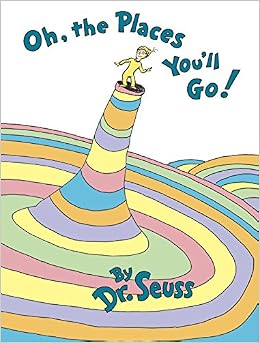
Seeing as I don’t have any knowledge of what goes in a baby’s library past my personal favorites, OH, THE PLACES YOU’LL GO and HORTON HEARS A WHO by Dr. Seuss, I thought I’d enlist your help in completing this little project of mine. 

So what are the must -have books that should be included in every child’s first library? To start off, I took a poll around the office and this is what everyone had to say:

Jane suggested BROWN BEAR, BROWN BEAR, WHAT DO YOU SEE?­­­ by Bill Martin and Eric Carle, and Jessica seconded that and added GOODNIGHT GORILLA by Peggy Rathmann.

Miriam and Michael both went with Dr. Seuss and Miriam suggested a couple more titles: THE VERY HUNGRY CATERPILLAR by Eric Carle and GUESS HOW MUCH I LOVE YOU by Sam McBratney.

Stacey’s daughters have loved TAP THE MAGIC TREE and TOUCH THE BRIGHTEST STAR by our very own Christie Matheson.

Jim’s go-to baby gift is Lane Smith’s IT’S A BOOK and IT’S A LITTLE BOOK.

Lauren suggested the hilarious classic ALEXANDER AND THE TERRIBLE, HORRIBLE, NO GOOD, VERY BAD DAY, and Lisa Brown’s amazing mommy gifts BABY MIX ME A DRINK, BABY MAKE ME BREAKFAST, BABY DO MY BAKING, and other entertaining titles in the Baby Be of Use series. 

As well as the classics- Sendak, Carle, McCloskey, Rosemary Wells, etc., John also enjoys ALL THE WORLD by Liz Scanlon, which is enjoyable for both parent and child. He also made a good suggestion about getting board books, so babies can play and chew on them!

 Eric added MADELINE by Ludwig Bemelmans to the list, and Mike  and Sharon love THE LITTLE ENGINE THAT COULD, GO DOG GO, and the Llama, Llama series.
Amy went with GOODNIGHT MOON by Margaret Wise Brown and Erin suggested the amazing classic, WHERE THE WILD THINGS ARE by Maurice Sendak.

Thanks to my wonderful DGLMians , I am off to pretty good start!  Are there any other titles you would like to add?

1

Inspiration for Young Readers

I’ve mentioned a few times before that unlike most people in the publishing business, I did not fall in love with books at the tender age of 8 months.  I wish I had, and sometimes I find myself looking out for great books I might have missed out on at the time. There were no specific reasons for my not being interested in reading, I had all the resources at my fingertips but I just wasn’t bothered.

The same can’t be said for the many children living in the slums of India. I read this short article about an inspiring young girl named Muskaan, who at the age of nine runs her own library outside her house in the slums of Bhopal.

As she returns from school, Muskaan would find eager young readers awaiting her at the spot where she lays out a mat and arranges her total of 119 books (donated by officials from the State Education Board), then they would gather around and listen intently as she reads out loud to them. After these allegedly fun reading sessions, the kids would then borrow whatever books they can and settled on the mats to read, or take them as they leave.

Having read this article I am reminded how much we take for granted. While majority of the world struggle to have decent and well stocked libraries, we feel the need to cut the budget on libraries, perhaps ensuring children in the future won’t have the same library experiences most of us had growing up. At the same time, Muskaan’s courage also shows me how blessed we are as a human race because no matter what the situation may be, there is always something, despite how small it is that gives us hope.


2

Keeping Libraries Open

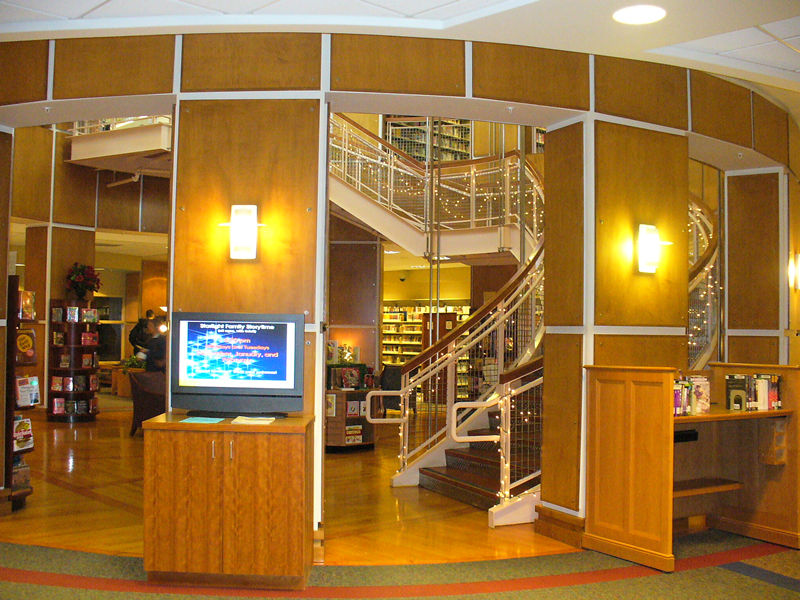
Libraries have always been my sacred ground. I can still remember the tiny public library of my childhood, which I proceeded to read from end to end between the ages of four and twelve and the grander, newly renovated Frederick Public Library with a sweeping spiral staircase, bright patterned carpeting in the children’s section, and new checkout machines that you scanned your library card and then your books at. 

CBA001

So it’s saddened me to read article after article about libraries closing over the years. And although many articles concerning the closing of public libraries advocate to keep their doors open for the benefit of the community, it still doesn’t seem to be helping. Funding is being yanked from them right and left, forcing closures all across the country. Libraries are often viewed as the heart of a community, providing reading and research space, countless resources, and can often help foster literacy and computer training. I wonder what the average taxpayer (and sometimes library-goer) can do to help support public facilities like this, which add value to a community.

How do you feel about libraries closing? How many of you regularly use a library? Has your library done anything creative lately to foster more relationships with the community?

0

Books on the move

If you’re reading an agency blog, you probably have a reasonably good idea how a book goes from your brain to the bookshelf, but have you ever wondered about the process a book takes as it travels through the library system?  I can’t say I really did until I saw this fun piece from the New York Times, but I enjoyed getting to know the journey.  I remember when news broke of the NYPL’s Super Sorter (that’s probably not what they call it), and I’ve always been intrigued.  A friend of mine works for NYPL in Long Island City—albeit as an archivist, not a book sorter.  I wonder if she can get me into the sorting room.

If you’re not excited yet, try picturing the book version of this classic Sesame Street segment at the Crayola Factory.


1

New York, New York

When you picture NYC, what comes to mind? Skyscrapers reflecting on the river on a crisp winter night? Tourists snapping photos of costumed characters in Times Square? Writers scribbling away in an overpriced apartment in Brooklyn? Agents reading away in an overpriced apartment in Astoria? (Guess which one of those is drawn from life…).

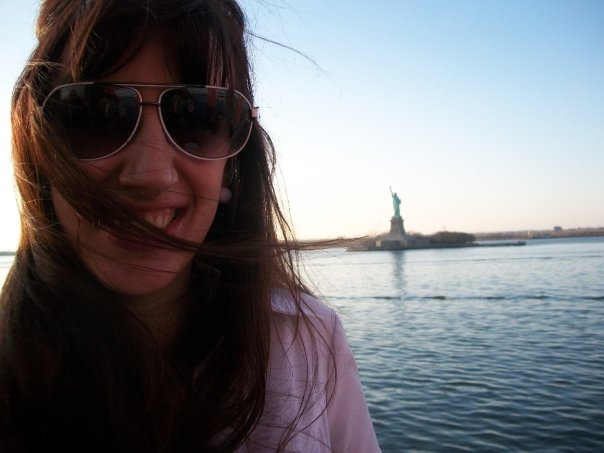
Me in the fall of 2009 – full of excitement and bangs

New York City is even more diverse and colorful than the version of it you get on Friends or Wolf of Wall Street. It’s a city full of many different neighborhoods, and even each neighborhood can have several vibrant communities sharing the streets. Turn off the TV and turn to a book shelf to get a much broader experience of NYC’s sights, sounds and smells – the New York Public Library makes it easy for you with this fun list of NYC novels by neighborhood.

A couple of my all-time favorite books made the list, but that doesn’t mean I can’t suggest a few additions! These are all books that are tied in my memory to very specific seasons of my life in NYC. A BIGAMIST’S DAUGHTER by Alice McDermott, gives a sample of the Upper East Side neighborhood where I lived when I first moved here, and the Murray Hill location of my first job in publishing.  I couldn’t tell you what part of Brooklyn is the setting for L.J. Davis’ A MEANINGFUL LIFE , because I bought the book at an author signing at Greenlight Bookstore my first week in New York, when I had no idea where anything was. Even seeing the cover will always evoke for me that autumn of fresh excitement, anxiety, and seemingly infinite potential.

More recently I’ve been seeking out books that celebrate the diversity of NYC and call my attention to corners I haven’t explored yet. Books like Adam Silvera’s MORE HAPPY THAN NOT which takes an honest look at both the joy and the danger of growing up in the Bronx – especially when your story is different from that of those around you. And Tanwi Nandini Islam’s BRIGHT LINES took me into Brooklyn’s Bangladeshi community as young girls come of age and learn to navigate among the identities that surround them. Because I think that’s maybe what nearly every novel is really about, in same way: finding out who we are, and learning to love it.

What are your favorite NYC novels? Any neighborhoods this list overlooks?

5

My small town wins big!

I live in a small town in New Jersey called Haworth (pronounced Haaworth). Like just over 3,000 people small. 1,100 households small. Most people have never heard of it, even people who grew up in NJ. I love my little town. Even more so because they recently raised almost $300,000 for a major library expansion that was facing a large funding deficit. Of course, I did my share. I donated money to buy a brick that will decorate a patio outside the entrance. And I offered to give a literary consultation to an aspiring author for a library fundraiser. But I was blown away when I saw this article about the fundraising efforts in a local paper, northjersey.com.

The time and energy these women put forth to creatively raise money for the library is nothing short of astounding. They started sending letters far and wide to anyone that had even a remote connection to Haworth.

They came up with a plan to contact the town of Haworth in England, home of the Brontë sisters, and the inspiration for our town’s name, who responded positively by buying a brick.

They got Anne Tyler and Ann Patchett, one of my favorite authors, to donate $700 between them.

Brooke Shields was raised in Haworth and bought a brick.

The SF Giants donated $500 because one of their early team members lived in Haworth.

Of course not all of their efforts were successful, but in the end they raised enough money for the expansion to go through. It was recently finished and looks amazing.

All I have to say is next time I have an author of mine in town, I am going to encourage them to come to the library for an event and get these ladies on board to sell books! If you have any great small town library stories to share, like my colleague, Eric, did last week on our blog, we’d love to hear them. This story makes me smile every time I think of it.

1

Libraries and Discoverability

Where do readers find out about new books?

It’s one of the questions every publisher asks itself over and over–perhaps even every time they release a new book. And on that topic, there was an interesting article in PW this week by branding guru David Vinjamuri about how libraries should be utilized to promote new titles. Vinjamuri makes some fascinating points here, especially when he correctly show how libraries do not cannibalize bookstore sales, which is unfortunately a truism that children’s book publishers have railed against with their corporate overlords for years. I was also impressed by his analysis of how important physical space is for discoverability, and how the shrinking of physical display space through store closings has affected sales—though it’s a little depressing that one takeaway here is how much people really do judge books by their cover!

Now, one can certainly debate Vinjamuri’s ultimate conclusion that publishers should work with libraries to replace bookstores as a means for finding new books. Myself, I wonder if a cynical attempt to promote through libraries might backfire, and backfire badly, as I think most people at some level go to libraries to escape commerce. I also know from years spent talking to librarians at ALA that they tend to guard their independence rather fiercely, and it’s hard to see them getting into the pay-to-play games of co-op advertising and display space.

But on the other hand, it’s great to see someone suggesting a new approach to book promotion. As I’ve written before here on the blog, with all the sales data available now, I wonder if we’re going to see more inventive ways of publishing and promoting books. While marketing through libraries may not be the best way to go, the fact that marketing types are thinking this way could lead to some rather interesting new book campaigns in the coming months and years.

Okay, enough speculation. Let’s get back to the question at hand—where do YOU (as a reader) find out about new books? And if libraries are one of the places, do you think publishers should market through them?

1

Little Free Library

Last month, when I was on vacation in Ohio (we publishing folks lead very glamorous lives) my son stumbled across a Little Free Library box—a brightly painted shelf with a plexiglass door, a peaked dollhouse roof that was filled with a random but charming assortment of books ranging from Rick Riordon to the Book of Mormon.  I’d read about Little Free Libraries before, but I’d never seen one, and they seem to me an absolutely lovely idea. My eight year-old was enchanted.  Free books—tucked into a small green space beside a modest community garden—for him it was a wish come true.  I know that the free exchange of used books is not so great for the publishing industry as a whole, but it seems to me—especially at this intimate, personal scale–a very good thing for the human race.  In a month in which the news from much of the world has been grim, this struck me as a bright note.

The train station in my town has a Give a Book, Share a Book shelf that I patronize regularly  in an effort to avoid becoming a a book hoarder—in Japanese known as a tsundoku (Thanks, LA Times) and I’ll bet you’ve got similar low-maintenance book swaps in your local coffeeshop, church, temple, or community center.   These are great, but there’s something special, almost magical about the Little Free Library boxes.

You can see a gallery and visit the Little Free Library site here, and there’s information on how to start a LFL in your town.

9

Whether a borrower or a lender to be…

I usually take a look at Twitter while I eat lunch and today this little gem, retweeted by publishing newsletter Shelf Awareness, caught my eye:


My first thought was, “Josh Malina is nicer than me.”

Now, in some ways I’m happy to lend books. If I loved a book, I want my friends to read it so that they can love it too – or so that we can argue about why we thought it was so good/not so good. Here in the DGLM office we often borrow books back and forth (DVDs too – in fact I currently have Lauren’s Sports Night DVDs, featuring the aforementioned Josh Malina – but I digress.) Books, staplers, post-its, everything is fair game in the office, right? Just don’t touch my peanut butter.

But sometimes I really, really love a book in a way that’s linked to a specific physical copy of a book. And then I’m verrrrrry reluctant to lend it out. Sometimes because I’ve scribbled notes all over it. Sometimes because I got it at an author event and it has a special inscription or signature. And sometimes, nonsensically, I loved the book so much that I want to hold on to the exact physical object that I held in my hands while I read it. The book is a physical symbol of that intangible and cherished reading experience.

I know this horcrux-like attitude doesn’t fit very nicely into the digital age. But the lending of books is a beloved part of the reading experience that hasn’t transitioned quite as easily to the e-books experience. It’s getting easier and easier to do it impersonally, whether you use the Kindle Lending Library, your city library, or subscription services like Oyster. It’s not so easy, however, for passionate readers to share e-books with each other like they could do with paperbacks – shared digital books often require both readers to use the same device or service, and usually come with time limits.

This is this kind of digital growing pain that has as much potential for excitement as for inconvenience. Think of the amazing new borrowing inventions that lie just around the corner! In the meantime, I’ll be separating my books into two categories: “Go Ahead, You’re Gonna Love It” and “Do Not Touch My Precious.”

Are you a free spirit when it comes to lending your books, or do you have precious no-touch copies like me?

 If you’re an e-book reader, what are your suggestions for improving options for e-book borrowing?