Category Archives: Sharon

3

Don’t Judge A Book by Its Dress

Readers find books in a lot of ways: a friend’s suggestion, a radio interview, a magazine ad, a blogger’s review. But nothing beats browsing a bookstore (or a website) and picking a new book simply because the cover caught your eye. In spite of – or perhaps because of – an increasingly digital world, it’s fun to see publishers’ art departments paying a lot of attention to creating arresting covers for books.

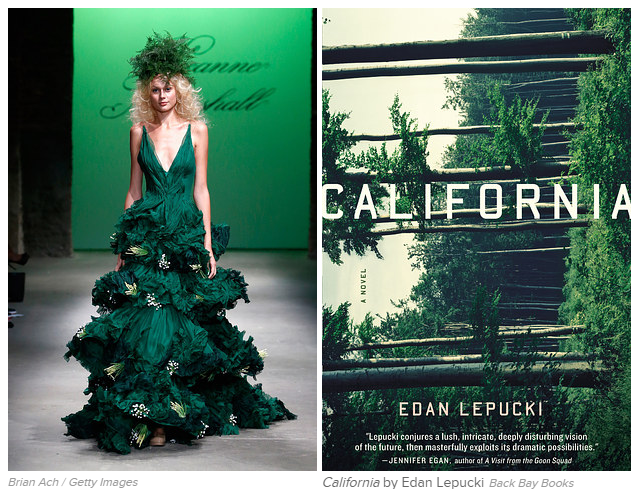
So I got a big kick out of this Buzzfeed list matching 24 striking book covers with couture seen on the runway during New York Fashion Week held earlier this month. High fashion and literature might not go hand-in-hand very often, but when they do, it sure is fun!

24 Books That Perfectly Match New York Fashion Week Looks

I don’t know if I’d wear that dress, but I sure would read it!

Have you ever bought a book based on cover design alone? What do you look for in a great cover design? Any favorite book covers that you think would make a great dress?

1

Broken Glass and Other Painful Metaphors about Revising

August tends to be a quiet month in publishing but the past couple weeks have been anything but here at DGLM. The building is doing work on the roof, so we’ve enjoyed a constant racket of drilling, hammering, and buzzsawing. Not to mention dust showers everywhere and occasionally the stench of propane. It was supposed to take just one week, but then they broke some windows in the process. And not just windows – the very ancient tall skinny skylights loom over our entire office! Replacement panes had to be special-ordered, and now the workers are back, hammering, vacuuming, and moving drop-cloths around as they hustle through their repairs.

All this reminded me a little bit of the revision process. It can be torture. It goes on forever! It gives you a headache! You have so many other things you’d rather be doing! And just when you think you’re finished, you realize a beneficial reworking in this part of your story messed up a plot point several chapters on. Back to the computer…

But, just like our roof work – which they tell us is for asbestos abatement, yikes – it’s gotta be done. Revisions lead to a better, stronger book that will stand up to criticism. Maybe you suffered a little broken glass along the way, but now your book is brighter and cleaner, and full of light!

 This metaphor is done now, and we hope the workers soon are as well. In the meantime, stick with it, all you revising writers!


1

New York, New York

When you picture NYC, what comes to mind? Skyscrapers reflecting on the river on a crisp winter night? Tourists snapping photos of costumed characters in Times Square? Writers scribbling away in an overpriced apartment in Brooklyn? Agents reading away in an overpriced apartment in Astoria? (Guess which one of those is drawn from life…).

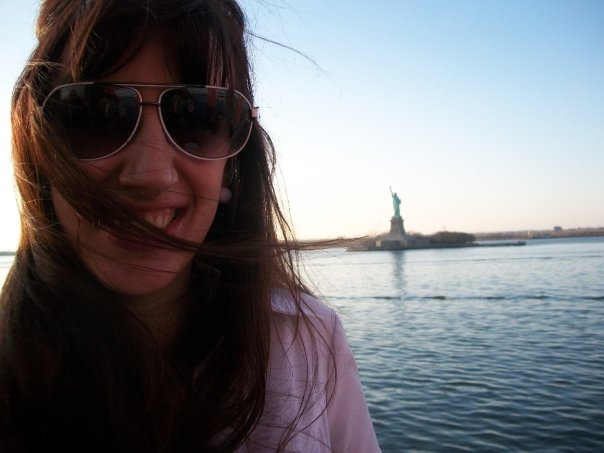
Me in the fall of 2009 – full of excitement and bangs

New York City is even more diverse and colorful than the version of it you get on Friends or Wolf of Wall Street. It’s a city full of many different neighborhoods, and even each neighborhood can have several vibrant communities sharing the streets. Turn off the TV and turn to a book shelf to get a much broader experience of NYC’s sights, sounds and smells – the New York Public Library makes it easy for you with this fun list of NYC novels by neighborhood.

A couple of my all-time favorite books made the list, but that doesn’t mean I can’t suggest a few additions! These are all books that are tied in my memory to very specific seasons of my life in NYC. A BIGAMIST’S DAUGHTER by Alice McDermott, gives a sample of the Upper East Side neighborhood where I lived when I first moved here, and the Murray Hill location of my first job in publishing.  I couldn’t tell you what part of Brooklyn is the setting for L.J. Davis’ A MEANINGFUL LIFE , because I bought the book at an author signing at Greenlight Bookstore my first week in New York, when I had no idea where anything was. Even seeing the cover will always evoke for me that autumn of fresh excitement, anxiety, and seemingly infinite potential.

More recently I’ve been seeking out books that celebrate the diversity of NYC and call my attention to corners I haven’t explored yet. Books like Adam Silvera’s MORE HAPPY THAN NOT which takes an honest look at both the joy and the danger of growing up in the Bronx – especially when your story is different from that of those around you. And Tanwi Nandini Islam’s BRIGHT LINES took me into Brooklyn’s Bangladeshi community as young girls come of age and learn to navigate among the identities that surround them. Because I think that’s maybe what nearly every novel is really about, in same way: finding out who we are, and learning to love it.

What are your favorite NYC novels? Any neighborhoods this list overlooks?

#Persistence

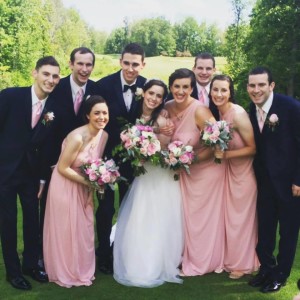
wedding 2I spent my summer vacation this year in Michigan celebrating my sister’s wedding, and I got to hear a lot of behind-the-scenes stories of how she and her fiancé met and fell in love. They’ve known each other for years because she is good friends with his sisters, and he was interested in her for a looooong time before she returned his affection. His sisters told me all the hilarious stories of him talking about her dreamy-eyed at the dinner table, looking for excuses to go to the bagel shop where she worked, treating everyone to baseball games and movies just so she’d come along and he could spend time with her. He was undiscouragable! And eventually, his persistence drew her attention to his kindness and funniness…and he won her heart.

I’m not just gossiping about my little family excitement – these stories about my new brother-in-law reminded me of the road a lot of writers travel on their way to finding an agent. When you’re an aspiring author, you want to be published so badly. It’s all you can think about. Your loved ones get tired of you talking about it morning, noon, and night – maybe they even tease you about how obsessed you are, or how outrageous your dream is. You write, revise, and revise again, go to workshops and writing groups, send your manuscript out to agent after agent after agent. You get a few requests, then heartbreaking “not for me”s. It’s so discouraging.

Don’t give up! Visit the How-I-Got-My-Agent stories on any blog or writing forum and you’ll find that many represented writers went through months or years of disappointing responses before finding the agent that was right for them. Many writers got their agent with the second or third (or more!) manuscript that made the rounds. For example, my client Rena Olsen wrote very frankly about the years of self-doubt and disappointment before she signed with me. And a writer pal of hers pulled together this informal poll on when authors got published – the numbers are fairly evenly split, with only 16% debuting with the first MS they wrote.

So keep at it! Keep writing, keep reading, keep researching, keep querying – that’s what it takes. And it will be a great story to tell when you finally win an agent’s heart.

What success stories inspire you when you get discouraged about your writing? What are your best #persistence tips? 

1

Living Sentences


I’ve been thinking about sentences today. This morning I came across a Buzzfeed post rounding up “53 Of The Most Heartbreaking Sentences In Fantasy Books”, including DGLM author Jacqueline Carey at #9. Then around lunch time David Morrell’s RAMBO was included in a HuffPost list of great opening sentences. And just now a Facebook pal shared this beautiful Paris Review essay about discovering a sentence from his long-out-of-print book had a wild and unexpected new life. The signs are clear – sentences are the theme of the day, and it got me curious about sentences that truly stand out.

Fiction writers work so hard over every detail of their books, carefully choosing a setting in place and time, planning out the key plot events, bringing the main characters to life. But it seems that many of the most quoted (most Pinterested, Instagrammed, tattooed, wedding-vowed) sentences have very little to do with the story or its characters. Just browse the most popular quotes on Goodreads, and you’ll see that I’m right – very few of these offer any sort of spoiler, or are hard to understand if you haven’t read the book. They are sentences powerful enough in their meaning and in the beauty of their language to live outside of the book that was their first home.

I spent some time pondering my favorite sentences from my lifetime of reading, and wanted to share a couple with you here.

“It takes a great deal of bravery to stand up to our enemies, but just as much to stand up to our friends.”
― J.K. Rowling, Harry Potter and the Sorcerer’s Stone

Corrigan had lost his line with God: he bore the sorrows on his own, the story of stories.”
― Colum McCann, Let the Great World Spin

“No bathroom on earth will make up for marrying a bearded man you hate.”
― Dodie Smith, I Capture the Castle

“How quickly he fell; how soon it was over.”
― Donna Tartt, The Secret History


Have you ever loved a sentence from a book you haven’t read? What are your favorite sentences?

Share in the comments!

4

A Verbal Confession

My brother is taking a course in professional writing that is required for his criminal justice degree…and I’ve been receiving panicked phone calls at random times asking for explanations of various fine points of grammar and punctuation. I hide my glee a little bit so he will send me tons of pictures of my 3-week-old nephew in payment gratitude for my help, but the truth is I am absolutely delighted. I could talk all day about how to use a semicolon properly and whether the punctuation goes inside or outside the quotation marks!

So when he got his first big assignment back, I took the professor’s corrections very personally. My brother worked really hard researching and writing his project (especially considering he has a newborn); I simply gave it a final proofread. But I am a PROFESSIONAL words person! I’ve spent my entire adult life getting really good at editing other people’s writing, from simple comma corrections to debating the nuances of vocabulary choices. So I couldn’t believe my eyes when I saw that his prof marked him down for a word choice error! That’s right, faithful blog readers, yours truly, who wrote this bossy post about sneaky homophones, let a vocabulary mistake get past me!

In one section my brother references a video of a police shooting in which the officer gives a “verbal instruction to the victim.”  The prof had flagged this as an incorrect use of “verbal” where it should be “oral.” “What is he talking about???” my brother asked, and I had to, shamefacedly, explain that technically, in the dictionary, “verbal” means written; “oral” means spoken. Your VCR manual contains verbal instructions. Your neighbor yelling “Turn down the TV!” is an oral instruction. Perhaps a distinction that has eroded in common usage, but just the kind of nitpicking that I usually live for! A very humbling moment.

What do you think? Are there any other vocabulary nuances that only the dictionary (and writing profs) are likely to care about? Will you take care to distinguish between “verbal” and “oral”?

2

The Tempest in a tempest

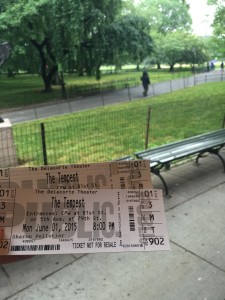
Last night I attended the Shakespeare in the Park production of The Tempest – well, part of it at least.

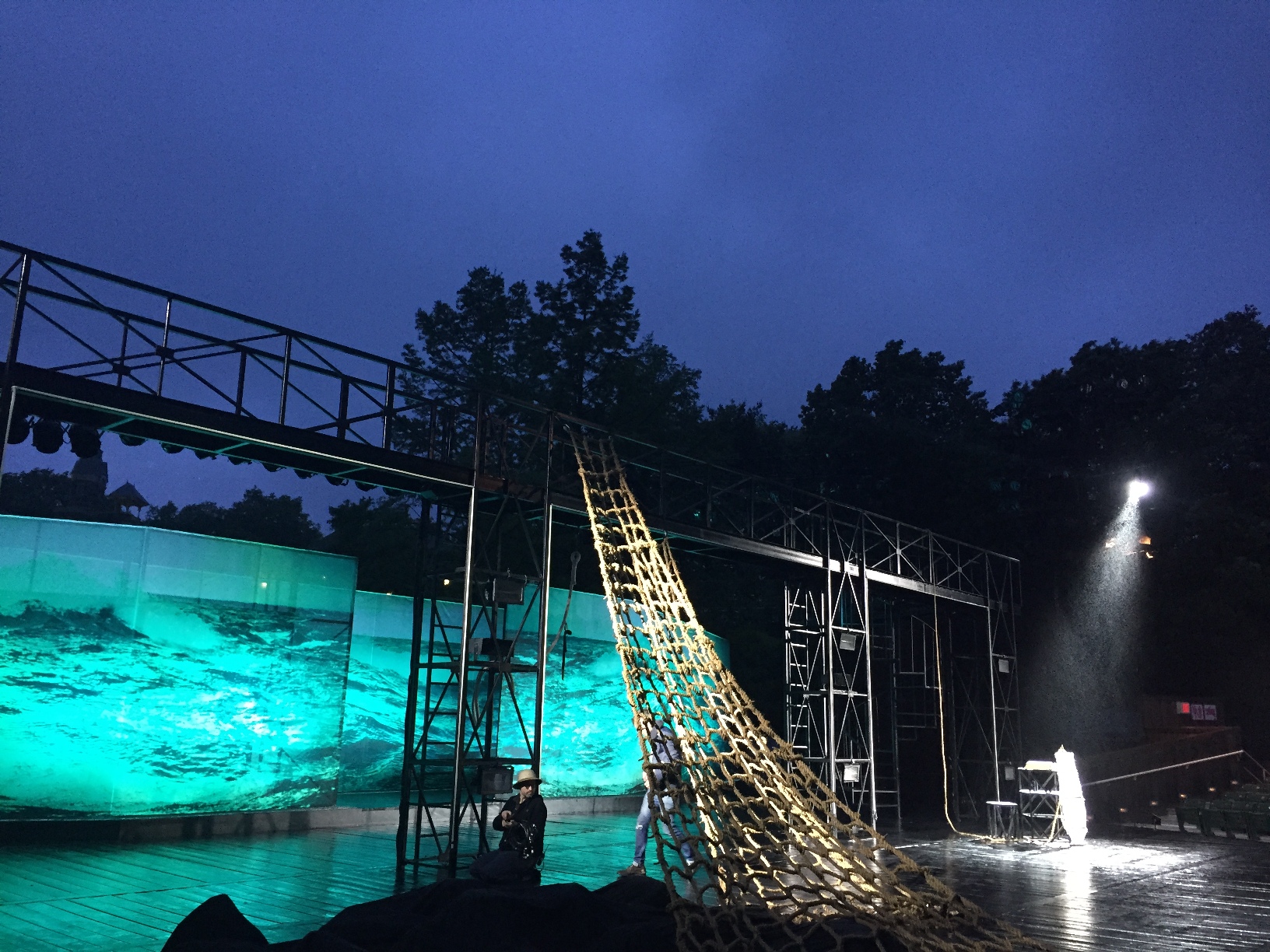
In case you aren’t familiar with Shakespeare in the Park, it’s one of the most amazing things about New York City. Every summer since 1954, The Public Theater presents two productions of Shakespeare in an open-air theater in the middle of Central Park, with tickets free by lottery or by waiting in line. I was lucky enough to get a pair of tickets in yesterday’s lottery – I’m guessing the entry pool was slim thanks to all-day rain and temps in the 50s. But I was not scared off! In fact, I thought it would be a lot of fun to see The Tempest in the midst of an actual tempest, and I was not wrong. Thanks to a hasty purchase of trusty emergency ponchos and a cozy blanket, my friend and I were ready to brave the elements and hoped the actors were as well.

tempest2

And they were! For at least the first act. And what a first act it was! The play opens with a fearsome shipwreck scene, and the scenery and special effects would no doubt have been impressive in any conditions; experiencing it with nature contributing her own genuine rain and blustery winds made Shakespeare’s gorgeous lines, and the fine work of the hardy actors, truly exceptional. It was a show to remember even though they decided to close the performance after the first act. (I was soaked and shivering, though intellectually elated, so it wasn’t a complete disappointment.)

tempest1

And it got me thinking about the way the weather influences fiction, for readers and maybe for writers as well! This weekend I was reading Neal Stephenson’s excellent Seveneves and thunder boomed outside just as I read an account of the moon exploding into pieces – quite a startling moment! On the other hand, fiction can be escapism – read a beachy book on a frigid winter day, or vice versa, to forget the miserable weather report.

I wonder if the same goes for writers as they create the fiction we love to readDo they have to work a little harder on a blizzard scene if they’re writing on a gorgeous spring day? Or can the creative imagination do its thing regardless of what’s going on outside the window?

What do you think? Do you match your book to the weather, or the opposite? Do you find the weather creeping onto the page when you write? 


4

Unexpected Authors

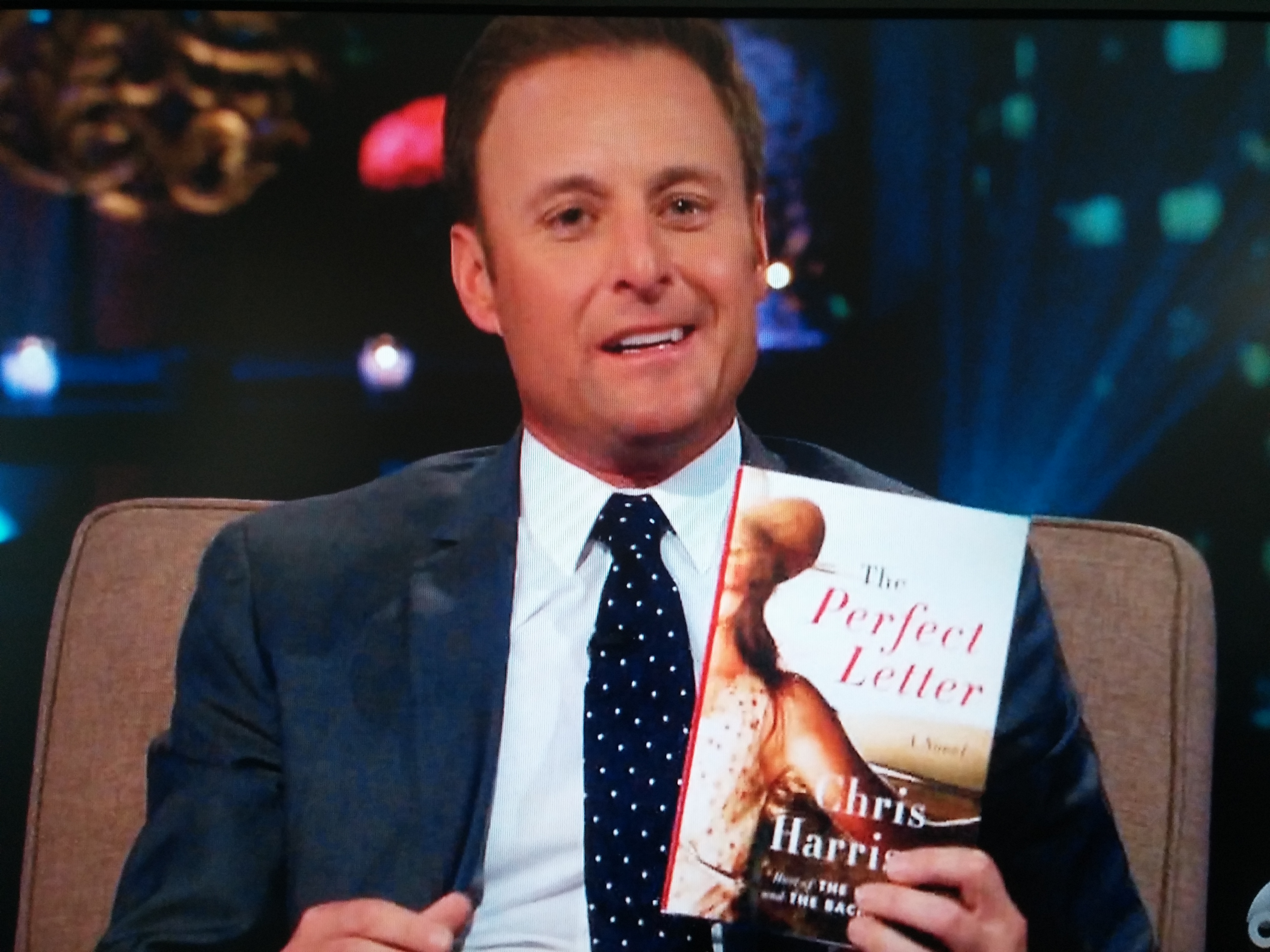
I am a longtime devotee of the Bachelor/Bachelorette dating shows, and mostly unashamed to admit it. A lot of the appeal for me is the shows’ host, Chris Harrison: though his job is to keep a straight face while the season’s star agonizes about being in love with too many people at once, he has a sense of humor about it. And he also blogs about each week’s episode and lets more of his snark out in the process. So I was delighted to discover that he wrote a romance novel. I can’t wait to get a copy and see if his long experience with reality TV romance gave him an advantage when creating a fictional one.

chris harriso

And it got me to thinking about others in the entertainment industry who have written an unexpected book. Of course celebrity memoirs are nothing new, but now several young comedians are coming out with essay collections. In addition to Lena Dunham’s much-heralded book out last year, Aziz Ansari has a book on modern love coming out this summer, and I can’t wait for Anna Kendrick’s recently-announced collection . Then there’s David Duchovny’s picture book, Molly Ringwald’s book of short stories, and can’t forget BJ Novak, who’s written one of each. Don’t even get me started on cookbooks!

Obviously publishers love celebrity authors – an author with a built-in fan base, media accessibility, and experience promoting their projects aggressively? SOLD! So it can feel like an unfair advantage to the unknown authors toiling patiently to get the attention of an agent and then a publisher, with nothing to offer but an incredible idea and an irresistible manuscript. On the other hand, more than a few celebrities have experienced embarrassment when a novel with their name on it just doesn’t stand up to the scrutiny of true bookworms – naming no names, but it rhymes with Byra Tanks!

 As a reader, what do you think about celebrity authors exploring other genres? Are you more or less likely to buy a book with a Hollywood name on the cover? Sound off in the comments – and let me know if there are other truly great or so-bad-it’s-good celebrity books I should know about!


6

The Thing and the Other Thing

In college I had a workshop with the writer Tony Earley, who taught us a theory of putting together an effective short story that I have never forgotten. I’m going to spend a bit of time discussing it today, because it’s fun and it might help you if you’re stuck in your writing.

Your story needs two pieces: 1. The Thing 2. The Other Thing.

To explain how it works, I’m going to just shamelessly paraphrase what Mr. Earley explained, because the details have stuck with me for almost ten years (accurately, I hope!).

Mr. Earley read to us a short story he had recently written, and explained its background: He had been fascinated by Bigfoot believers for years, and wanted to write about them – the Thing – but the story had never quite worked when he sat down to write it. Then, he read a news article about the FBI pursuing a suspect into the woods around his home in North Carolina, and realized that could be the missing piece of his story – the Other Thing. And boom. The Cryptozoologist was ready to be a story.

While Mr. Earley was focused on short fiction, I’ve found the theory of the Thing and the Other Thing applies to full-length fiction and even memoir, as well as short stories – it helps me analyze the bones of a plot when I’m when I’m assessing queries or responding to a client’s story concept. Let’s look for this concept in a few other books so that you can really get a handle on how this works.  

Twilight by Stephanie Meyers Thing: Girl goes to a new school and falls in love (yawn) Other Thing: with a vampire in disguise.

The Goldfinch by Donna Tartt Thing: Boy’s mother dies in a museum bombing and he struggles to find meaning in the rest of his life (yawn) Other Thing: while keeping hidden the painting he stole from that museum.

WILD by Cheryl Strayed Thing: Woman is grieving mother’s premature death while trying to move on from a lifetime of self-destructive behavior (like a thousand other grief memoirs) Other Thing: and hikes Pacific Crest Trail with no experience and little preparation.

The Storied Life of A.J. Fikry by Gabrielle Zevin Thing: Middle-aged widower running a small bookstore (ok, so what?) Other Thing adopts a baby girl abandoned in the store.

Now, I’m not claiming that no book ever could manage to organize itself without clear, identifiable Thing and Other Thing at all. (Bonus points for whoever can pull out the GONE GIRL T. and O.T. in the comments.) But the main idea holds up, and can even help you organize more complex projects.

Maybe you have multiple story lines, and they all have their own Other Thing, so sharing the same Thing unifies the book.  Or maybe your story jumps from era to era and each has the same Thing and Other Thing but in different form for each time and place (David Mitchell, I’m looking at you.)  And there might be a couple Secondary Things. For example, in the Donna Tartt example above, STs are that Theo’s father dies, that his best friend is a drug dealer, that he goes to live with an antiques seller and ends up embezzling from him…but none of those pieces can hang with each other without being pinned to both T. and O.T., right? (Not to mention that we can’t all be Donna Tartt.)

This is probably the longest post in the history of the DGLM blog, so I’ll cut to the takeaway: If you have an amazing idea that just isn’t working, put it in a Thing folder. And wait for its perfect Other Thing to come to you. (And then send it to me!)

7

Query Turn-Offs

Now that you know what I’m looking for, here’s a follow-up on what I’m NOT looking for – a quick list of my query pet peeves!

These won’t be an automatic deal-breaker for you and your project, but they will make me a little sad; more importantly, they’ll make me wonder if you’ve done your research, and if you take your writing seriously. And your pitch and sample pages will have to work that much harder to win me over.

  •  “What’s her name? Shannon? Close enough.” While no one loves “Dear Agent” or “To Whom It May Concern,” it’s even worse to get a query addressed to “Dear [Coworker’s Name]”; “Dear Sarah” (you’d be surprised how often it happens), or even “Dear Mr. Spelletier.” You should be doing your research to make sure you’re querying agents who will be a good fit; in addition, messing up my name makes me wonder if you’ll take your time and pay attention to detail when we work together.
  •  “Pssht, guidelines don’t apply to me.” Yes they do, and they’re right here! So please follow them; don’t ask me to click on your website or download a file from Dropbox. I won’t buy your self-published e-book or look under a rock in Central Park for your hand-penned sample pages.
  •  “My book is the next GONE GIRL meets WILD!” It’s probably not, and those comps don’t do much to help me understand your book – what’s special about it, why you were the perfect person to write it, how it fits into the market. Of course you want to highlight how your book will fit in with what’s popular right now, but be specific, and show that you’ve read widely in your genre. If you’re querying me with a thriller about a time-traveling cheerleader who kidnaps the Lindbergh baby, mention The Shining Girls and Dare Me, not Gone Girl and Twilight.
  •  “Whatever, spellcheck probably caught it all.” Now I must admit that I am a grammar zealot, and my spam filter is set to automatically delete any email that omits the second attributive comma (just kidding – that’s only a dream of mine). I’m self-aware enough not to hold minor typos against you, and I might even let it slide if you use fiancé where fiancée should be. But fundamental writing errors like homophone confusion (isle ≠ aisle, discrete ≠ discreet), dangling participles, verbsubject disagreement, etc., are a red flag. Whether you need more time to learn the basics of your craft, or whether you just didn’t bother to give your letter a second read, grammar mistakes are signs that you might not be ready to work with an agent.
  •  “You’re making a huge mistake.” And please be nice. Be professional in your query, not arrogant or demeaning, and don’t write back rudely if I decline. Even if the project you’re querying isn’t for me, who knows when and where our paths might cross again – publishing is a small town!


Now you know what to double-check before hitting SEND on that fantastic project that’s exactly what I’m looking for. For more query tips, check out Jessica and Mike’s great insights recently.

Do you have any suggestions for making sure your queries are good to go? Any embarrassing mistakes you didn’t catch in time?