Category Archives: Sharon

2

My 2015 Wish List

Jumping on the bandwagon to tell you all what kind of projects I would love to see fly into my inbox!

(Reminder: Submission guidelines here. )

  • Historical fiction with a believable voice like Vanessa and Her Sister and Euphoria. It’s not easy to get the dialogue right when you’re setting your story in a century you never saw. Even manuscripts with every detail perfect from shoe buttons to breakfast menu have lost me the second the characters opened their mouths (visit our archives for more from Rachel on this). So if you have a fantastic historical setting and you’ve really nailed your characters’ thoughts and conversations…I want to read it!
  • Narrative nonfiction with a personal angle like Brain on Fire, Full Body Burden, and Irritable Hearts. If you are the right person to explore a little-known story, expose an injustice, or explain something fascinating, and you can blend your expertise and careful reporting with the emotion and passion of memoir-type nonfiction…send it to me!
  • A smart, edgy literary thriller that I can’t put down and can’t stop talking about like Dear Daughter and The Weight of Blood. A story that will make me scream “whaaaaaaaaat!” or “NO!!!” when I’m reading on the train.  I’m a complete sucker for unreliable narrators, and would also love some more procedural but still twisty mysteries like the work of Tana French or Brad Meltzer. (BONUS: combine bullet points 1 and 3 for an authentic historical suspense like The Paying Guests and I will love you forever.)
  • Nonfiction on any of the following topics: feminism/gender politics, contemporary religion, little-known historical figures with a BIG story.

Of course, if you have an absolutely fabulous project that you’re sure is right up my alley, send it right along even if its category is not mentioned above.  Find me at spelletier@dystel.com.


I can’t wait to see all of your fantastic (and carefully proofread) queries!


3

Pulling an Oprah

As agents, our number-one job is to look out for the best interest of our clients, from the scope of their writing careers to each individual project. Just as we’ve signed up a number of successful self-published authors and helped them achieve traditional publishing contracts, we also suggest digital self-publishing to our traditionally published clients when that seems to be the best option for them.

But not every author has the time, interest, or know-how to self-publish an e-book. DGLM to the rescue again! Our digital publishing program, run by yours truly, exists to assist them with the details, from lining up freelance editors and cover designers, to building e-book files, to strategizing marketing initiatives. Authors who have taken advantage of this service include those with a sizable backlist, like David Morrell, as well as talented debut writers with projects that just haven’t found a home.

Why am I talking about this today? Because we have a free gift for you! And you! And you!

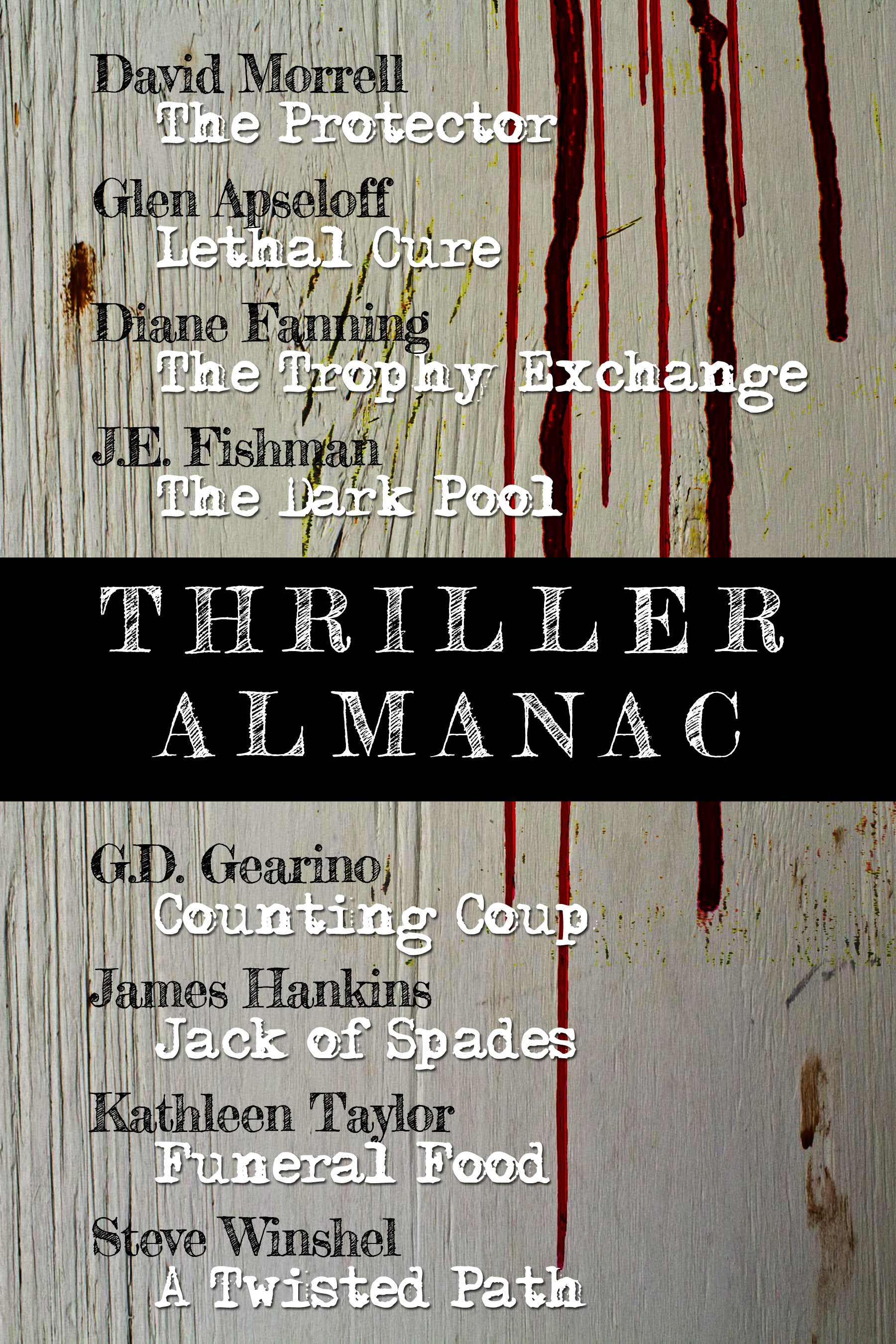
We’ve put together an e-book sampler that includes excerpts from eight thriller titles self-published by our clients.

Help yourself to our Thriller Almanac!

ALMANAC FINALKindle     Kobo     Google Play      iBooks

We’re curious to see how giving away a free sample could boost sales in this genre, and we’ve asked each of the participating authors to spread the word in their social media circles.

And now we want your input! If you’re an avid e-book reader, please let us know what you think of this sampler.

Are the end points for each excerpt exciting enough to make you want to buy the whole book? How do you discover new e-book authors? What’s the perfect price point to tempt you to take a chance on a series you’ve never heard of?

0

Glossy Pages

Recently Mike blogged about his New Year’s Reading Resolutions, and I was inspired. I’m going to make a read-olution of my own, and mine has to do with the pile of magazines next to my bed! I only subscribe to a handful of publications – Elle and Elle Décor, New York Magazine, Vogue, with the latter about to expire – but somehow can’t quite read them as fast as they come! That’s going to change in 2015; I am going to vanquish the stack before it crashes through the floor of my apartment and gives my landlady a concussion. And there are a couple other practical reasons as well…

Magazines are great for commuting. Flip through an article or two if you’ve just got a couple stations to go and don’t want to get lost in a book and miss your spot. And they’re certainly a lot easier to tote around than a book – I’m currently reading the second book in the Outlander series, which clocks in at 743 pages.

And staying up to date with magazines is important to our work as an agency too. Publishing every week or every month, magazines keep you in touch with the latest lifestyle trends, emerging political or economic thought, fascinating little-known stories, scandals waiting to explode – all potential book ideas, whether we pursue the writer of the piece or share a story idea with of our clients or promising At our bimonthly ideas meetings at least one person mentions “Well, I was reading in the New Yorker” or “I saw this thing in The Atlantic…

So in 2015, I gotta keep up!

Ever seen an article and though that should be a book? Any tips for keeping up with your subscriptions? Or magazines I should check out?

1

The Best Christmas Propaganda Ever

My book club – you remember them – is meeting for our holiday party tonight, and we always like to cut ourselves a bit of slack by picking a children’s book during this busy busy month. Last year we read each other’s favorite childhood titles, and this year we read a classic that several of us grew up reading year after year: The Best Christmas Pageant Ever by Barbara Robinson. If any of you read this one, or maybe saw the TV movie version from the eighties, you’ll remember it’s the story of the chaos that reigns when the worst kids in town decide they want to participate in the church Christmas pageant.

I remember finding this book absolutely enthralling and hilarious as a child, probably in part because of my membership in a family of 6+ children that, like the Herdmans, left a wake of havoc wherever we went. (I’d like to think I was a little better behaved than Imogen Herdman – I know I did a better job keeping my wild brothers in line than she did.)

As an avid re-reader of childhood faves, I’m often surprised to discover deeper meanings in stories that were lost on younger me, who raced through the pages gleefully as the Herdmanns rob the penny bank and say the H-word during rehearsal. Little did I realize that Ms. Robinson was sneaking in a lesson about compassion, about suspending judgment, about being grateful for our blessings and sharing them with those who are less fortunate. An important lesson to learn at the holidays…and to remember all year round!

Do you have any favorite books to read at the holidays? Ever re-read a book from your childhood and were surprised to learn what it’s really about?


0

Rory’s Reading List

I’ve started watching this great show on Netflix. It’s called Gilmore Girls – ever heard of it? Okay, so maybe it’s not a hidden gem; when the series hit Netflix a month or so ago, my Twitter exploded with glee from ecstatic fans who began planning marathons, comparing favorite episodes…and chastising in shock and horror those of us who have never seen an episode (even our own Miriam Goderich was appalled at me).

So this weekend I finally bowed to the pressure. And I found something to love right away – Rory Gilmore has a book in her hand in almost every scene. In fact, her high school sweetheart first notices her when she is so utterly absorbed in a book that she is oblivious to a fight breaking out nearby.

And it turns out I am not the only one to notice the bookwormyness of Gilmore Girls. From this EW list highlighting seven titles to this massive Buzzfeed post on all 339 books mentioned in the show, the internet seems to love Rory’s reading lists as much as they love the show itself. One superfan even pledged to read every one of those 339…and this Goodreads list will make it easy for the rest of us to add a few to our own TBRs.

Reading is not a spectator activity, usually, so hats off to Gilmore Girls for making the love of literature so prominent in such a lively show. And now I’m thinking how to add more bookishness to my favorite shows…maybe one of the firms on The Good Wife could represent a library facing an FBI subpoena of patron activity! And come to think of it, The Mindy Project just finished an arc in which one of Mindy’s party-boy coworkers dated a romance author and learned authors a lot more fun than he expected.

What other shows would you like to see add a book-loving character? Ever discovered a favorite book recommendation through a character on television?


0

I VOTED

It’s Election Day today!  Kudos to those of you already proudly sporting an I VOTED sticker, and to those of you who will make it to the polls by the end of the day. But don’t let the voting fun end there! Another election is taking place right now, one even more exciting and important than the one which determines our nation’s government – and you don’t even have to wait in line in a school gymnasium to vote in this one: The 2014 Goodreads Choice Awards.

 Okay, so maybe this is a little more for fun and a little less for the fate of the future (unless you’re an author with a book in the running, that is!). But it’s still fun to think about your favorite books of the year. There are 15 books presented in each category –Goodreads picked their initial nominees based on the stats from their site, so it’s TRULY democratic. But don’t worry, you can write in your own picks as well! And if you’re like me, and second-guess every award short list that’s announced, this is the perfect chance to actually have a say in picking winners!

New to Goodreads? It’s a fun way to catalog the books you own, the books you’ve read, or to simply check out what passionate readers thought of a book you’ve been planning to pick up – I’m planning to check out The Romanov Sisters and The Museum of Extraordinary Things. So click through the categories and cast your vote. Bonus points if you just so happen to vote for some DGLM authors’ books, like these Jim suggested on Twitter for starters.

Did you any books that didn’t appear on the list as nominees? Add any new titles to your To Read list? What’s your favorite way to use Goodreads?


0

Judging the Book by its Cookie


This morning I listened to a fascinating NPR interview with Peter Mendelsund, an esteemed cover designer who has recently published his own book on cover design (did you follow that okay? I’ll wait).

Mendelsund talked to Fresh Air’s Dave Davies about how he reads every manuscript carefully. “I’m trying to be very alert for anything in that text that has structural importance or a particular kind of emotional weight,” he explained, saying that he wants the cover design to capture the feeling he had while he was reading, rather than simply recreating a character or portraying a scene.

So I was thinking deep, important thoughts about aesthetics and subliminal messaging today as I stood in the kitchen making my coffee. And my eyes fell on a framed cookbook cover on the wall in our lobby, which just so happens to be in my direct line of vision from the kitchen door. “A ha!” I thought to myself. “THIS is why I always crave cookies in the office! It’s not even my fault. It’s the cover design!” Luckily, Tuesdays are the day our intern Amy usually brings in amazing home-baked goods – chocolate peanut-butter-chip cookies are today’s treat.

I’m kidding – sort of – but I’m also thinking about covers. We do judge books by them, even when we don’t realize we are. When I worked at Barnes & Noble, I would hear at least once a day, “I don’t remember what it was called, but the cover was orange.” Below are some delightful books I discovered when their cover caught my eye:


What are your favorite book covers? What catches your eye when you’re browsing for a new read? Do you find yourself drawn to the same design elements over and over?


Covers via Goodreads

4

Crisp.

Last week I read a great suggestion from the CEO of Google, Eric Schmidt: “Be crisp in your delivery.” Keeping this in mind, I’m getting to the point at the beginning of every email and controlling my tendency to over-explain the background.

The whole article, 9 Rules for Emailing from Google Exec Eric Schmidt, is very clear and useful, but Rule No. 2 is the one that’s really stuck with me. (And wouldn’t you know, it’s the one that quotes a writer!)

crisp2. When writing an email, every word matters, and useless prose doesn’t. Be crisp in your delivery. If you are describing a problem, define it clearly. Doing this well requires more time, not less. You have to write a draft then go through it and eliminate any words that aren’t necessary. Think about the late novelist Elmore Leonard’s response to a question about his success as a writer: “I leave out the parts that people skip.” Most emails are full of stuff that people can skip. 

Over the past couple weeks, I’ve consciously thought about frontloading my emails with the important point. Rather than a four-sentence lead-in, I’m being intentional about diving right in to the question I need answered or the solution I’m proposing.

And this tip is not just for emails! Similar to Leonard’s advice, Strunk & White famously suggested, “omit needless words.” Are you cluttering your prose with adverbs instead of strengthening your verbs? Are you bogging down your plot by overdescribing routines such as getting dressed or making dinner?

But the world needs Hemingways and Fitzgeraldsbooks aren’t simply information delivery systems. A memorable story has atmosphere and context, as well as plot; an effective essay illuminates extraordinary dimensions in something ordinary. 

How do you balance brevity and nuance in your own writing?

Have you found writing tips from any unexpected sources? 


0

Second Time Around

Have you heard of sophomore slump? A phenomenon that plagues authors, musicians, and artists of any stripe when their second thing is judged a disappointment by critics and/or fans.  Maybe because you’re going up against inflated expectations, created by the glory with which you first burst upon the scene. Because as hard as it is to live up to your heroes, it can be just as difficult to live up to yourself.

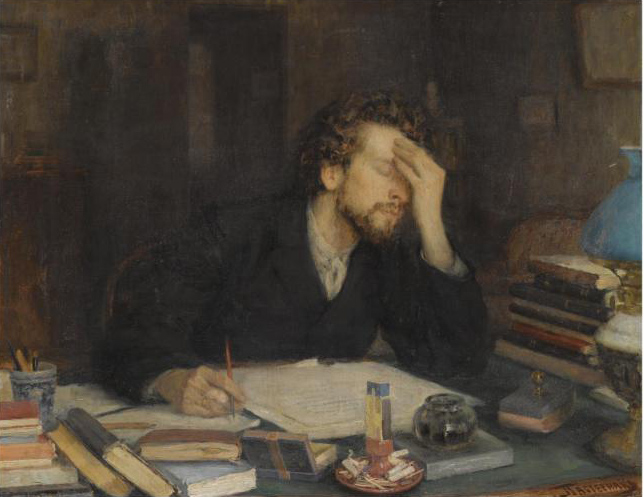
Throes of Creation by Leonid Pasternak

Throes of Creation by Leonid Pasternak

The other theory is that your first thing—book, play, album—is amazing because it’s been stored up in you for so long. You’ve spent years thinking it over, dreaming of it, honing your skills to bring it into the world. Your second thing may not have germinated in you as long, or your authentic inspiration may be altered by feedback to the first thing or by your own anxiety over meeting the world’s expectations. On the other hand, don’t you learn a lot in the process of creating the first thing? Authors get better with every book, if they’re doing their job right and if their agent and editor are doing their jobs right.

Whatever the causes and pros/cons of the sophomore slump syndrome, authors need all the support they can get for their second title. The first book might make a name for you but the second book is where you start to make a career. And one online publication is turning its eye to this overlooked corner: along with the Whiting Foundation, Slate is founding a prize especially for second novels.

Now, the Slate/Whiting Second Novel List might not be as prestigious an award as a MacArthur Genius Grant or a Pulitzer Prize (yet) – as Slate itself acknowledged. “It’s akin to being retweeted by your literary idol, or finding out that the classmate you have a crush on thinks you’re cute. A mash note from the cosmos!” But as an avid backlist treasure hunter, I love that they’re looking at the last few years of published books, not just moving into the future with this honor. As Slate’s culture editor Dan Kois put it, ”Books don’t have an expiration date like a carton of milk; we believe that it’s worth going back to the shelves to discover what we’ve missed.”

What do you think? Do authors get better with each book? Any favorite sophomore novels you recommend?

2

Coming Not-So-Soon

There’s nothing like the excitement when your favorite author announces the pub date of their next book. You can hardly wait! A year, or a year and a half, sounds so far away! You imagine yourself springing out of bed on pub date, running to the local bookstore, seeing the long-awaited cover sitting there on the NEW RELEASES table. Or maybe you set a pre-order alert online and then you’re crouched over your e-reader at midnight, eager for the new file to blip onto your screen.

Well, for Margaret Atwood fans, and the fans of other to-be-announced authors, that excitement is not to be. A library in Norway has announced a new, carefully curated collection of books affiliated with a newly planted forest. The books in this collection will be published on paper coming from the trees in the forest…starting in 2114. That’s right – a hundred years from now!

trees Margaret Atwood, always adventurous in her fiction, is excited to be a part of this experiment, loving the idea of the distance of time between her and the critical reception of the book. She noted, “When you write any book you do not know who’s going to read it, and you do not know when they’re going to read it. You don’t know who they will be, you don’t know their age, or gender, or nationality, or anything else about them. So books, anyway, really are like the message in the bottle.”

But this is most provocative part of this program to me: Its funding grant includes provision for the library to invest in a printing press, to be sure they’ll have the technology to print the books when the pub date finally arrives, next century. Which struck me as a little bit odd – isn’t the important part of a book the story itself? The words, the plot, the characters? If, (a BIG if) in a century, printing presses don’t even exist, and books don’t even use paper…but people are still reading, and still excited for a collection of books from last century’s great authors…isn’t that just fine?!

What do you think?

Is it important for libraries or literary organizations to preserve the technology of physical books printed on paper if society is outgrowing it?

How would you feel if your favorite author were selected for this collection – excited that they were so honored, or upset that you would never get to read this particular work?

How would you feel if you were invited to participate as an author?