Category Archives: Sharon

2

The Gerard Butler Guide to Agenting

The best thing about being a literary agent is that there’s always so much to read.

The worst thing about being a literary agent is that there’s always so much to read!

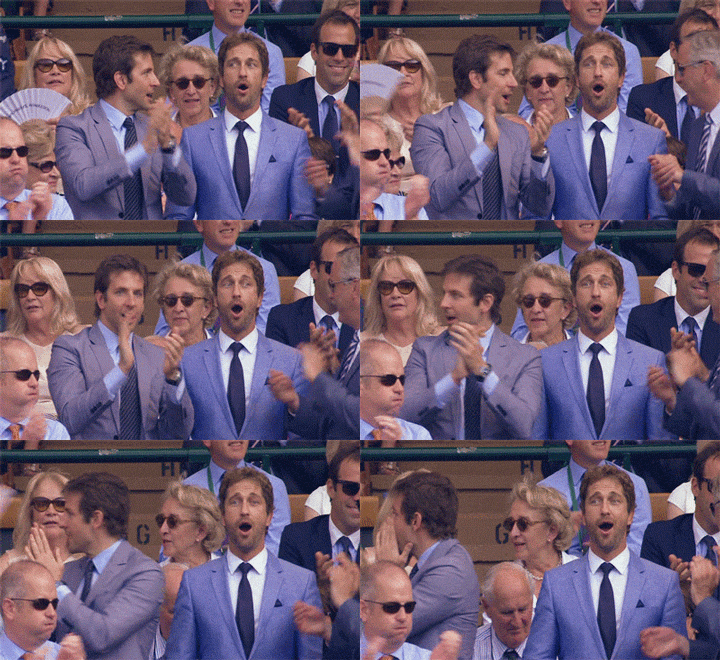
Sometimes, when faced with a particularly daunting pile of manuscripts, I turn to GIFs for inspiration in staying focused and fired up. This week, hoping to get enough done to leave the work reading behind when I go away for the weekend, I am channeling the élan of Gerard Butler:


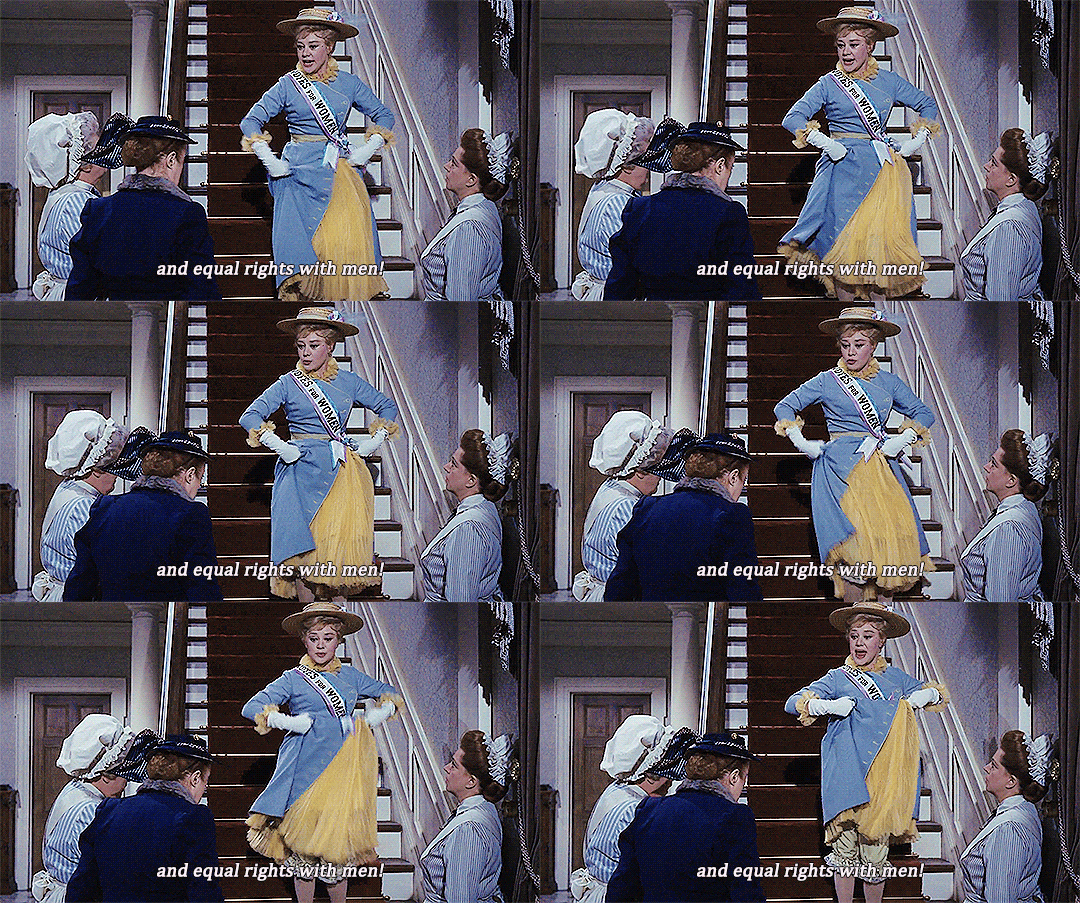
And when I find one of those mind-blowing, can’t-put-it-down, I-gotta-represent-this manuscripts:


Who are your GET IT DONE inspirations? Do you have any GIFs or characters you turn to when you need to power through an intimidating to-do list?


0

We Should All Be Feminist

Today is International Women’s Day, which, believe it or not, dates back to 1908, when 15,000 women marched in New York City to demand better pay, better hours, and voting rights. Social media brought the celebration to my attention a few years ago, and, I’m grateful that today my Facebook and Twitter are an extravaganza of women celebrating each other and the achievements we’ve made toward more equal lives.


So, in the spirit of adding to the inspiration,  I asked a few of my officemates about books that were significant to their understanding of women’s issues and equality, and got some moving responses that have definitely added to my reading list! Lauren is a fan of Chimamanda Ngozi Adichie’s We Should All Be Feminist, which she describes as “Conveniently bite-sized but available as a small physical book as well, it’s a smart, inclusive, and compelling case for why feminism is for all of us. Perfect for people who are too overwhelmed by the decades of discourse to know where to start.” Amy mentioned C**t by Inga Muscio: “I was in high school when I read it, and it really opened my eyes on a personal and global level as to what women were facing and the remarkable things that had already been accomplished.”

Jim suggested Herland by Charlotte Perkins Gilman, sharing the following really incredible story:

My 7th grade English teacher was a kickass feminist activist who pushed really challenging material. Herland was my first experience dealing with issues of separatism at all, but it also really informed my notion of the distrust that can exist, and most importantly, the roots of that distrust in systemic sexual violence. I went on to read The Yellow Wallpaper, which further blew my mind. It was one of the first times that I had to confront profound inequality in a way that broke through my incredibly sheltered and narrow world-view. It was an eye-opener, and (in retrospect) a gloriously nervy lesson for a teacher to drive home so hard to a group of middle school students.

Jim’s story brought to mind my childhood librarian, Carla, who took me seriously from the first moment I approached her desk; while I don’t remember a specific book she recommended that taught me about feminism, her interest in my ideas about books and her example as the first working mom I ever knew—a working woman who loved her work and took pride in it—were incredibly influential.  And to bring it into the present, my book club tonight is discussing Men Explain Things to Me by Rebecca Solnit, which is a lively little book that should be required reading for every human being, explores the how mildly annoying behaviors like mansplaining are connected to the global epidemic of violence against women.

If you’re on social media, check out the hashtag #IWD2016 for more inspiring stories and galvanizing information. And please, in the comments, chime in with your favorite books celebrating women and women’s issues!


1

Form & function

Yeats full

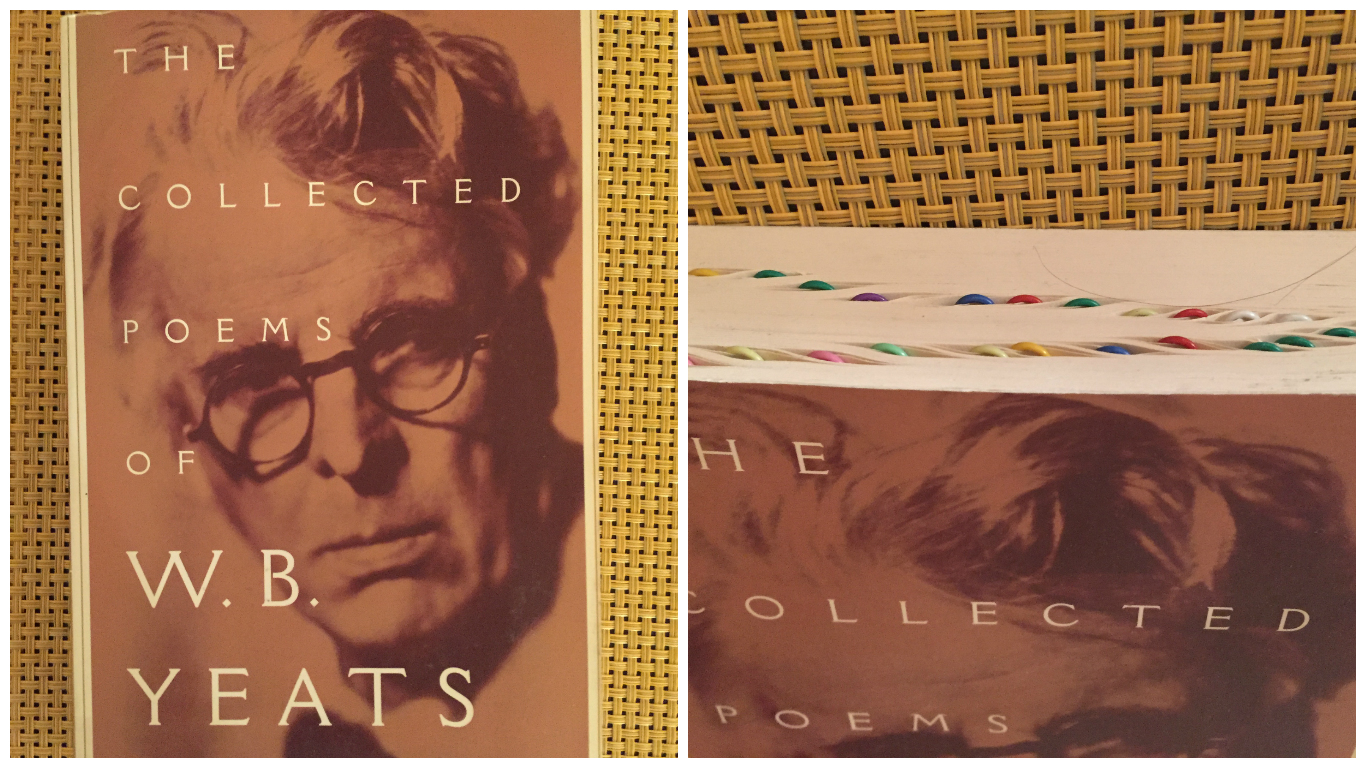
Mr. Yeats attended two universities with me and lives his life with paper clips marking the poems I’ve studied and annotated.

H&M

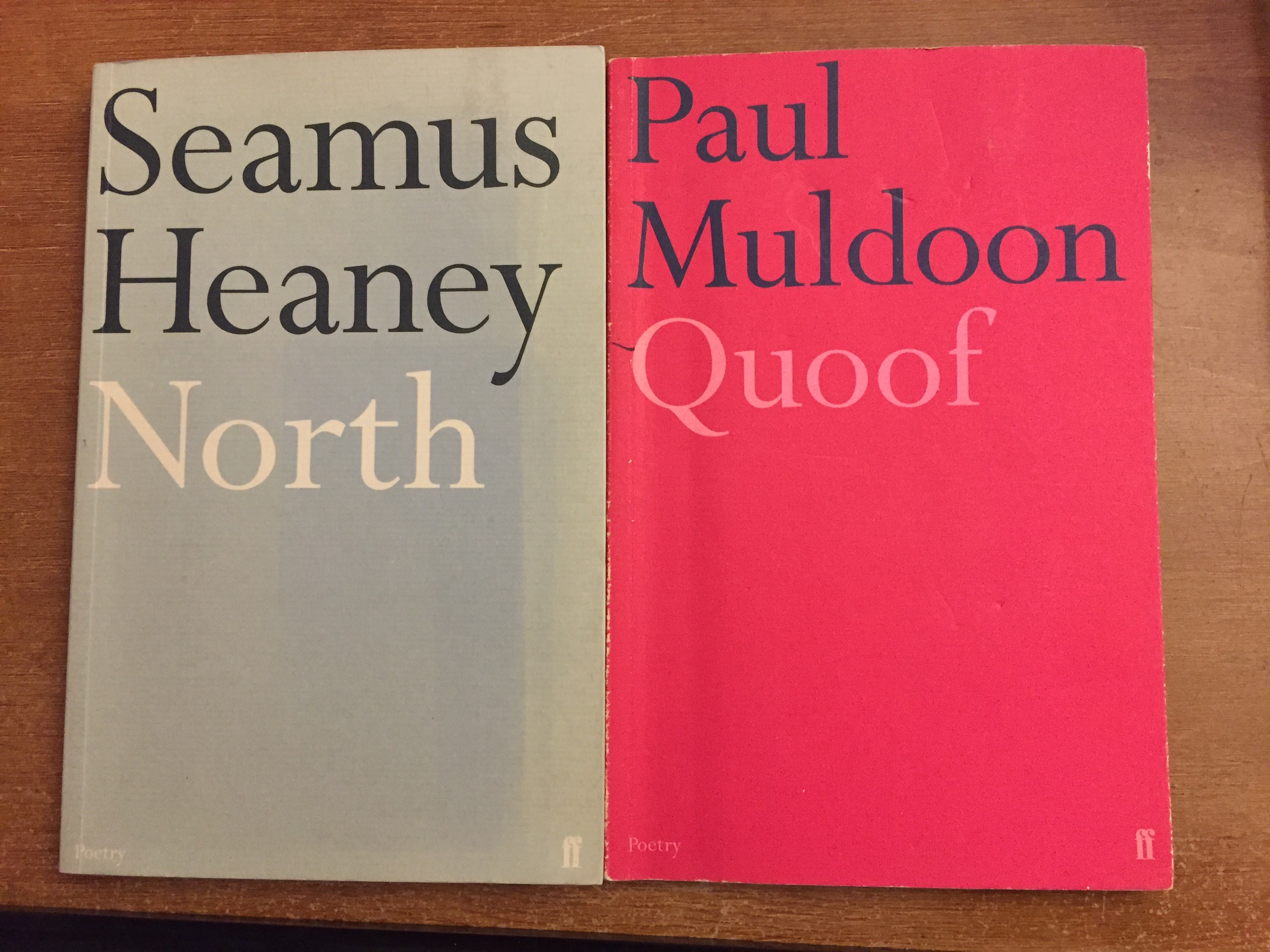
Heaney and Muldoon live on my shelf in many forms, but NORTH and QUOOF actually live at my office. Six months before I began working at DGLM, I turned in my master’s thesis on these two collections. And something about identity and politics. I’m not sure I ever knew what I was trying to say about them. But now they live in my office reminding me of what words can do and why I broker them for a living.

Last week, Sharon and I were discussing a book she wants to read that I own a copy of, and we agreed on the one major failing of borrowing a book:  you don’t get to keep it.  I’m a hard copy person (a trade paperback person, if we’re getting specific), and I not only want to own physical copies of the books I’ve read and loved, I want to own the exact copy I read and loved.  I’ll borrow a galley if I want to read the book before I can buy it and don’t have a copy of my own, but if the book is available for purchase, I’d rather go buy it just in case I love it enough to give it a permanent home on my shelves. 

I mean, sure, I could borrow the book and go out and buy my own if it turns out to be worthy, but then I wouldn’t have an emotional attachment to the book as an object as well as to the book’s contents, and it’s just not the same.  I’ve always wanted to be a library person, since it’s obviously more fiscally sensible, but ultimately I’d rather forego new clothes and expensive dinners and fancy technology and living in a trendy neighborhood so I can curate my own personal library. One day I’m going to be a rich person with a dedicated library and rolling ladder, and I want the books that I fly past Beauty in the Beast-style to tell the story of my reading history.

McCann

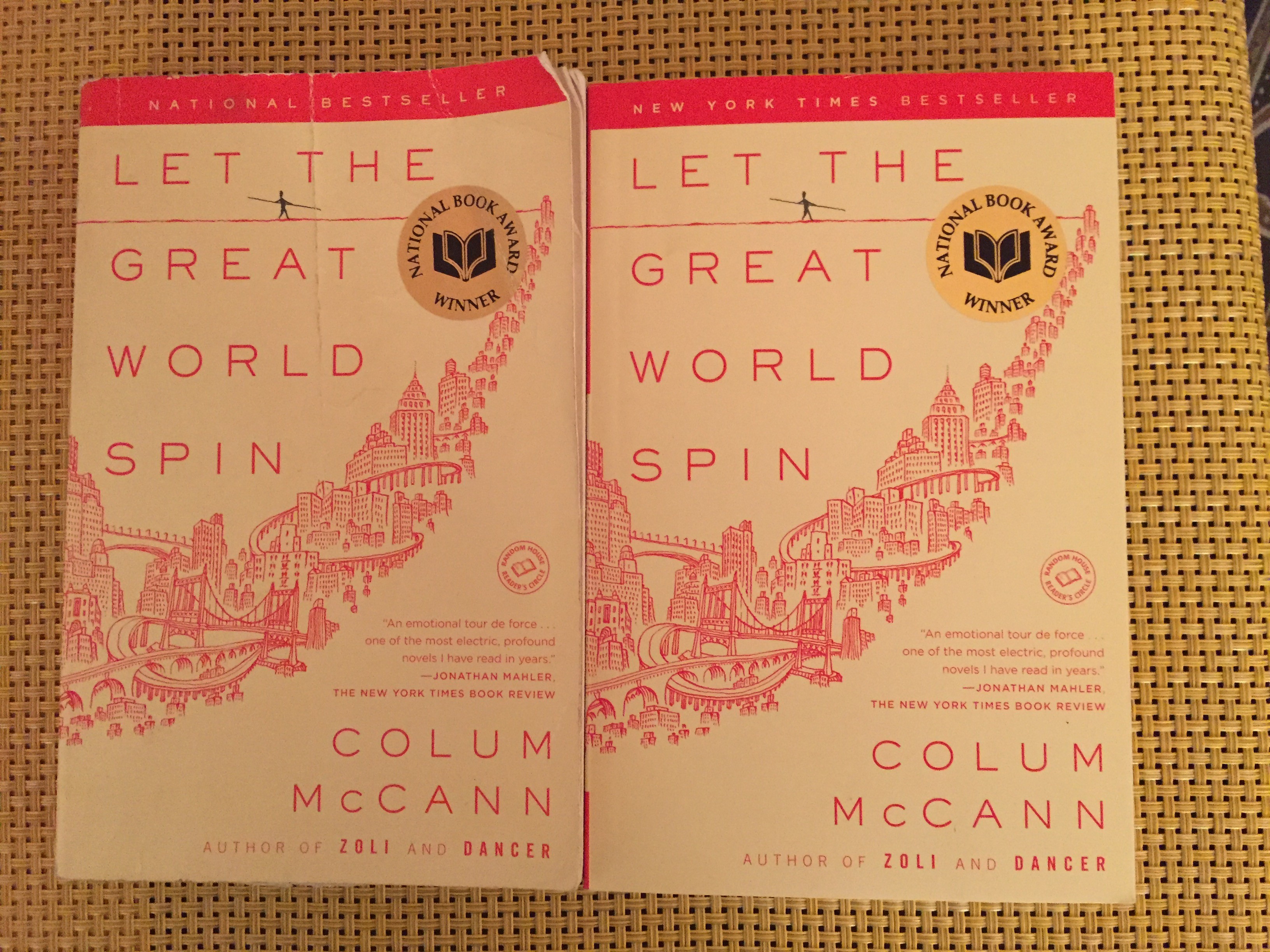
To the left, my reading-worn original. To the right, my pristine copy signed by the master himself.

This is such a strong issue, that it turns out both Sharon and I have some books that we own in two copies: the one we read, and the one we got signed at an event.  I’m not really that big on signed books, but obviously, you can’t get rid of a signed copy, especially if it was personalized. But how am I supposed to part with the object I was holding in my hands as I experienced a book that means something to me?  That would just be insane.  So I’ll just persist with multiple copies of Let the Great World Spin on my shelves forever.  

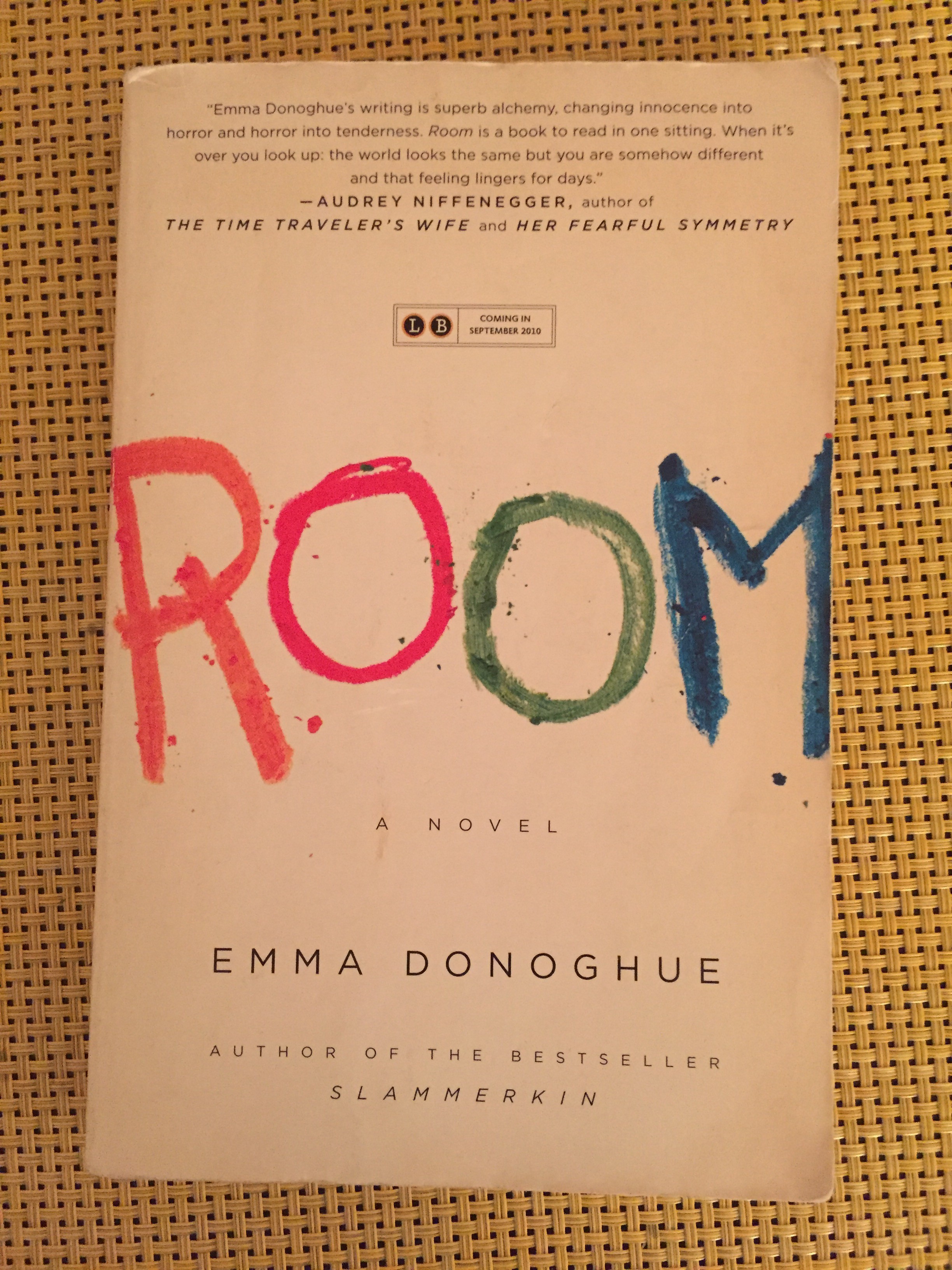
Emma Donoghue signed this, my most coveted BEA galley of all time, after it had been read by me and several friends of mine.

Emma Donoghue signed this, my most prized BEA galley of all time, after it had been read by me and several friends of mine.

Many of the books I own have lived on two continents, in two countries, in three towns/cities, in two boroughs of NYC, and in around ten apartments.  I paid about $100 extra just to get all my books on the plane when I moved home after grad school in Ireland.  And when I’m old and grey, they’ll still be there, physical reminders of the worlds I’ve had the good fortune to temporarily inhabit.

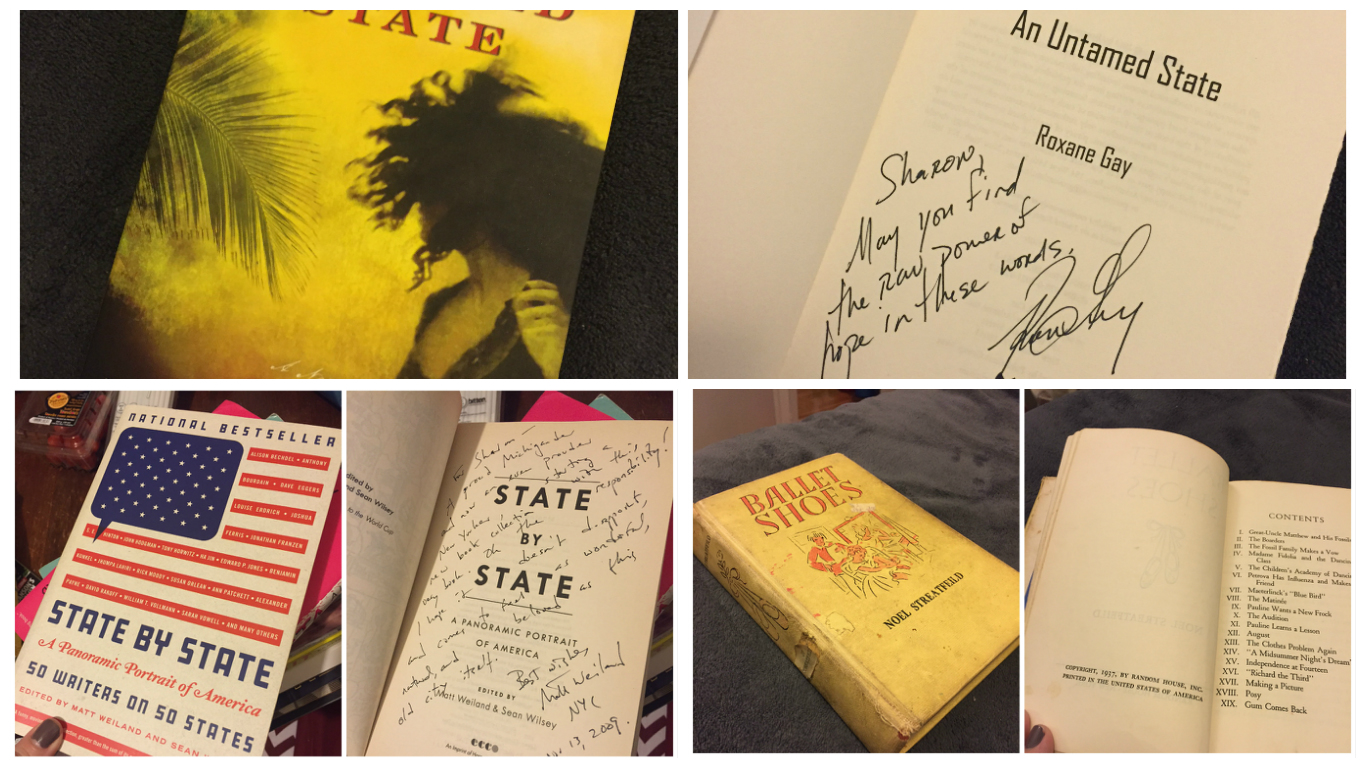
These are some of Sharon's special totems (though she also has the same double McCann "problem" that I do). I'm most envious of her signed copy of Roxane Gay's AN UNTAMED STATE, with that incredible inscription. Though Matt Weiland is no slouch at book signing himself.

These are some of Sharon’s special totems (plus she also has the same double McCann “problem” that I do). I’m most envious of her signed copy of Roxane Gay’s AN UNTAMED STATE, with that incredible inscription. Though Matt Weiland is no slouch at book signing himself.

3

Smells like a bestseller!

Like many in publishing, I was an English major…by default more than practicality, because I was pretty good at reading and writing, knew I wanted to spend my life obsessing over commas, and ran screaming from the room the first time a science teacher broached the possibility of dissecting a sheep’s eyeball (still one of the worst experiences of my life). To this day I don’t really understand the principle of gravity and find it highly suspicious.

My science aversion has not kept me from accumulating quite a few science-loving friends, though; in fact, my college roommate double-majored in chemistry and physics and is now a science professor in upstate New York. She’s always trying to trick me into sciencey things, like a poetry reading based on the periodic table of the elements, which actually turned out to be pretty fun. (Plus there was wine there – fermentation is one scientific process I am not averse to.)

So I was not surprised to find this post from her on my Facebook wall today: a scientific breakdown of the smell of books. You know what I’m talking about –  that big whiff of delicious mold when you step through the door of a used bookstore; the fresh perfume released when you crack the spine of a brand new hardcover. Old or new, the smell of books has been a favorite topic of nostalgians and those resistant to the lure of digital reading. But did you ever stop to wonder just what produces those beloved aromas?

This chemistry website did, and their in-depth report will no doubt enthrall those of you with room in your brains for science and literature.

Do you prefer the aroma of old books or new books? What burning literary question do you think science should turn to next?

1

Reading through Jonas

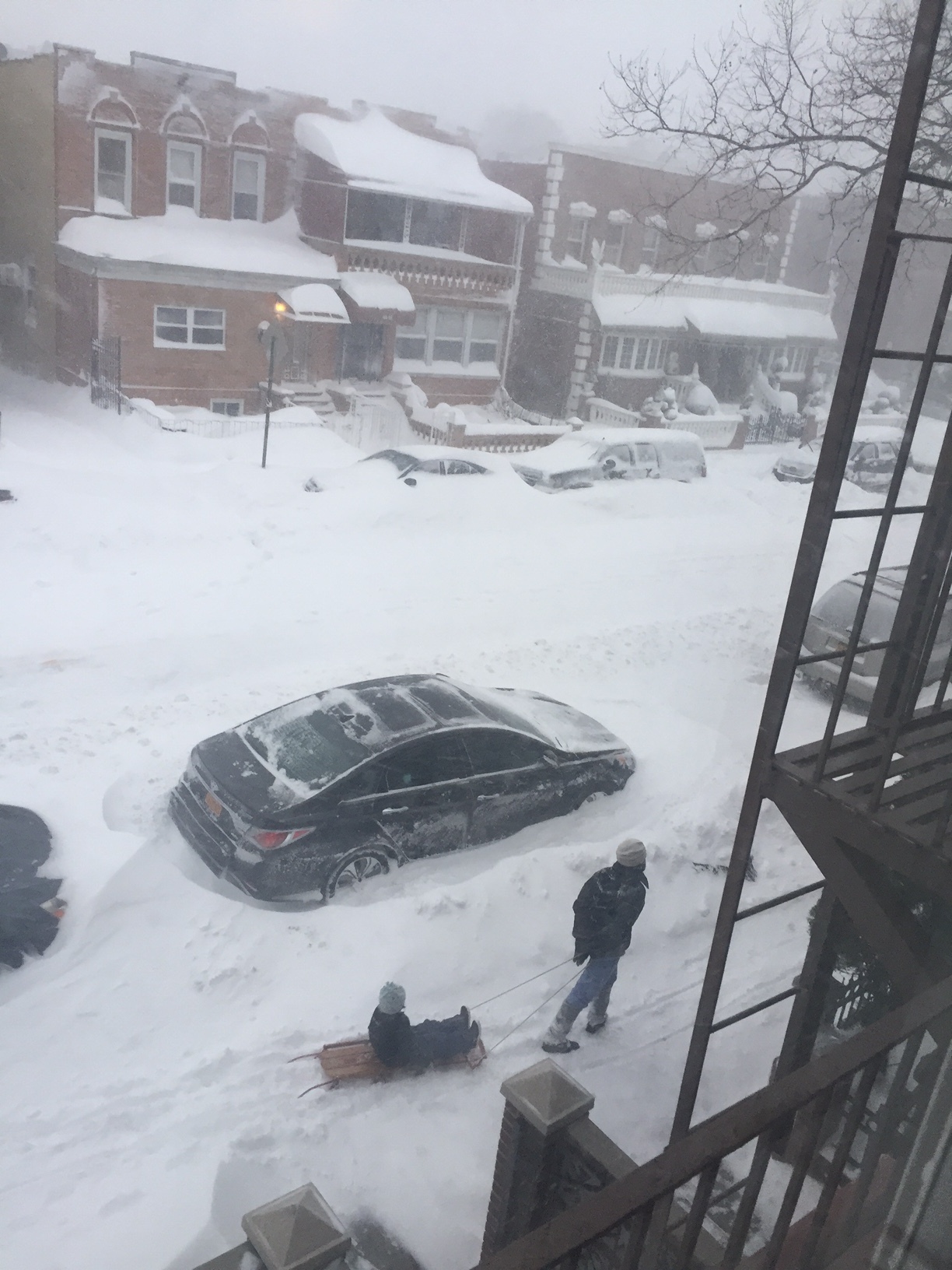
IMG_7527This weekend a winter storm poured snow all over the East Coast, bringing 27 inches to my neighborhood and as much as 30 elsewhere! Most in my circle on Twitter seemed to be rejoicing at the “snow day” (though is it really a snow day if it falls on a weekend??) to read, snack, and watch Netflix. Instagram was full of people’s cozy blanket piles, pots of soup, and cups of cocoa steaming next to a stack of books.

What interested me most, though, was the celebration of the “excuse” to stay home and catch up on reading. Being something of a homebody, I frequently spend one or both weekend days holed up to read no matter the weather, so Jonas was less of an excuse and more of an atmospheric backdrop. So I am curious about those bookworms for whom this was a deviation from their usual weekend routine. Do they simply have more dynamic social lives than I do? Do they make more brunch/theater/museum plans thus putting me to shame as a New Yorker and cultural citizen by comparison? I thrive on long hours in silence, alone, to counterbalance the busyness of the work week and the stimulation of the social engagements – I figured a lot of avid readers feel this way but perhaps my introversion is more rare than I thought.

What’s keeping us from making every Saturday a snow day?

0

I’ll tell you what I want, what I really really want

My clever colleagues Stacey and Jessica used this space to share their wish lists for the coming year and I’m going to avail myself of their example! Here are some of the categories I’m eager for right now:

Can’t put it down narrative non-fiction. Whether it’s a gripping personal narrative about key current events, or an exquisitely reported work of journalism, I want it! Send me your Five Days at Memorial or your Missoula, your Irritable Hearts or your A House In the Sky.

Tell me something I don’t know explanatory / exploratory non-fiction. Are you really good at something everyone is curious about right now? Do you have a new approach to save money or reset your memory, a new explanation of why we need love or what scares us most….and the platform to back it up? Rip it from the headlines and explain it to me. I’m not looking for gimmicks, but for accessible experts with fresh ways of looking at our world, the things we do, and what we care about most, like Caitlin Doughty’s Smoke Gets in Your Eyes, Scott Stossel’s My Age of Anxiety and Kate Bolick’s Spinster.

OMG! book club fiction. I will never not be hungry for character-driven page turners and well-written plots that keep you guessing. Got a closed community, like a boarding school or fishing village? Bring it on. Is a lifelong group of friends falling apart? Is a family struggling to keep a secret from the outside world…or from each other? YES PLEASE. Bring me your Big Little Lies, your Secret Histories, your Tana Frenches and Beatriz Williamses yearning to breathe free.

This is by no means a comprehensive list of the types of writing I am interested in, so don’t be discouraged if the thing you’re working on doesn’t fall meet these descriptions. If you’ve done your research and think I’m right for it, send it to me – sometimes the favorite projects of all are ones we never would’ve thought to wish for…

And those of you who do fall into these categories…I can’t wait to read your work!

0

Tis the Season


What a very charming story Parnassus Bookstore in Nashville shared on their blog this week: A bibliophile in Arizona turned to Parnassus to make long-distance recommendations when his local independent bookstore closed. It’s become a tradition that the booksellers look forward to, and no doubt his family as well!

Of course I always have a lot of books on my holiday shopping list every year, from cookbooks to biographies to novels. And this year I’ve started a new little holiday book tradition. When I was little, I remember getting very excited when my mom started hauling all the Christmas decorations out every year, because the Christmas storybooks were stored with our lights and ornaments – in particular I remember one that was actually in the shape of a snowman that enthralled me year after year. Now that I have a little baby nephew, I want to make sure he builds a collection of holiday stories to look forward to each December! So a couple weeks ago I sent him a package of holiday board books, and was delighted to receive pictures of him happily gnawing on them – no luck finding a snowman-shaped board book yet, but I have a whole year to work on it.

What are your favorite bookish holiday traditions? What are some must-haves for little ones’ holiday book collections? 


2

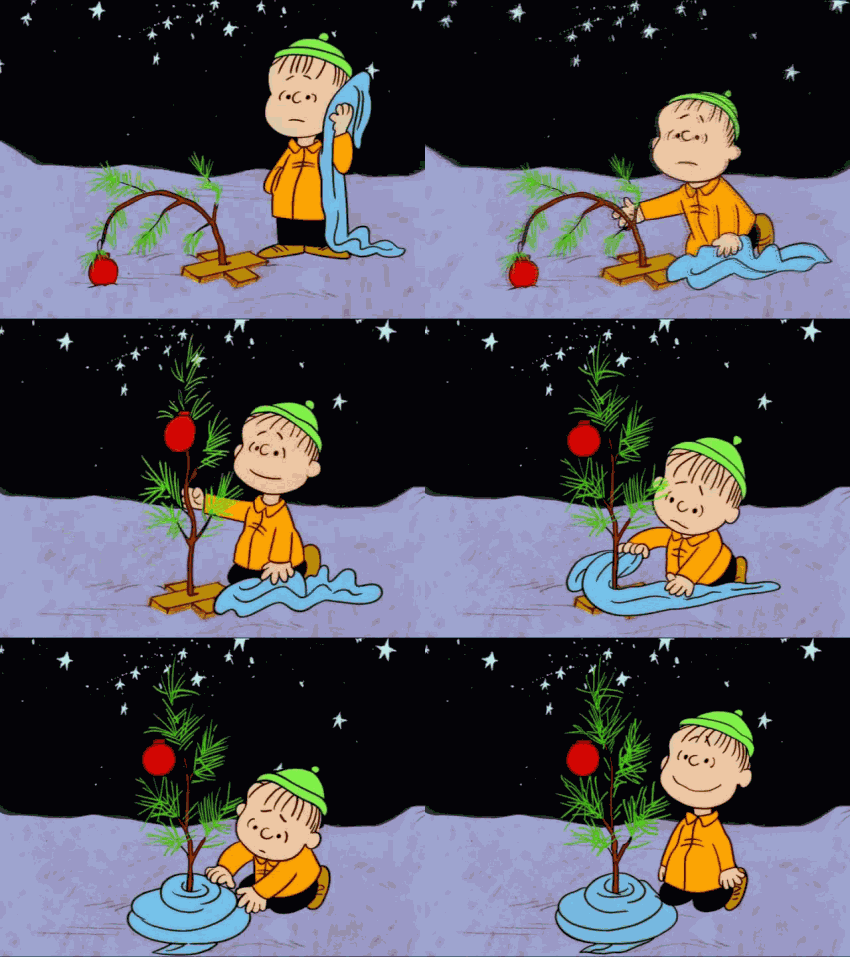
You’re A Good Writer, Charlie Brown

A Charlie Brown Christmas celebrates its 50th anniversary this year, and last night ABC ran it with a feature on the history of the special’s creation. Did you know that Coca-Cola contacted Charles Schulz’s team to express interest in sponsoring a Peanuts holiday special, and he and his animators put the basic story together for a pitch in just a couple of days?

Funny that such an beloved holiday movie, one that we all grew up with, takes as its theme (if softened by animation) very adult struggles with self-doubt and seasonal blues. Don’t we all have an internal Charlie Brown…I guess you were right, Linus. I shouldn’t have picked this little tree. Everything I do turns into a disaster. I guess I really don’t know what Christmas is all about...especially when we’re writing or trying to do something creative. Everything can turn into a competition – write the best manuscript, make the most important lists, get the shiniest awards – and meanwhile we’re full of self-doubt.


tumblr_luwdfgw3DS1qb9pa3o1_500.gif (500×367)

Oh brother…

Here’s an idea! Try to laugh off the Lucys in your life, the people barking orders, pointing out your flaws, or trying to hold you accountable to arbitrary standards that aren’t what really matters to you.

Lucy: What has Beethoven got to do with Christmas? Everyone talks about how “great” Beethoven was. Beethoven wasn’t so great.

Schroeder: What do you mean Beethoven wasn’t so great?

Lucy: He never got his picture on bubblegum cards, did he? Have you ever seen his picture on a bubblegum card? Hmmm? How can you say someone is great who’s never had his picture on bubblegum cards?

Don’t worry about getting your picture on a bubble gum card! Or finding the perfect pink aluminum tree, or writing a world-changing story in a couple of days. Surround yourself with friends like Linus who will believe in your talent, give you valuable feedback, and encourage you to do work you believe in.

giphy.gif (425×319)


I never thought it was such a bad little tree. It’s not bad at all, really.

Maybe it just needs a little love.


2

Grand Gestures

Recently Stacey shared on our blog about hosting a book club at her home…and I am an avid book clubber myself! So I was interested to read this article in PW about an author who set a personal goal of visiting 100 book clubs. And she is well on her way! Thanks to Skype, Nomi Eve was able to visit book clubs all over the country, sometimes several in one day!

My book club has never had an author visit like this, though we have a few times gone to author events for a book that we read. It’s always a lot of fun to chat with an author about their work, and I imagine even more of a thriller for readers who do not have the pleasure of working in publishing and meeting authors all the time! On the other hand, my book club has often had lively discussions when a couple of us strongly disliked a book – and that certainly can’t happen if the author is present (unless you’re a fan of awkward moments…).

But the really fascinating thing that Nomi Eve experienced was the snowball effect:

What happened was that for every book club I visited, I got invited to another. A book club member’s sister, or cousin, or neighbor, or sister-in-law heard about my book club visits and invited me to their book club. So when I had 20, I really had 40; when I had 40, I really had 80, and so on and so on.

That’s some powerful word-of-mouth when you consider that a book club visit likely means 8-10 books purchased. So 20 visits turning into 40 visits is like 200 books sold turning into 400 books sold!

If you’re in a book club, what do you think about author visits? Ever had one? Authors, would you enjoy meeting with book clubs or would you find it nerve-wracking?


9

“You Gotta Read this Book.”

Publishers (and thus agents) often talk about word-of-mouth. The elusive factor that can make or break a book, especially in fiction. You readers know exactly what I’m talking about! “Oh, oh, you gotta read this book” or “OK…That book is SO good,” often accompanied by wide eyes, clutching your heart, and/or waving hands (personally I usually do a weird STOP motion with my hands, like some kind of frantic reading crossing guard).


The contagious excitement often leads to borrows, sales, and more – you read it, you love it, and you enact the same dance with someone else. On and on! This is why publicists often spend a lot of time, energy, and postage on getting upcoming titles in the hands of “influencers” – in addition to important reviewers and bloggers, people who are loudmouths about books in their communities, whether it’s on Twitter, in book clubs, or at the dog park.

But the real question is…just what what makes a book you gotta read? Is it something identifiable in plot, characters, setting? Is it just a lucky perfect storm of everyday readers, and bestseller headlines?

Buzzfeed asked their audience recently what books they can’t stop talking about, and the wide variety of answers seem to suggest a third option: it’s simply different for every reader. On this list you’ll find classics, contemporary award winners, scifi, YA (all genres), mysteries and histories. There’s books I loved on this list, and books I’ve hated! So I spent some time thinking about the qualities common to books I tend to force people to read: things like a big twist that I didn’t see coming will get me yelling about a book; a memoir that makes me laugh and cry; or a true story that leads me into a subject I never realized existed. Whatever the factor, it’s definitely something I’m thinking about when reading submissions – am I excited enough about this book that I am dying to recommend it to people…starting with editors?

What makes for a book you can’t stop talking about? Any of your favorite recommends make this list?