June 03, 2015
  sharon
Last night I attended the Shakespeare in the Park production of The Tempest – well, part of it at least.
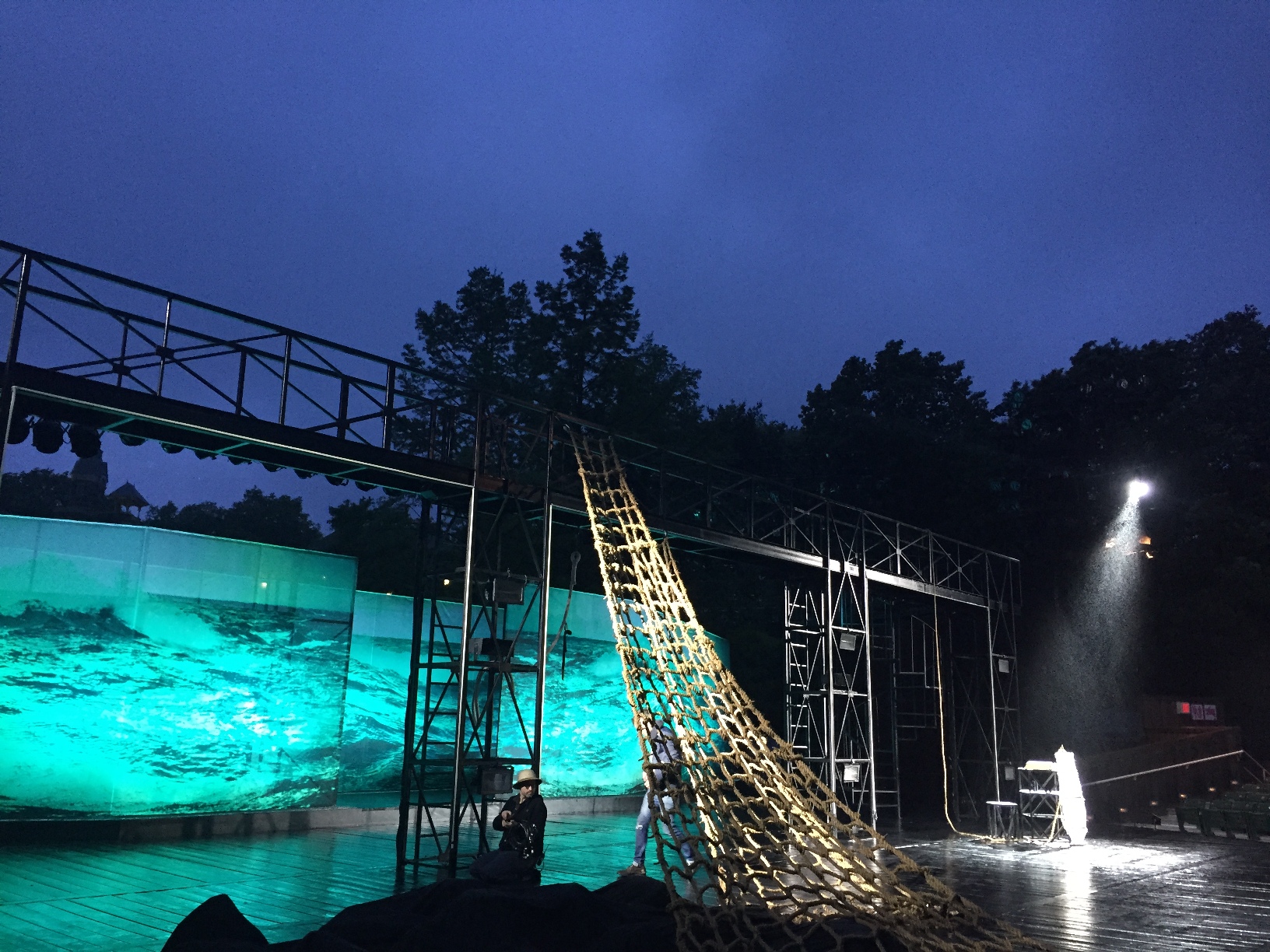
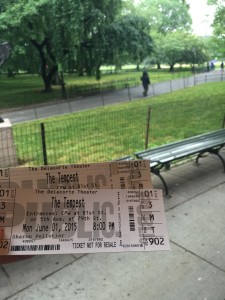
In case you aren’t familiar with Shakespeare in the Park, it’s one of the most amazing things about New York City. Every summer since 1954, The Public Theater presents two productions of Shakespeare in an open-air theater in the middle of Central Park, with tickets free by lottery or by waiting in line. I was lucky enough to get a pair of tickets in yesterday’s lottery – I’m guessing the entry pool was slim thanks to all-day rain and temps in the 50s. But I was not scared off! In fact, I thought it would be a lot of fun to see The Tempest in the midst of an actual tempest, and I was not wrong. Thanks to a hasty purchase of trusty emergency ponchos and a cozy blanket, my friend and I were ready to brave the elements and hoped the actors were as well.
And they were! For at least the first act. And what a first act it was! The play opens with a fearsome shipwreck scene, and the scenery and special effects would no doubt have been impressive in any conditions; experiencing it with nature contributing her own genuine rain and blustery winds made Shakespeare’s gorgeous lines, and the fine work of the hardy actors, truly exceptional. It was a show to remember even though they decided to close the performance after the first act. (I was soaked and shivering, though intellectually elated, so it wasn’t a complete disappointment.)
And it got me thinking about the way the weather influences fiction, for readers and maybe for writers as well! This weekend I was reading Neal Stephenson’s excellent Seveneves and thunder boomed outside just as I read an account of the moon exploding into pieces – quite a startling moment! On the other hand, fiction can be escapism – read a beachy book on a frigid winter day, or vice versa, to forget the miserable weather report.
I wonder if the same goes for writers as they create the fiction we love to read. Do they have to work a little harder on a blizzard scene if they’re writing on a gorgeous spring day? Or can the creative imagination do its thing regardless of what’s going on outside the window?
What do you think? Do you match your book to the weather, or the opposite? Do you find the weather creeping onto the page when you write?