September 16, 2016
  Jessica

Mari Andrew’s Iceberg of Creative Success
I came across this infographic from the talented Mari Andrew on social media, and although her iceberg is not explicitly aimed at authors, it works pretty well for our purposes. Most overnight successes were (quiet, lonely, arguably desperate) years in the making, and while there are a few, charmed, fairy- godmother-type-tales out there— wunderkind author commands astronomical advance and widely praised debut novel becomes instant NYT bestseller—these shimmering breaths of fairy dust are the exceptions that prove a much less sparkly rule.
Tonight was back to school night at my son’s elementary school, so I’ve got education on the brain, but it’s worth thinking of a book contract as an acceptance letter to the college of (ideally) your dreams. Which is to say, it’s a starting point, but what happens next has a great deal to do with you. As education is far from passive, so too is publishing. And a great house and even a healthy advance do not mean that you graduate with a bestseller.
Houses large and small market and promote books along broadly predictable lines. These include creating and sending out press releases, mailing out galleys/arcs to bookselling accounts and long-lead media outlets, followed by a finished copy mailing to more of the same, bloggers, big-mouth influencers, and anyone you might have listed on the jaw-droppingly voluminous author questionnaire you struggled to complete some months earlier. Publicists will pitch and follow up with a tailored list of editors, producers and gatekeepers, the house may buy ad space, an online marketing department can help generate (or more likely amplify) buzz on social media, but unless the book starts selling like mad, this all-hands-on-deck campaign is in full swing for a finite period, typically about three months.
And while it’s true that in-house publicists have carefully cultivated connections that few among us may possess, they are no stranger to rejection or wholesale lack of response. There are, after all, many publicists, many more books, and a limited number of career-altering media outlets, or outlets, period. Frustratingly, book publicity is a field in which there can be little relationship between effort and result. In-house publicists also divide their time between several projects of varying importance to the house, and they report not to author or agent, but to the publisher. So writers are well-advised to enter into even the most dazzling book contracts with their own clear-eyed plans for promotion, ideally something more concrete than here is my book—do your magic! A publisher’s bag of tricks can be effective, but it’s limited. While publishers generally do their level best to help their books succeed (it is, after all, in their interest as well as yours) they rarely engineer do-overs when their efforts fall short. They want your book to be a break-out success, but you want it more.
At some point, the task of promoting the book will belong mostly to its creator, and as much as I sympathize with complaints over the indignities and puzzlements of self-promotion, it makes sense that writers invest some fraction of the effort they spent writing their book in working to connect it with the audience that very likely exists, if only they could find it. Plugging away at promotion does not sound, or feel, especially glamorous, but as the infographic shows, long marches (don’t forget sad emails to mom) are a necessary precondition to spontaneous success. My advice: see how authors whom you admire promote, create a strategy, and then choose a method that you don’t loathe. Something you can do tolerably well, tolerably often.
In a follow-up post I’ll address specific ideas I’ve picked up–some from freelance publicists, others from savvy, dogged authors (please feel free to share your own ideas) and I’ll talk about why your connections, energy and commitment matter.
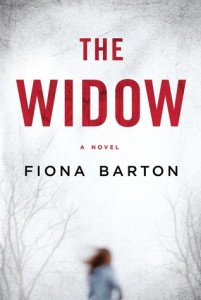 There are times, lots of them I think, when a publisher decides to totally get behind a book in order to make it a bestseller. That happened with a novel, a thriller, published by NAL last February entitled THE WIDOW. Everyone at the publishing house was asked to read the book and start a real buzz about it (when I asked an editor colleague there for a suggestion on what to take with me on my February vacation, she readily recommended this book).
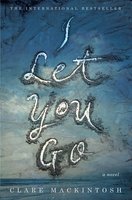 I finished I LET YOU GO last week and it is one of the best books I have read in a very long time. It delivers on all fronts—solid writing, great story telling and characters the reader really roots for. Again I surveyed my company colleagues who had read the book to see what they thought. Everyone agreed that this book really delivered.