Category Archives: millennials

2

Reaching A Younger Generation of Readers

This past spring, a few English majors from my college (including me) got the opportunity to have lunch with M. NourbeSe Philip, a Canadian poet and writer of all genres, and she asked the small group around her, “Do children still read books?” By books, she meant hard copy books, not digital versions. As some diehard English majors are wont to do, the table exploded in reassurances that yes, hard copy books were still very much present and who reads off Kindles/Nooks/iPads anyway? From there, we embarked on a cultural and social discussion about the importance of children holding a book in their hands, why hard copy books will probably always exist., etc.

Four months later, I started babysitting for a charming family who moved to NYC from Hong Kong with two gems of boys. (I’ve honestly never seen better behaved children in my life and they do homework when asked to without much griping. A dream!) My main reason for being there—other than giving their mom a break—is to get them to try and read more. Their mom mentioned with a wry grin that they prefer using the iPad or computer to picking up a book, and do you think you could install a love of reading in them, please?
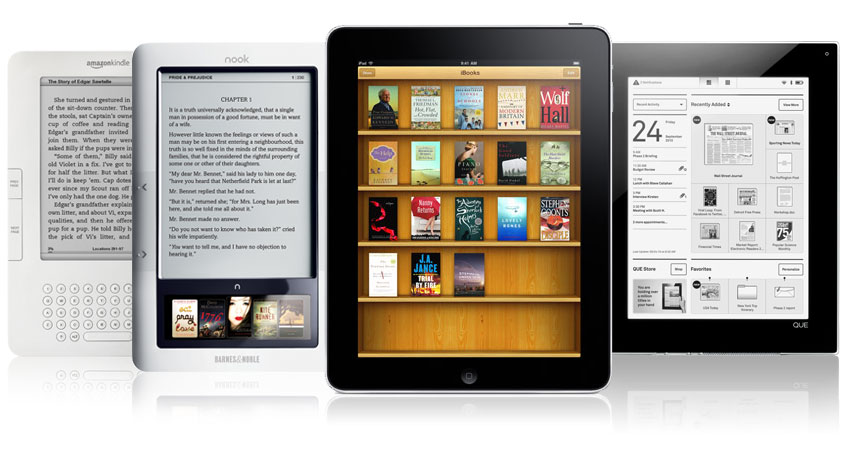
ipad-ereaders

As a kid who didn’t have access to digital reading, I’m a hard copy book reader myself. But I’ve found myself reading manuscripts on my iPad because those are digital and it’s a matter of convenience. The majority of people I know who are big readers have some kind of digital reading device. And last summer, I had a conversation with an agent at another literary agency about audiobooks and how to reach a wider, more digitally driven audience. “Certain demographics,” he said, “aren’t going to pick up a book. They’re going to be plugged in. How do we reach them?”

I think I’m going to bring my small charges to the Strand and turn them loose. I’m hoping that being surrounded by books will get them excited to choose a book to bring home. (So yeah, it’s a little bit of bribery, but you know. Babysitting is half bribery, to be honest.) Fingers crossed that somehow in my time with them, they start being enchanted by books they can hold and smell and turn pages in.

So that being said: any suggestions for books for active boys around ages 5 and 7 who love soccer, Legos, and have lived in two countries already?

Any predictions on how kids will be reading in ten, fifteen, twenty years?

2

Youth is wasted on the young. Or is it?

Every “semester” we have an office lunch for the purpose of getting to know our current batch of interns and to answer any questions they might have about the, undoubtedly, bizarre goings-on in publishing (and in our office).  Yesterday, over a Middle Eastern spread (the baba ganoush was delicious!) we asked everyone to tell us what they read for pleasure.  Overwhelmingly, the response was YA.  And, for some reason, that surprised me and even made me a little wistful for the days when youngsters couldn’t wait to get their grubby little hands on “adult” literature.

I still remember when, in seventh grade, a beat up copy of The Other Side of Midnight (which was already a decade old at the time, in case you were wondering about the timeline) was surreptitiously passed around at my school.  The book, of course, opened naturally to the “sexy” parts and we would have all been mortified if our parents had caught us reading it.  By the time I was a young adult, myself, my peeps and I were interested in SERIOUS fiction that dealt with IMPORTANT subjects, and if you wanted some sex and scandal, you turned to grown-up bestsellers like Marguerite Duras’ The Lover  or Josephine Hart’s Damage.  You know, stories about older people behaving badly….

The thing is that, traditionally,  YA was considered “aspirational”—kids younger than those depicted in the books were the primary market for it. Now, I know that YA literature has exploded as a genre and that, in many ways, it’s tackling tough subjects in ways  sometimes more inventive and provocative than we’ve seen in what is considered adult fiction.  That said, is it narcissism, solipsism or fear of growing up that accounts for young adults actually preferring YA books in general?  In recent years, with blockbusters like  the Harry Potter  and Twilight series playing havoc with readership demographics (as evidenced by 40-something moms reading YA and NA alongside their tweens and teenagers), it seems that the category now even appeals to its own namesakes.   Crazy, huh?

How do you account for this shift?  Are there broader cultural implications that I’m missing here or is this trend just a function of how sophisticated the category has become?


1

Talking ‘Bout My Generation (?)

Last Sunday’s New York Times Book Review ran a review of Lena Dunham’s new memoir, NOT THAT KIND OF GIRL, under the headline  “A Voice of a Generation.”  I’m not a millennial and I’ve only seen one episode of GIRLS, so I can’t judge the validity of this claim, though I’ll note that it’s nice that this VoaG is female.  When I think about the novelists and writers variously hailed as the voices of my generation– Douglas Coupland, Brett Easton Ellis, David Foster Wallace, Rick Moody, Dave Eggers, Michael Chabon, Jonathan Franzen, Jonathan Lethem, Jonathan Safran Foer, they are overwhelmingly male. And white. And named Jonathan. (Clearly VIDA has a point). In any event, I arrived in New York a decade or so too late to indulge in the cocaine-fueled excess that Jay McInerney (another VoaG) chronicled in BRIGHT LIGHTS, BIG CITY and at the moment when grunge-rocking, flannel-sporting, ‘zine-publishing youth culture was in full flower on the opposite coast, so I’ve always maintained a bemused interest in the writers and artists who are designated speakers for their peers.

So who would you nominate? I’d say Lorrie Moore for Self-Help (though I see she’s not actually a GenX-er), Claire Messud for The Emperor’s Children, even Melissa Banks for her wildly successful Girls Guide to Hunting and Fishing, a book that made the linked short story collection almost as commercially viable as the novel.  Joanna Rakoff’s novels capture in retrospect the nineties I knew, but she didn’t write about the zeitgeist as it was happening.

What writers capture–for you–the preoccupations, anxieties and animating spirit of your generation?