Category Archives: reading

10

Getting lost in a book

My preferred activity as a kid was sitting somewhere (I always hoped for inside and air-conditioned during the summer) with my library bag stuffed with ten to fifteen new library books, and reading the day away. I would zip from one universe to another, skip centuries back in time, advance a few thousand light years in the future, face down a dragon or learn new magic words, be embroiled in the Civil War or Elizabethan England…the possibilities were endless. Changing worlds was as effortless as changing from wakefulness to dreams.

Given this, it’s unsurprising that this article from The New York Times piqued my interest. Two writers (Francine Prose and Benjamin Moser) ask whether or not it’s harder for readers to be transported by a book as they get older. Prose argues that children’s bigger imaginations and willingness to suspend disbelief allow them to become more wholly immersed in a book. Adults are more likely to analyze, cross-reference, and compare people and events in a book to things they’ve experienced. Moser says he discovered that he wanted to read the same books again and again, since, “the deeper you go into your own writing, the harder it becomes to enter someone else’s.”

Now of course, neither Prose or Moser’s points are true for everyone. Prose admits that some books still have the ability to totally immerse her in their reading experience and plenty of writers find new inspiration and motivation from reading other people’s work. Reflecting on my own reading trends, I realize that maybe I’m choosing a different kind of immersion as I’ve gotten older. I used to devour everything fantasy & sci-fi as a kid—I loved escaping to other (more exciting) worlds that had the possibility of magic glimmering at every turn. Now, I’m more interested in commercial fiction, “women’s” fiction, and more contemporary fiction, perhaps as a reflection of my own life. I’m turning to these genres for answers, other experiences and perspectives, and identification in my own life. It’s a different kind of immersion. (And I still love sitting down on a weekend and turning my attention to the stack of two or three library books I’ve checked out.)

What do you think? Can you mark a noticeable difference in your reading experience as a child and an adult? Do you think writing helps or hurts your reading?
4

Dream Job

A few days ago, I signed a new client—a scientist and researcher who studies dreams, who is writing a smart, heady novel that draws upon the neuroscience of dreaming and pushes it just beyond the threshold of the possible. Think David Mitchell, the film Inception, with a dash of DaVinci Code.  The novel is built like a mystery and set against a dreamscape backdrop that beggars Freud.  The author interleaves both the science and the mythology of dreaming in a tale that is inventive, original and utterly spellbinding.    All this is by way of introduction to the idea that I love my job.   It’s like grad school, but this time without papers, politics or adjunct teaching. Agenting offers exposure to big ideas and the folks who think them, and the opportunity to keep learning pretty much all of the time across a dizzying range of subjects.

Since part of my job is to act as a stand in for a curious, bright-but-not expert reader, I get to ask innumerable questions, request clarifications, and read like mad–sometimes even an actual, published, bound-in-paper book. Other parts of my job are just as satisfying, but in different ways—matchmaking, negotiating, advocating, advising… and the gerunds continue.  Of course, there are plenty of downsides to this business, too; rejection is a constant, there are disappointing sales, difficult people and the always fragile ecosystem of publishers, but I’ll save the grim bits  for another post. On balance, I love the work I do.

And what does that work look like on a day to day basis? My lived version is not especially glamorous.  I was a rank disappointment to a client visiting New York for the first time, who imagined me kitted out in Louboutins and Armani, climbing in red-soled stilettos over the bodies of tourists.  Happily, she forgave me for my lack of resemblance to Anna Wintour or even Annie Hall.  As I’m writing this on Thursday, I’m dashing in sensible flats between meetings with editors from three different imprints, all in midtown. This evening I have two author events, novelist Beth Hahn, author of THE SINGING BONE, doing a reading at the terrific Spine Out series and Mychal Denzel Smith, author of INVISIBLE MAN, GOT THE WHOLE WORLD WATCHING in conversation with Melissa Harris Perry at B&N. Assuming the subways and my legs are functioning, I’ll attend both; the first on the lower east side, the second on the upper west.

Wednesday was a staff meeting in which all the agents in our office go over the projects presently on or near submission.  With more than a dozen agents in attendance, it’s lengthy but informative. This is always followed by an ideas meeting where we pitch potential book concepts. In the interstices, I edited a proposal, responded to countless e-mails, set up author meetings/phone calls for a project on submission, and conducted gently harassing follow-ups on behalf of other projects out in the world. Earlier in the week I learned a great deal about ground scanning radar technology on a conference call with an archeologist client, conferred with a film co-agent shopping the adaptation of a forthcoming work of narrative history, had a long editorial conversation with client/co-authors about a novel in progress,  and requested several projects from queries.  I also tried to glance at social media, the newspaper and the weather.  I managed two thirds of these, hence was umbrella-less on Wednesday when the skies opened up.

The downpour was actually useful. Trapped until the rain slackened with a rapidly draining iPhone battery and no computer, I did something I rarely do in the space of a work day;  I cracked open a book and read—which to me, is living the dream.

7

Baby Library Must -Haves

This weekend I attended my cousin’s baby shower and while every other person brought adorable gifts and essentials for the new mom-to-be, I came bearing books. Why? Well, why not? But really, it’s mostly because I have taken it upon myself to help build my little cousin’s first library.

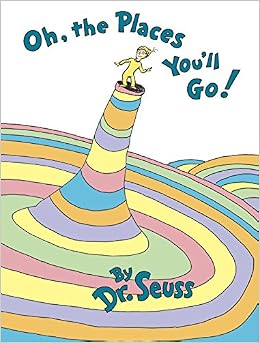
Seeing as I don’t have any knowledge of what goes in a baby’s library past my personal favorites, OH, THE PLACES YOU’LL GO and HORTON HEARS A WHO by Dr. Seuss, I thought I’d enlist your help in completing this little project of mine. 

So what are the must -have books that should be included in every child’s first library? To start off, I took a poll around the office and this is what everyone had to say:

Jane suggested BROWN BEAR, BROWN BEAR, WHAT DO YOU SEE?­­­ by Bill Martin and Eric Carle, and Jessica seconded that and added GOODNIGHT GORILLA by Peggy Rathmann.

Miriam and Michael both went with Dr. Seuss and Miriam suggested a couple more titles: THE VERY HUNGRY CATERPILLAR by Eric Carle and GUESS HOW MUCH I LOVE YOU by Sam McBratney.

Stacey’s daughters have loved TAP THE MAGIC TREE and TOUCH THE BRIGHTEST STAR by our very own Christie Matheson.

Jim’s go-to baby gift is Lane Smith’s IT’S A BOOK and IT’S A LITTLE BOOK.

Lauren suggested the hilarious classic ALEXANDER AND THE TERRIBLE, HORRIBLE, NO GOOD, VERY BAD DAY, and Lisa Brown’s amazing mommy gifts BABY MIX ME A DRINK, BABY MAKE ME BREAKFAST, BABY DO MY BAKING, and other entertaining titles in the Baby Be of Use series. 

As well as the classics- Sendak, Carle, McCloskey, Rosemary Wells, etc., John also enjoys ALL THE WORLD by Liz Scanlon, which is enjoyable for both parent and child. He also made a good suggestion about getting board books, so babies can play and chew on them!

 Eric added MADELINE by Ludwig Bemelmans to the list, and Mike  and Sharon love THE LITTLE ENGINE THAT COULD, GO DOG GO, and the Llama, Llama series.
Amy went with GOODNIGHT MOON by Margaret Wise Brown and Erin suggested the amazing classic, WHERE THE WILD THINGS ARE by Maurice Sendak.

Thanks to my wonderful DGLMians , I am off to pretty good start!  Are there any other titles you would like to add?

12

Meh…

So, our next office book club book is a bestselling first novel that a publisher paid a lot of money for and that has gotten the kind of publicity most authors can only dream about (and wake up weeping once reality sets in).  I’m not going to mention what it is because (a) we haven’t discussed it yet, and (b) I don’t want to prejudice you if you’re currently reading or about to read it  (I know, I know, that’s never stopped me before, but I’m trying to turn over a new leaf).

Anyway, the issue I have with this book is that it’s…fine.  It’s okay.  It’s readable.  It’s pleasant.  It’s 20 pages of interesting and I can stop and not pick it up again for days.   What it isn’t is unforgettable and unputdownable.  There’s nothing objectionable about this novel—the writing is nice, descriptive, clean, the characters are fleshed out, believable, the premise is a good one….Zzzzzz.  I just don’t find myself thinking about any of it five minutes after I’ve put it down.  And, honestly, I routinely forget to pick it back up.

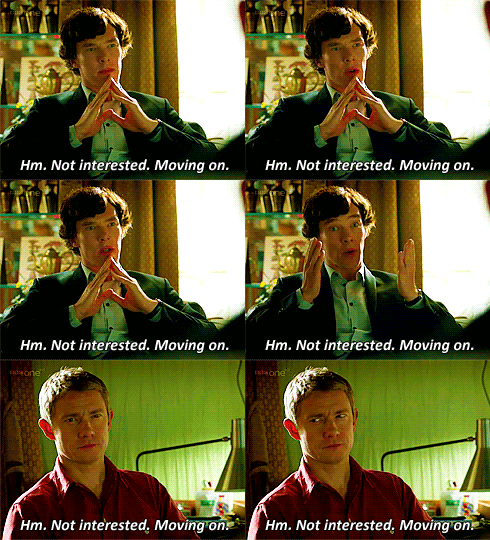
When this kind of thing happens with a book as massively hyped as this one, I always wonder what’s wrong with me as a reader and then, because I’m judgy and have the power of my convictions, what’s wrong with all the other readers.  And therein lies the biggest issue we have as agents—we’re first and foremost readers.  And, as anyone who considers him/herself a reader knows, you can objectively see the good in a published work, but you can’t make yourself love it or even care about it if you just don’t.Sherlock

Which accounts for how a DGLM agent (whose identity I will not reveal so as not to expose him to public shaming—we’ve all already shamed him in-house) passed on a first novel that went on to sell for a cool half million dollars with movie rights following for seven figures.  Turns out, he didn’t think it was all that.  And we’ve all been there.

All of this is by way of saying, yet again, that when you get a rejection letter from an agent or publisher with the cliched “I didn’t fall in love,” trust that they’re actually telling you the truth.  You should not take that as a sign that you must give up your dreams of literary success.  It just means that you need to find that one person who does fall in love or at least in enough like to get you a big honking advance and a Netflix series deal.

What are you reading and feeling “meh” about?

5

When to put down a book

Some people have to finish every book they start reading. I am not one of those people. There are so many amazing books out there that I want to read that it feels wrong, even irresponsible, to spend time finishing a book that has completely lost my interest.

For instance, if a novel’s written in the first person and I can’t relate to that character, then I’m going to stop reading. If a plot is dragging or meanders without a clear end in sight, I’ll usually put the book down unless I’ve become emotionally invested in the characters. Stories and characters that feel familiar are also begging to be dropped and forgotten. Very rarely will I put a book down because of the writing or an unlikable character. I can power through subpar writing if the story is that good—the kind of good that keeps you up at night and practically forces you to turn the page to find out what happens next. Plus if it’s published, then the writing can’t be that bad…right? And I love unlikeable characters, especially a flawed protagonist, which seems to be a hallmark of good fiction.

A book needs to force me to put it down. It’s not easy, but it happens and I’ve learned to recognize when it’s time to move on. What do our readers think? Do you ever stop reading a book? What makes you stop? And if you’re also a writer, are you aware of the possibility that someone might start and stop reading your work? What impact does this have on your writing?

2

Travel Reads

Perhaps something about longer days and more sunshine—although you wouldn’t know it this week—gave me the travel bug, and I was shocked to glance at my calendar and see that I’m traveling almost every weekend in April. This means a lot of long bus/train/plane rides ahead and I’ve been stocking up on public transportation reads.

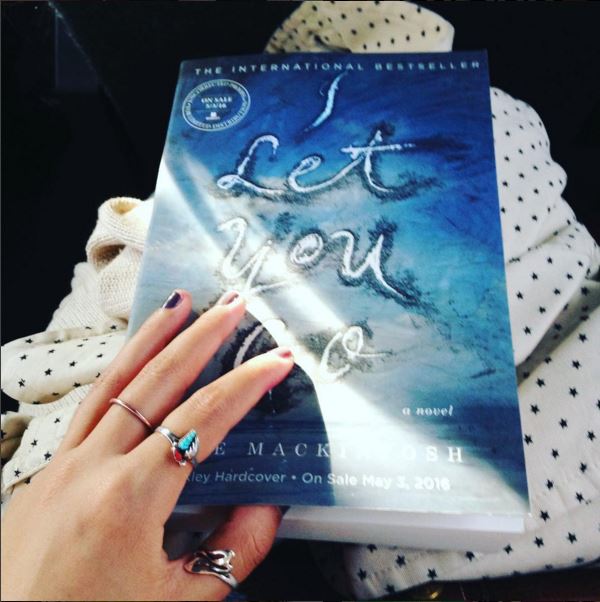
Last weekend, I was in beautiful Washington D.C., with the trees all abloom and an abundance of flowers (although sadly, I just missed cherry blossom peak). For that ride, I brought along two reads: I LET YOU GO, a stunning thriller by debut novelist Clare Mackintosh and one from our own client list, IMAGINARY GIRLS by Nova Ren Suma (repped by Michael Bourret). Both were fast bus reads, although I’m not sure I recommend reading I LET YOU GO right before you step off the bus in a city you don’t know very well.

Capture

I find that I gravitate towards YA or books that move quickly (like thrillers) for long rides. I tend to get bored/sleepy or distracted easily (people-watching! eavesdropping! all those phone games you can mindlessly play!) when I’m stuck on a bus or a train for 6+ hours.

Me on the bus.

Seeing as I have three more weeks of travel ahead of me, what do others find are good books to read on a trip? What makes a good bus/train/plane book in your opinion?

2

The Gerard Butler Guide to Agenting

The best thing about being a literary agent is that there’s always so much to read.

The worst thing about being a literary agent is that there’s always so much to read!

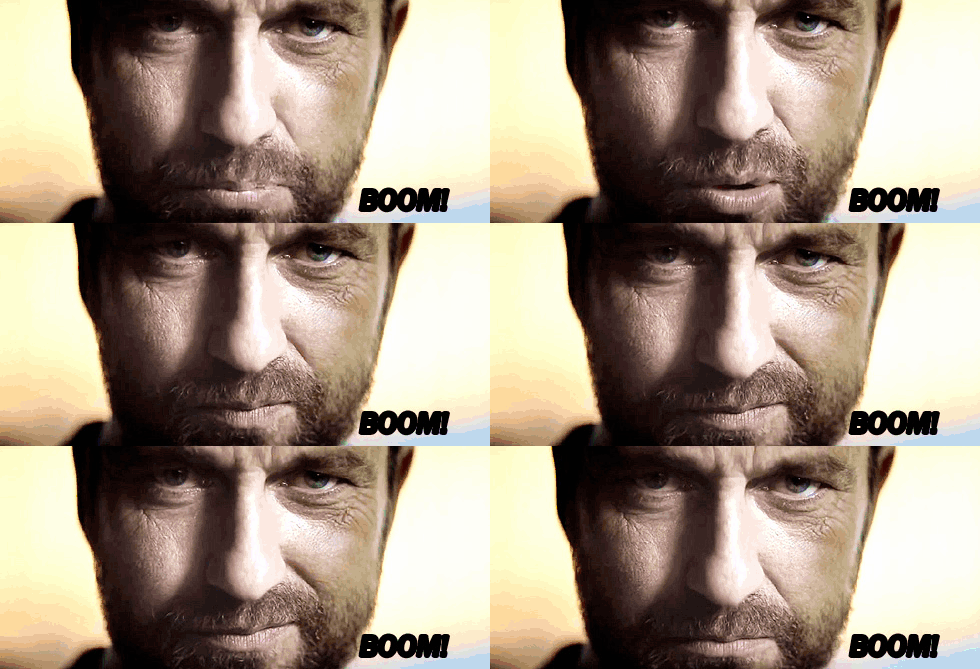
Sometimes, when faced with a particularly daunting pile of manuscripts, I turn to GIFs for inspiration in staying focused and fired up. This week, hoping to get enough done to leave the work reading behind when I go away for the weekend, I am channeling the élan of Gerard Butler:


And when I find one of those mind-blowing, can’t-put-it-down, I-gotta-represent-this manuscripts:


Who are your GET IT DONE inspirations? Do you have any GIFs or characters you turn to when you need to power through an intimidating to-do list?


1

Inspiration for Young Readers

I’ve mentioned a few times before that unlike most people in the publishing business, I did not fall in love with books at the tender age of 8 months.  I wish I had, and sometimes I find myself looking out for great books I might have missed out on at the time. There were no specific reasons for my not being interested in reading, I had all the resources at my fingertips but I just wasn’t bothered.

The same can’t be said for the many children living in the slums of India. I read this short article about an inspiring young girl named Muskaan, who at the age of nine runs her own library outside her house in the slums of Bhopal.

As she returns from school, Muskaan would find eager young readers awaiting her at the spot where she lays out a mat and arranges her total of 119 books (donated by officials from the State Education Board), then they would gather around and listen intently as she reads out loud to them. After these allegedly fun reading sessions, the kids would then borrow whatever books they can and settled on the mats to read, or take them as they leave.

Having read this article I am reminded how much we take for granted. While majority of the world struggle to have decent and well stocked libraries, we feel the need to cut the budget on libraries, perhaps ensuring children in the future won’t have the same library experiences most of us had growing up. At the same time, Muskaan’s courage also shows me how blessed we are as a human race because no matter what the situation may be, there is always something, despite how small it is that gives us hope.


8

How do you read?

And by that I mean, do you read one book at a time or multiple books at once?

As for myself, I’m always reading at least 3 books at any given time, not counting those for work. It’s a tendency fed by both practicality and whim. When I’m on the go, I’m reading a book on my Kindle or iPhone. When I’m home it’s always print books—I’m curling up on the couch with a nice new hardcover or lying in bed with a paperback before going to sleep. But I also shuffle between books based on mood. Sometimes I’m just not in the mood for nonfiction and would rather read a fun, fast-paced espionage thriller instead of that critically-acclaimed National Book Award nominee.

reading-balancing-gif

Average readers might find the habit odd—I know many of my less literate friends do—but book lovers, more often than not, couldn’t imagine reading any differently. I polled a few coworkers, and all of them responded with the “multiple books at once” answer. Not a fair poll, I’ll give you that, considering we all work in publishing, but I think you’ll find that most serious readers are in the middle of a few books. Which brings me to my next question.

Is this an efficient reading habit? Is it the “right” way to read?

Although several studies have looked at multitasking and its harmful effects on the brain, I’m not sure you can consider reading multiple books as “multitasking.” At least in the sense of rapidly switching attention from one task to another. However, I could also easily see how shuffling between books might decrease reading speed. Regardless, I won’t be changing my reading habits any time soon. Not only is reading multiple books at once both practical and enjoyable, but it’s also rewarding in the sense that sometimes the books play well off one another—whether it be a juxtaposition of different writing styles or books with similar settings or the structure of nonfiction books.

I’d like to hear what our readers think. How do you read? Have you seen a dramatic difference in reading efficiency reading one way over the other? Let us know in the comments!

9

Finish what you start (or not)

For most of my life as a reader, I read every book I started to the end.  Not finishing a book was sacrilege.  No matter how tedious the narrative (I’m looking at you, James Fenimore Cooper), how irritating the storytelling (Hi, Dan Brown), or how purple the writing (Ugh, take a bow, Robert James Waller), I would slog through the whole thing figuring that even if I hated the book I would have learned a valuable lesson about bad choices and the authors who make them.

Then, I became a grown-up.  With a job that requires a lot of homework, a husband I like to talk to, a kid with more activities on his calendar than Babe Paley in her heyday, and friends I’d ideally like to see in person rather than just on Facebook, reading for pleasure has become a, well, guilty pleasure.  My once holier-than-thou attitude about finishing what you start has now morphed into if I’m not intrigued by the second page and in love by the fiftieth, the book is going back on the shelf to collect dust and await discovery by a more committed reader or eventual relocation—so I don’t feel guilty every time I look at it.

There are exceptions, of course.  You all know I read every last annoying word of The Goldfinch even though I disagreed with all those who thought it was brilliant.  Occasionally, I do force myself to keep reading, because there are glimmers in those first 50 pages that the story will unfold to reveal something exceptional.  Mostly, though, my pleasure reading follows the pattern of my work reading.  If you can’t capture my attention very early on, the crush of other manuscripts waiting in the wings will make the decision for me.

A propos of all of this, today, on Galleycat, I saw a piece about how women are more apt to stay with a book they don’t like than men.   And, from my experience, I find that to be true.  The women in my book club, for instance, will routinely report that they have read an entire book they felt lukewarm about at best or hated outright at worst.  My husband and other male friends, on the other hand, will leave a trail of half-read volumes in their wake with not even a discernible glimmer of guilt or regret.

What does that say about women and men as readers?  And does it mean that my reading process has become more, er, masculine as I’ve gotten older?  Do you guys finish everything you start?  And, if not, at what point do you throw your hands up, toss the book aside, and go in search of the remote?