Category Archives: critique

5

When to put down a book

Some people have to finish every book they start reading. I am not one of those people. There are so many amazing books out there that I want to read that it feels wrong, even irresponsible, to spend time finishing a book that has completely lost my interest.

For instance, if a novel’s written in the first person and I can’t relate to that character, then I’m going to stop reading. If a plot is dragging or meanders without a clear end in sight, I’ll usually put the book down unless I’ve become emotionally invested in the characters. Stories and characters that feel familiar are also begging to be dropped and forgotten. Very rarely will I put a book down because of the writing or an unlikable character. I can power through subpar writing if the story is that good—the kind of good that keeps you up at night and practically forces you to turn the page to find out what happens next. Plus if it’s published, then the writing can’t be that bad…right? And I love unlikeable characters, especially a flawed protagonist, which seems to be a hallmark of good fiction.

A book needs to force me to put it down. It’s not easy, but it happens and I’ve learned to recognize when it’s time to move on. What do our readers think? Do you ever stop reading a book? What makes you stop? And if you’re also a writer, are you aware of the possibility that someone might start and stop reading your work? What impact does this have on your writing?

0

Common query and writing mistakes to avoid

I’ve been seeing a lot of no-no’s recently so here we go: what not to do. Buckle up.

  • Long queries that ramble on will significantly hurt your chances. Agents receive a lot of queries, and we don’t have a lot of time to read them. Get to the point—4-5 short paragraphs max should be enough. We don’t need a scene by scene rundown of the book. The idea is to hook us and make us want to actually read your book.
  • On a somewhat related note, before you add your writing credentials to your query, ask yourself if they’re truly credentials worth mentioning. If you have an MFA and your short fiction’s been published, by all means let us know. If your grandma read the first 5 chapters and loved it, we don’t need to know.
  • There’s nothing wrong with self-publishing, but for the most part, we usually won’t represent a book you’ve already put up on Amazon. Publishers want original works, which means we want original works. So write an amazing new manuscript and send us that!
  • Word count isn’t important except when it is. Stay in the average range for your genre and category. This helps show that you’re familiar with your market. Yes, of course there are exceptions, but your 600,000 word thriller isn’t one of them.

The good news is that we outline our query instructions here. Unfortunately though, a good query doesn’t necessarily guarantee a good book, so here are a few common writing pitfalls to avoid.

  • Infodumping is a big no-no, and I often receive SFF sample pages that make this mistake. Blurting out everything about your world and characters at once is telltale sign that your novel isn’t quite there yet. Conversely, many sample pages read like an entirely different language with invented concepts and terms that strewn throughout the prose with no explanation. Can’t represent what I can’t understand.
  • Don’t overly describe your characters’ actions and emotions. The reader doesn’t need to know all the little movements that entail Joe boarding a bus. Likewise, the reader doesn’t need lengthy explanations of Joe’s innermost feelings. Better yet, don’t tell me your characters’ emotions at all. Good writing describes; truly great writing evokes.

Finding an agent is hard enough. Give your work the best shot it deserves by steering clear of the literary atrocities above. Have any other tips for our readers? Share ‘em in the comments.

1

Globalizing the literary landscape

Hey readers! Today I’m pleased to share a guest blog post from our bright and insightful intern Christa Angelios:

From Mallory Ortberg’s poem “Male Novelist Jokes” to Junot Diaz’s comment in the New Yorker on his MFA program – “that shit was too white” – it’s no secret that the world of literary classics is awash in a lack of diversity. Culturally diverse authors often assume pseudonyms or use initials to make themselves fit in more with what they see as expected of them – because they’re worried the sales numbers will be too low if they use their given names. They’re worried that the American public is simply not interested in hearing their stories, cultural stories.

There are, of course, authors who are pushing against this formulaic assimilation, and proving that diversity does not equal diminishing numbers. Khaled Hosseini’s wildly popular novel, THE KITE RUNNER; Matt de la Peña’s critically acclaimed piece, MEXICAN WHITEBOY; and Junot Diaz’s hailed work, THE BRIEF AND WONDROUS LIFE OF OSCAR WAO, all attempt to diversify the modern literary landscape. Fortunately, my schools have not only respected diversity, but encouraged it. In high school, during my sophomore year, we read Jhumpa Lahiri’s INTERPRETER OF MALADIES along with a selection of short stories by Amy Tan, Sherman Alexie, and Junot Diaz. Diaz came to read at my high school that year, before which the administration begged him to keep his audience in mind and to tone down his presentation and after which the administration stood mortified when he chose to read some of the most colorful stories he had hand. Teachers were torn between admiring his bold rejection of censorship and finding his gall appalling. But despite the fact that the administration cracked down on a lot of smaller spoken-word performances after that, we still read works that broadened our cultural literary palate.

In college, I discovered that folklore held my literary heart. Celtic mythology, Grimm’s tales, and Russian skazkas could entertain me for a lifetime. And when I began writing culturally informed work, taking up the mission Chimamanda Ngozi Adichie expressed in her TED talk to prevent a culture from being distilled into a “single story,” my professors felt compelled to ask the question: what gives you the right to be writing about a culture that isn’t your own? My father is from Egypt, after all, so I have a rich ethnic history to draw from to which I could “appropriately” lay claim, and I admit that Ancient Egypt and the Arab Spring have captured my interest and imagination. But I count myself among what ethnically Indian author Pico Iyer, who feels he has not earned the “right” to call himself Indian because he didn’t know enough about the culture even if it was his ethnicity, calls an increasingly multicultural group for whom “home” is more of an intangible and ongoing project than a place. With no indication that globalization will be slowing down any time soon, what happens when our world becomes full of people who are of every nation – then whose “right” is it to lay claim to a nation’s culture?

These are not questions that the literary world can continue to ignore. Diversity should be recognized and celebrated across the board, not separated out into its own genre of “ethnic” work. In an interview with RonReads, young adult author Jenny Han said of her choice to include diversity in her work, “I want my books to look like the real world, and the real world is populated by all kinds of people.” It’s time the American literary landscape began reflecting the real world, too.

Tell us how we’re doing

A while back (a year, maybe more—my conception of time is shockingly horrible, bordering on nonexistent), Sharon did a blog post asking for feedback from our readers. What we heard was eye-opening to say the least.

snl gif

All of it was informative and very helpful—and I believe it led to a better year in blogging for DGLM and our readers. So I will do so again here. Let’s call it our year-end review.

What do you guys enjoy about our blog? What keeps bringing you back for more? What would you like to see us do differently, do better?

This is your chance for some input. Our readers are important to us, and we want to blog about what you want to read about. So please, don’t hold back. What’s on your mind?

4

Critique Part 2

Thank you all for your enthusiastic responses and interest in having the first page of your WIP critiqued. I picked at random a page to review from one of our loyal blog readers, and have now done that and am ready to share the results with you. Bear in mind this is completely subjective, and only my opinion. There is no right way to write a novel or critique one!

Regarding the material itself, I thought there were a lot of nice elements that set up the story well. I tried to be specific if there were places where I felt things could be done differently to better explain the situation or maximize the impact. Every word counts so choose each one carefully. You can click on the screen below to increase the size and take a look at my notes on the first page, or click this link for a PDF. Hope it’s helpful.

Despite some technical difficulties in figuring out the best way to share the feedback with all of you, I hope this is a valuable exercise. I certainly enjoyed hearing from so many of our readers who are eager for feedback on their work. We will definitely offer this kind of thing again since it clearly struck a chord with so many of you.


Offer to do first page critique

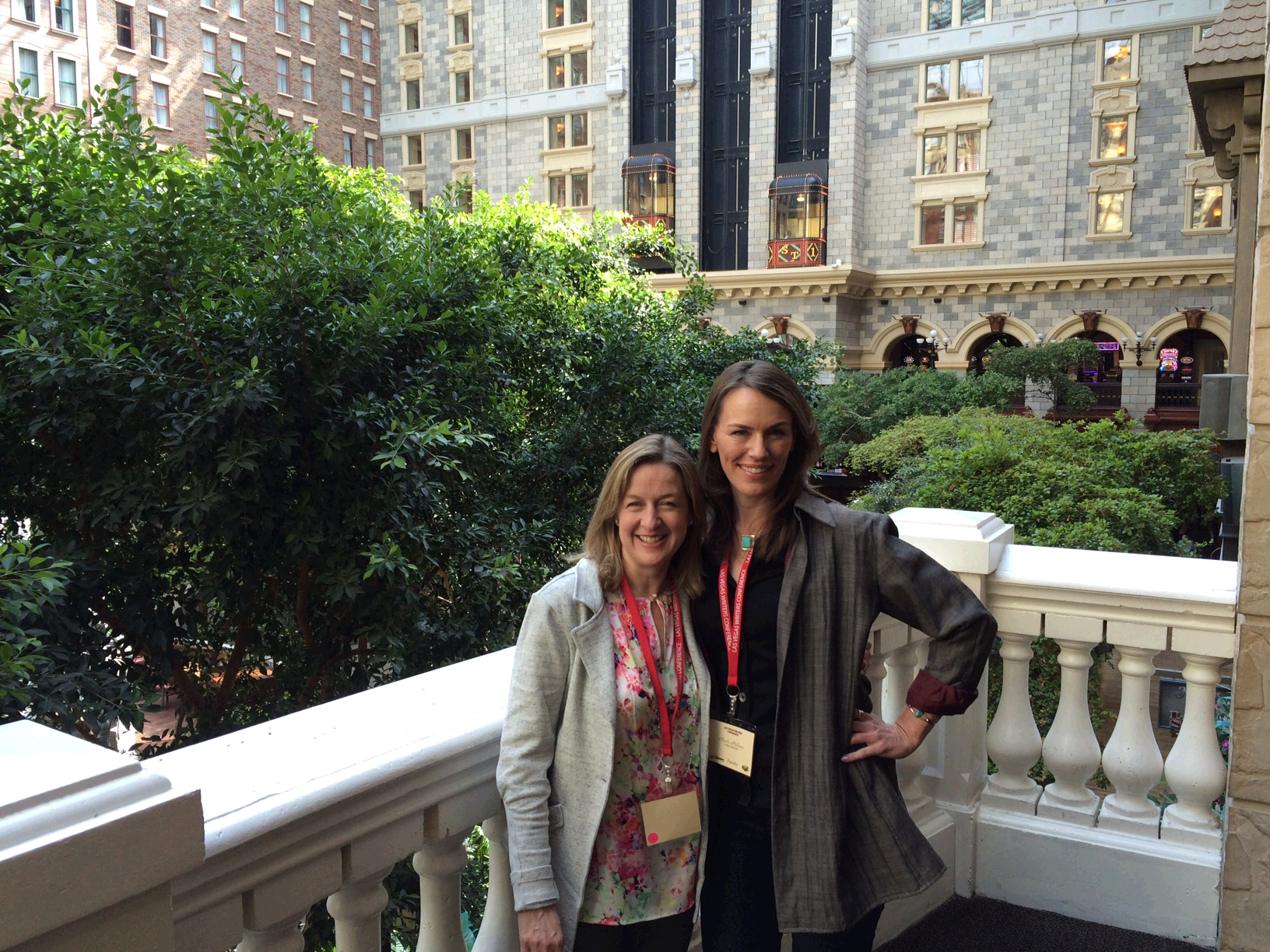
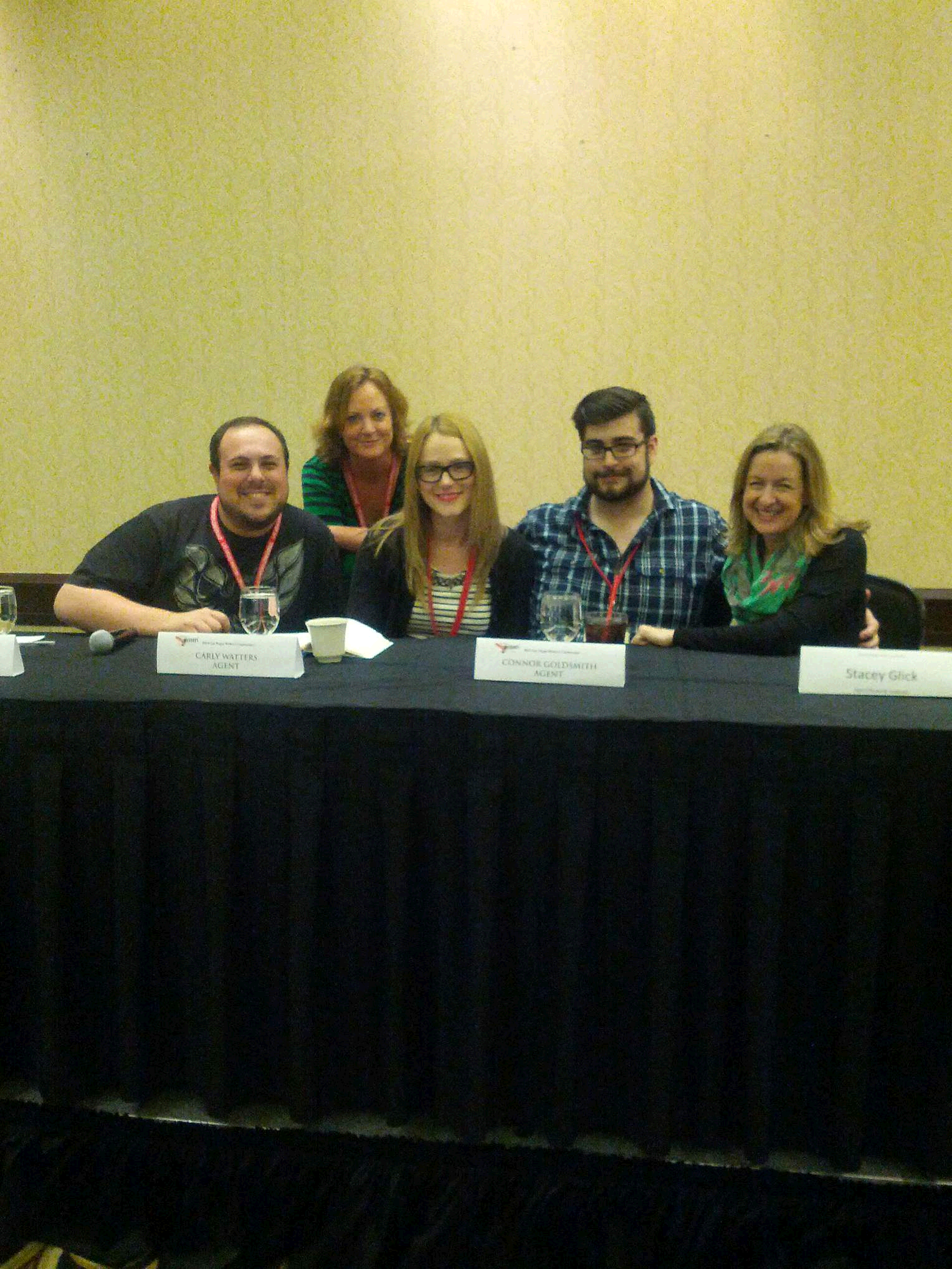
I just returned from the Henderson Writer’s Conference in Las Vegas. It was a lot of work, but also a lot of fun. One of the best parts was finally meeting my amazing client, Nicole McInnes. We had a great time doing two unscripted panels describing the author-agent relationship. There was little time for gambling until the conference was over (or late into the night!), but there was plenty of time for the attendees to spend with the faculty pitching their books and learning about the business from a select group of seasoned professionals.

 One section of the event consisted of an American Idol-style critique where the first page of an attendee’s work was read out loud and a panel of agents would raise their hand at the point they felt the material went off track. Then, each panelist would share their thoughts on strengths and weaknesses of the first page.

As an agent, it’s a challenging but interesting exercise. I personally prefer to have the page in front of me rather than relying on the auditory cues. And then there are the differences of opinion that inevitably arise from our subjective views in that setting. On the other hand, it was interesting to hear a variety of ideas about what other agents respond to when considering a submission. In the end, no major shouting matches ensued and I think the attendees found the honest feedback useful.

So it got me to thinking this could be a fun exercise on the blog. If you are interested in hearing my first page thoughts on a finished book or work in progress, and you’re willing to share the page on this space, please send a comment by Wednesday, May 7th, and I will pick one person at random to do a critique. Obviously it won’t be Idol-style, but it still should be an entertaining and productive exercise. Thanks in advance for participating!