Category Archives: reading

2

Expand Your Empathy Through Novels

President Obama, while talking on the subject of empathy and how it helps him be a better president and citizen, said in an interview with The New York Review of Books, “The most important stuff I’ve learned I think I’ve learned from novels. It has to do with empathy…And the notion that it’s possible to connect with some[one] else even though they’re very different from you.”

I don’t mean to quote this to be political, but his words stood out to me because he said everything I feel about novels. This is why I read. I love being able to get into the head of another person—even if that person isn’t real. It allows me to understand the world through another perspective, and this is tantamount to better understanding other people.

We all have different lives and different obstacles that lead to the same emotions. While you may not be able to understand how it feels to say, be a war refugee, if you read about the pain another is experiencing, those feelings can be understood because no matter your economic status, your race, your nationality, you have the same raw emotions as every other person on this earth—that’s what connects us.

Empathy grows through every novel we read. We chip away at the mystery of humanity with every word. So what are you waiting for?

What books have taught you to be more empathetic?

3

A Word on Fan Fiction

It was in my early years of high school that a classmate introduced me to the world of Fan Fiction. I thought it was the most amazing thing ever, because not only did I already have the habit of rewriting the ending to every book / movie I wasn’t quite satisfied with, but I also wondered if there were others like me, people who enjoyed doing something similar. I was happy to find out that there were a million and one!

Many years later, and with the increase of its popularity, there seems to be a debate about the benefits of fan fiction. Does it indeed help writers learn and improve their craft, or is it more of a crutch, preventing them from moving on and creating their own original works?

I will say this: Fan fiction can be helpful, but I think it depends on the writer. Some take the opportunity to be truly creative, experimenting and finding ways to strengthen their skills; others fall into a certain pattern for the sake of getting the most likes/reviews, and it’s not really about the writing anymore. Then, I guess, it’s also what you read. If a person spends time reading things of little quality, then nothing can be gained from it. I think it is important for every writer to keep in mind the ultimate reason for writing fan fiction, which is writing their own original work. And honestly, for some people it’s simply to get more out of their favorite books and there is nothing wrong with that.

I ended up being more of a fan fiction reader than a writer; however, what I did get from it was the first inclination of what I wanted to do when I grew up. I found myself at various times patiently sifting through all the different stories until finally finding one that truly struck me. It was always a gratifying feeling finding that needle in a haystack and those were the moments when I knew I wouldn’t mind doing something like this for the rest of my life (this was way before I knew literary agents existed!).

What are your thoughts on fan fiction? Here’s a list of published authors who have a thing or two to say about fan fiction. 

1

Why reading matters

As a parent of young kids, my Facebook feed is inundated with articles about parenting, and this week everyone seems to be passing around this piece by Leonard Sax, the famous child psychologist. Evidently, in his new book THE COLLAPSE OF PARENTING, Sax argues that, “American families are facing a crisis of authority, where the kids are in charge, out of shape emotionally and physically and suffering because of it. He calls for a reordering of family life in response.” 

Now, I haven’t read the book yet, but in the article Sax offers some concrete advice for helping parents regain their authorityno cell phones in kids’ rooms at night, family dinners, no earbuds in the car, and getting outdoors. All of which are certainly good pieces of advice that I’ll take to heart, particularly how to handle electronics when the kids get to the age of fully abusing them. It’s already starting with my seven-year-old, who fancies himself a budding iphone film director…

Yet, I have to say, among Sax’s advice was one glaring omission that should be obvious to anyone in our industrywhat about reading? 

Perhaps Sax does encourage reading to one’s kids in his book (like I said, I haven’t read it yet), but I’m a little disappointed he doesn’t list reading as a primary method for helping families. I would think the daily structure of a child listening to a parent read aloud, particularly at bedtime, would be an ideal way for parents to reclaim authority from their kids. And of course, the benefits of
reading are pretty darn fundamental, don’t you know
and don’t just take my word for it, it’s science

So, how many of you read or used to read to your kids aloud? And thanks to that reading, were your kids  absolute angels who always respected your authority? Of course they were! So I’ll be curious when I read THE COLLAPSE OF PARENTING to see if Sax does actually encourage reading aloudif anyone has read it yet, please let us know!

1

Reading through Jonas

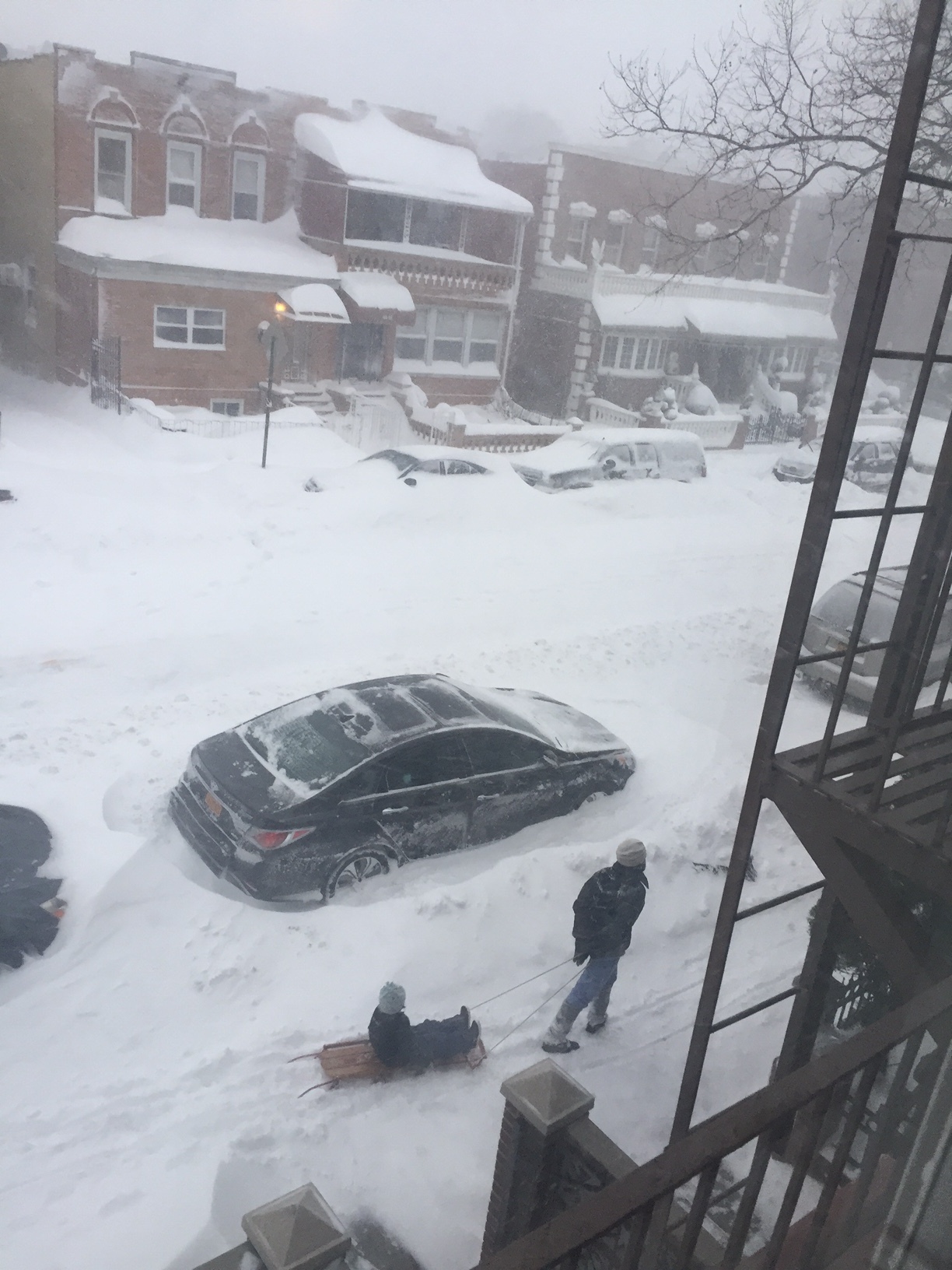
IMG_7527This weekend a winter storm poured snow all over the East Coast, bringing 27 inches to my neighborhood and as much as 30 elsewhere! Most in my circle on Twitter seemed to be rejoicing at the “snow day” (though is it really a snow day if it falls on a weekend??) to read, snack, and watch Netflix. Instagram was full of people’s cozy blanket piles, pots of soup, and cups of cocoa steaming next to a stack of books.

What interested me most, though, was the celebration of the “excuse” to stay home and catch up on reading. Being something of a homebody, I frequently spend one or both weekend days holed up to read no matter the weather, so Jonas was less of an excuse and more of an atmospheric backdrop. So I am curious about those bookworms for whom this was a deviation from their usual weekend routine. Do they simply have more dynamic social lives than I do? Do they make more brunch/theater/museum plans thus putting me to shame as a New Yorker and cultural citizen by comparison? I thrive on long hours in silence, alone, to counterbalance the busyness of the work week and the stimulation of the social engagements – I figured a lot of avid readers feel this way but perhaps my introversion is more rare than I thought.

What’s keeping us from making every Saturday a snow day?

3

When it’s good, I’m really good, and when it’s bad, I go to pieces

My musical hero and idol David Bowie died on Sunday at the age of 69, and it felt to me like a light had gone out in the world. He was, along with Jim Henson and Stanley Kubrick, one of the three great artistic influences on my life. (That combination should explain me and my taste pretty perfectly.) I wanted to join in the celebrating and singing like they were doing in Brixton, but I kept bursting into tears. (Am I the only one who cries about ten times more easily as I get older?)

I really don’t remember there being a before-Bowie time in my life. He was there in my childhood, on MTV looking all sweaty in Australia in the “Let’s Dance” video. There he was in Labyrinth, which I remember watching at my friend Paul’s house (Paul knew all the cool movies), laughing hysterically and rewinding over and over to watch him step from the bottom of a platform to the top, in what at the time seemed like mind-blowing special effects. Then there was my obsession with the “changesbowie” album, which got me really hooked on his music. From there, my love only accelerated.

I was lucky to see Bowie live several times 2002-2003, including at an amazingly intimate show at Jimmy’s Bronx Cafe during his New York Marathon tour. The man couldn’t have been more than 25 feet away, playing songs from the brilliant Heathen, but also favorites like “Starman,” “Be My Wife,” and even “Ziggy Stardust.” I might have smiled for days afterwards. When he had a heart attack on stage in 2004, I had a feeling we weren’t going to see him play live again. And he disappeared, for the most part, for so many years. (Though this cameo on Extras in 2006 cracks me up every time I watch it.)

When Bowie released The Next Day last year on his birthday, I was hopeful that we’d entered a new era of music. And I was thrilled when it was announced that yet another album, Blackstar, was coming on his birthday this year. It’s clear now that this period of creativity was a goodbye, and what a way to go. The man’s been dealing with mortality and dying since the beginning, but relistening to this new album through the lens of his dying…damn.

So, while this post was mainly a way for me to deal with my own grief, it also has to do with books! Because, as I’m sure you’ve heard many times over, Bowie was quite the reader. And boy was his taste varied, as evidenced by this list of his 100 must-read books. If you’ve been following along with him at all, many of the books aren’t much of a surprise, and also not surprising is where our reading overlaps: The Gnostic Gospels, A Clockwork Orange, 1984, The Great Gatsby, The Iliad. Those works influenced some of my favorite Bowie albums, like Diamond Dogs, Station to Station, and Scary Monsters and Super Creeps, and it’s fun to try to make other connections between the books and his own work.

Looking at this list and thinking about his lyrics, I can’t help but wonder what a Bowie novel would have read like. It would have been weird and likely esoteric, and I likely would have spent ages trying to decipher it. And I would have loved every minute of it.

Saying goodbye to friends is hard. I miss knowing that David Bowie is another person in our world, making things brighter, shinier and weirder. But I will continue to celebrate his music and spirit, and I’m going to try my damnedest to grab life and knowledge by the throat the way he did.

“Should’ve took a picture

Something I could keep

Buy a little frame, something cheap

For you

Everyone says hi”

0

Reading Goals

I’m the kind of person who loves a good To Do List.  (As I’ve probably mentioned before, since I’m also the kind of person who talks too much about the kind of person I am.) In fact I keep several kinds of lists, varied in form, content, technology, and location. I used to keep a To Read list on my phone, but then I found that I wasn’t actually ever reading anything from it except by accident, so now I keep my To Read list in the form of stacks of books. I’m far more likely to read a book if it just happens to be in my apartment when I finish reading another one. (Now is the time some of you will be tempted to tell me that this is where e-books come in handy, but I don’t read digitally except for submissions and manuscripts. The strict divide between work reading and pleasure reading does me a world of good psychologically and makes me better at turning my editor brain on and off as befits my reading purpose, so I’m sticking with it.) I even keep a high-priority To Read list in pile form (things I’m super excited about, plus DGLM galleys, plus books for my office and personal book clubs) right next to my TV, to shame me into not neglecting them in favor of rewatching The West Wing for the 83rd time.

So naturally I love when other people make lists of books I should read, so I can mine them for new reading goals. I was pleased to see that Esquire enlisted eight “female literary powerhouses” to help them make a list of books everyone should read. You see, the last time they did that, it was kind of a disaster. The fantastic Rebecca Solnit (go read her collection Men Explain Things to Me) rightly called them out for their myopia, so they called in some reinforcements to give it another go.  It’s a pretty fantastic list—and not just because it features DGLM’s own Tayari Jones and her excellent Silver Sparrow.

Hey, credit card, looks like we need to stop by the bookstore on our way home from work.

0

‘Tis the season to read & read & read

Because I don’t do enough reading as it is, I’ve already started compiling my holiday reading list for our winter break. I have a bad habit of squirreling books away in various corners of my office and apartment all mentally marked “to read later,” but never really quite getting to them. But I’m going home to my quiet rural town for six days (!) and what else is a girl going to do but read?

On my list:

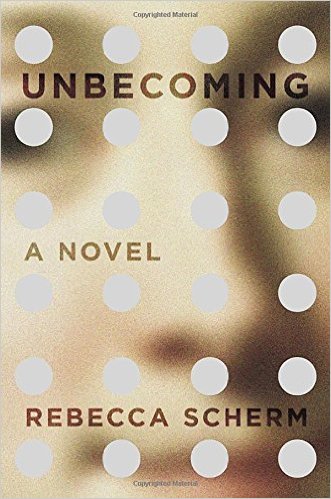
  • UNBECOMING by Rebecca Scherm

unbecoming

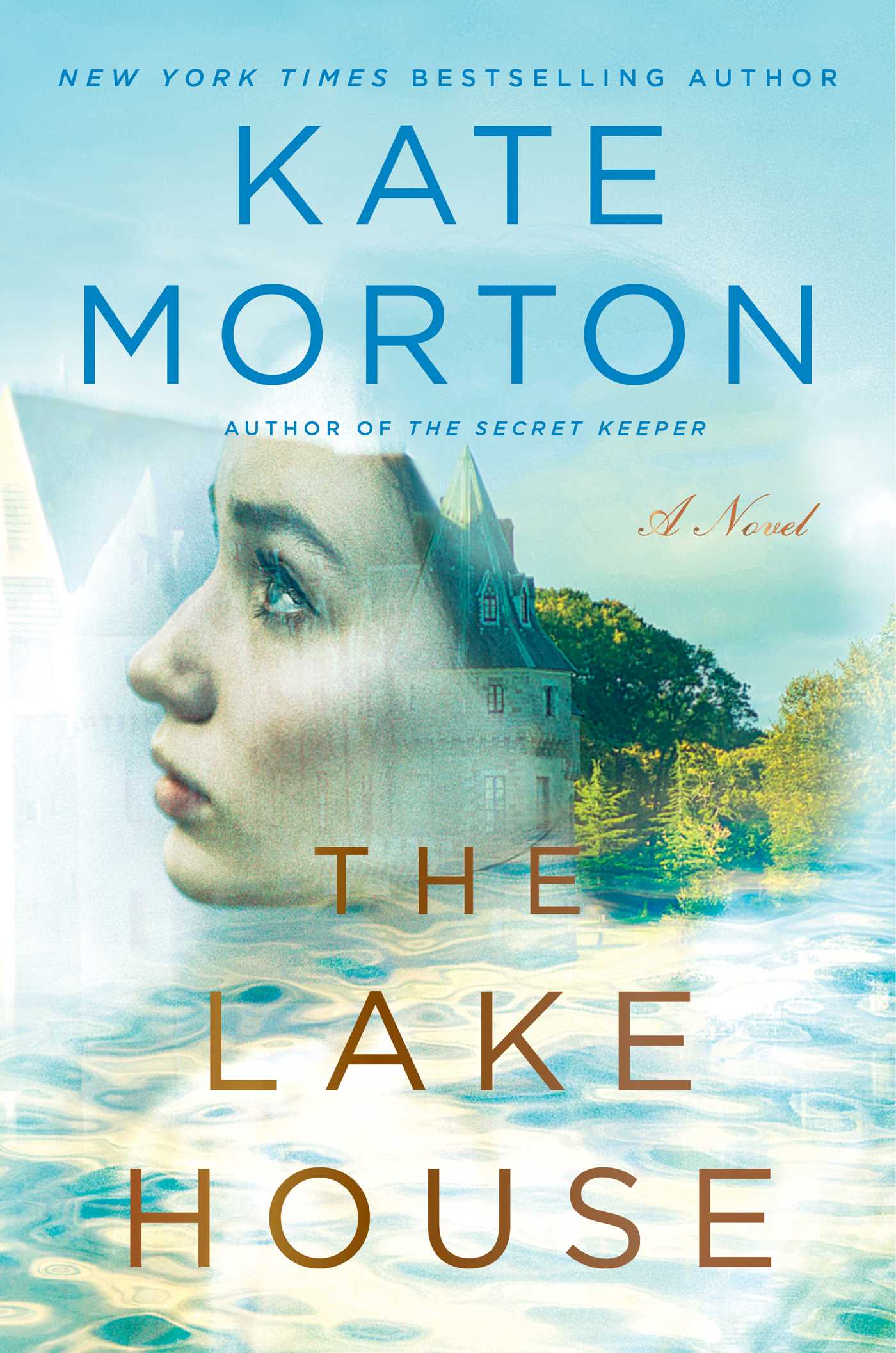
  • THE LAKE HOUSE by Kate Morton

the-lake-house-9781451649321_hr

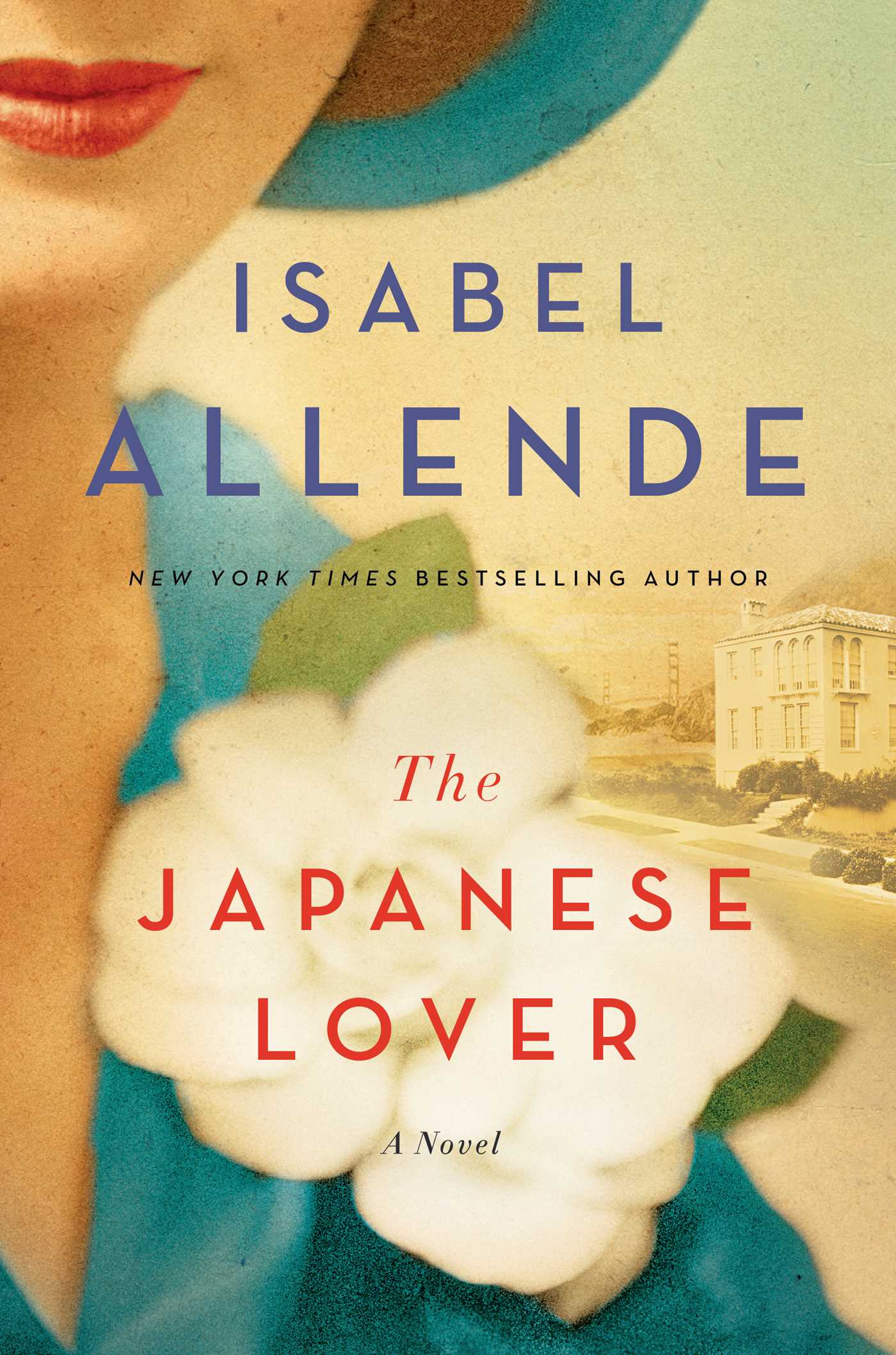
  • THE JAPANESE LOVER by Isabel Allende

the-japanese-lover-9781501116971_hr

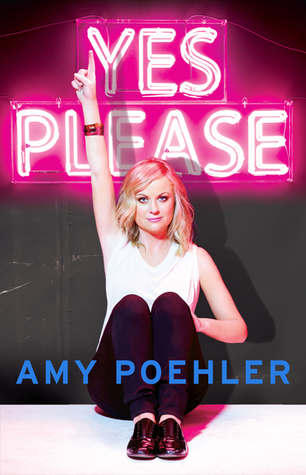
  • YES PLEASE by Amy Poehler (this has been on my list since last summer, embarrassingly enough)

yes please

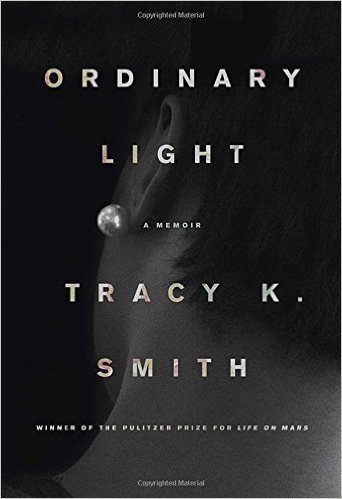
  • ORDINARY LIGHT by Tracy K. Smith

ordinary light

What’s on your list? Any books you’re looking forward to pick up in the New Year? 

Let nothing stand in the way of your holiday reading. Taking some tips from this bun.

0

Happy holidays, book lovers!

I’ve been sitting here all day thinking about what I could offer as a holiday gift to readers. Some insight into the publication process? Helpful writing tips for the winter break? What I’m looking for in 2016? Well, more on that last one in January, but right now, as I’m scrambling to wrap things up before taking off for Maine with the in-laws, my brain is pretty much fried to a crisp. And I’m sure tonight’s DGLM holiday party won’t help…

So, thank goodness for Buzzfeed! Yes, even though we’ve all seen and heard things like this a zillion times, there’s nothing like a good assortment of gifs to fill a reader with good cheer. And when I saw what Mr. Bean was reading in #6, I just had to share. Happy holidays, y’all, and have fun making a dent in your reading pile over the break—I know I will!

4

Career moves

Despite the fact that we publishing people love nothing more than to whine about how miserable our jobs are (the endless reading, the rants from angry authors who, after seeing your edits, just know you don’t get their particular brand of genius, the bureaucratic Everest climb that negotiating a contract and then prying the advance money from a publisher entails, the Miranda Priestly type bosses who make Steve Jobs seem like a soft touch, etc.), relatively speaking we do pretty interesting, engaged and engaging work.  In fact, the reason I’ve stuck with my first job out of grad school for a couple of decades now is because it’s always interesting, always challenging, (almost) always satisfying, and never, say what you will, boring.

And yet, who hasn’t fantasized about a whole other career?  Given my fascination with disease and gross bodily functions (ask any of my colleagues about my detailed descriptions of snot when I have a cold), I probably would’ve been a doctor if my math grades had been better (I suspect that getting the right dosage of medicine in a patient is key in effective treatment).  And being the kind of reader who immerses herself in engrossing narratives, I’ve had many opportunities over the years to fantasize about other, more exciting professions.  After reading Andy Weir’s The Martian recently, I wondered if NASA has any plans to send a literary agent into space and, if so, where would I sign up for training.

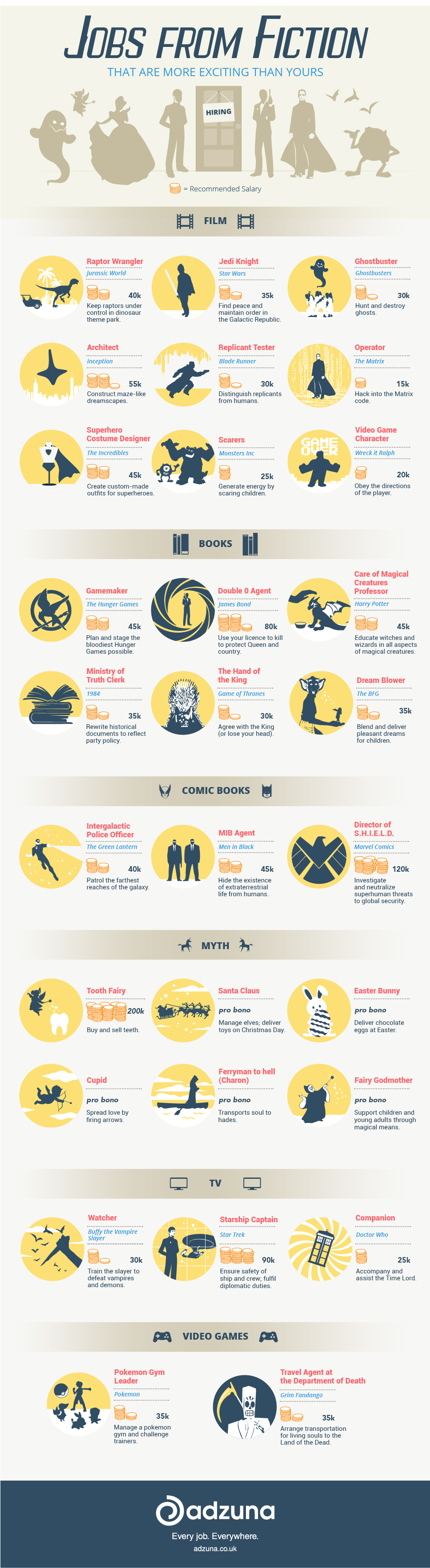
Given the foregoing, this infographic from Adzuna.co.uk which was picked up by GalleyCat delighted me to no end.  So many career options, so little time!

Fictional-Jobs

What’s your most coveted fictional job—wizard, international man/woman of mystery, treasure hunter, Jedi knight?

0

Oh, To Be in Iceland For Christmas!

I’m very interested in learning about different holiday traditions all over the world. For example, while studying abroad in Europe I found out that the advent calendar is a huge part of the German Christmas celebrations, and that in England Christmas Eve is not as important as Christmas Day or Boxing Day. So, I was really excited to find out about Iceland’s Christmas tradition, and it immediately became my favorite, because it involves books!

Every year, by November, Bókatíðindi, a catalogue containing information about all the books that have been or will be published that year is sent to various homes. In Iceland, it’s a tradition to give books as Christmas gifts, thus the majority of them are published within the last three months of the year. I can imagine families exchanging books on Christmas Eve and then settling down with a hot cup of cocoa or cider and reading away into Christmas Day.


You can read a bit more about this amazing tradition here.


How about you, what amazing international Christmas traditions have you heard of?