Category Archives: Stacey

1

Lessons from a ghostwriter

The work of a writer can take on many forms. Whether it’s articles, nonfiction, short stories, fiction or some combination of all of the above (thinking of Stephen King, Ann Pratchett, our own David Morrell and many others). But I think it’s safe to say all writers do one thing over anything else – they write.

So I found this article in PW interesting as it is written by a ghostwriter or collaborator who had worked with several authors on their own nonfiction projects, and then she decided to write her own memoir. It’s a bit of an unusual hybrid to have a ghostwriter penning a memoir, but it worked for her, and she learned some things about her own work from working with others. The lessons she offers are worth reading because she shares what she learned about her own life from writing about other people’s lives, and how she applied it to her own work.

I think there is takeaway here for writers in general. Especially her last idea that you are responsible for your own story, not other people’s reaction to it. That is such a widely applicable concept as a writer because so much uncertainty and fear exists in putting your work out there for others to see. Even seasoned authors sometimes complain that they can’t handle a bad review, or they feel terrible when they see a negative comment about their book on Amazon. We’re all just human, after all. And it takes real guts to write, and share your work with others. Bravo to Sarah Tomlinson and to all authors for overcoming their insecurities and sharing their work with the rest of us.

Take a look and see what you think. Any other tips you can share for improving your own writing from working with others?

3

One project at a time

I was flipping through brainpickings.org and came across some writing advice from Henry Miller that I liked and thought I’d share with our readers.

Apart from the fact that he was a master at his craft, Henry Miller’s advice feels timeless and random in the best of ways. I also like the fact that his suggestions based on his own writing habits are positioned as Commandments, an authoritative approach to getting your writing life in order. Mostly, I really like that he indicates clearly that you should work on one thing at a time until it’s finished. The rest of the ideas support this, and it’s an interesting thought. In our current culture, there’s very little focus on one thing at a time. Multi-tasking is the (not so) new normal. So the idea of working on one thing at a time until it’s done feels daunting and refreshing. How nice to have just one creative project to think about until it’s finished! While it might not always be practical or even possible, it does make one think about taking a breath and paying attention in a different way that could enhance productivity.

I also like that he tells writers to keep human and see people, go places and drink if you want to. It does conflict with his advice in point 11 to write first and always while painting, music, friends, cinema come afterwards (at least the drinking is still allowed!).

What parts of his advice resonate with you? People are so fascinating. I love hearing what makes a brilliant writer tick. Don’t you?

1

Book Expo America — it’s here!


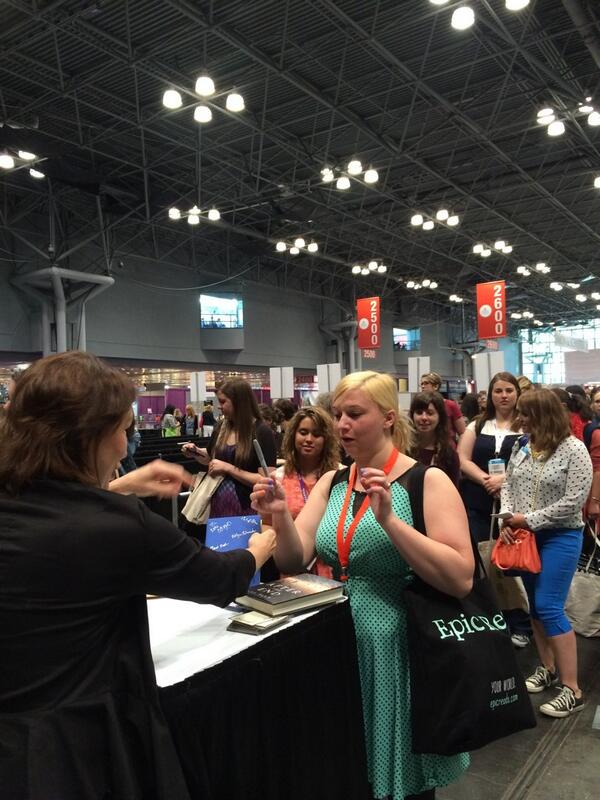
Every year at this time, the entire publishing industry converges at the Javits Center in NYC for the biggest annual bookseller’s convention in the U.S. It’s a massive endeavor, full of publisher booths that cost tens of thousands of dollars, author events and signings, an International Rights Center where our own Lauren Abramo will be meeting with publishers form around the world, and a whole lot of schmoozing and general conversation about books.

BEA Amy

The books that are the focus at Book Expo (BEA for short) are the ones that will be published the following fall, so Fall, 2015 this year. Galleys, or early reader copies, abound and many of us run around sharing stories about who scored what.

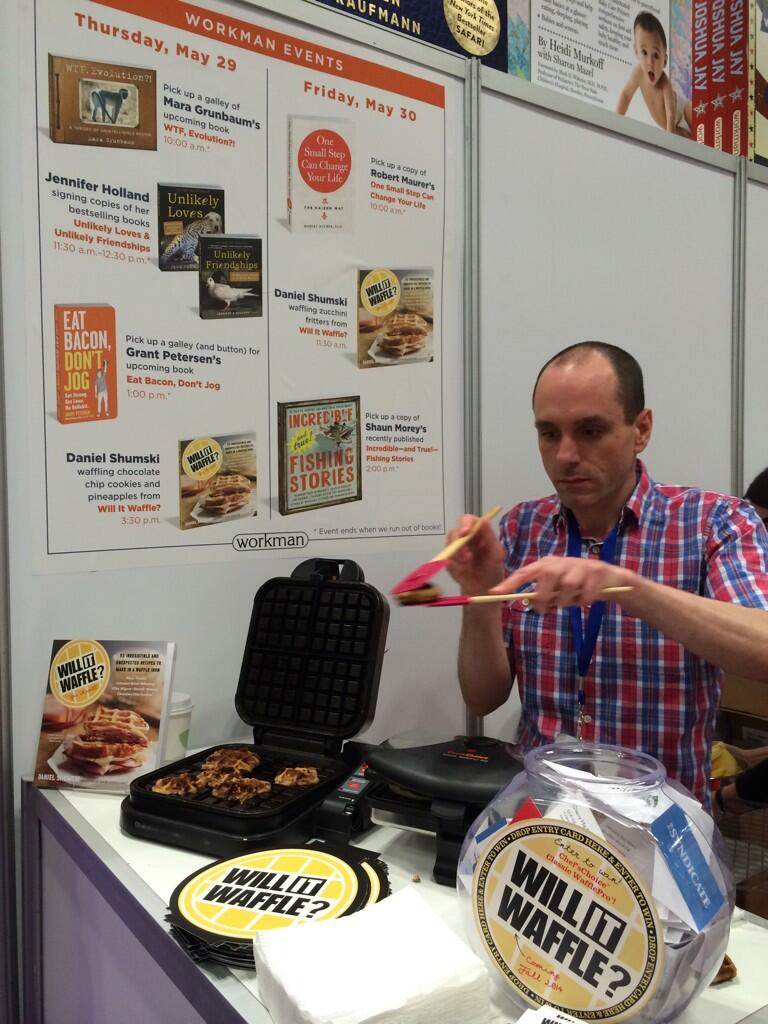
Last year, I had a couple of authors at BEA, and even had a client doing a cooking demo from his latest book (photo below, the waffle chocolate chip cookies were delicious!).


BEA Dan

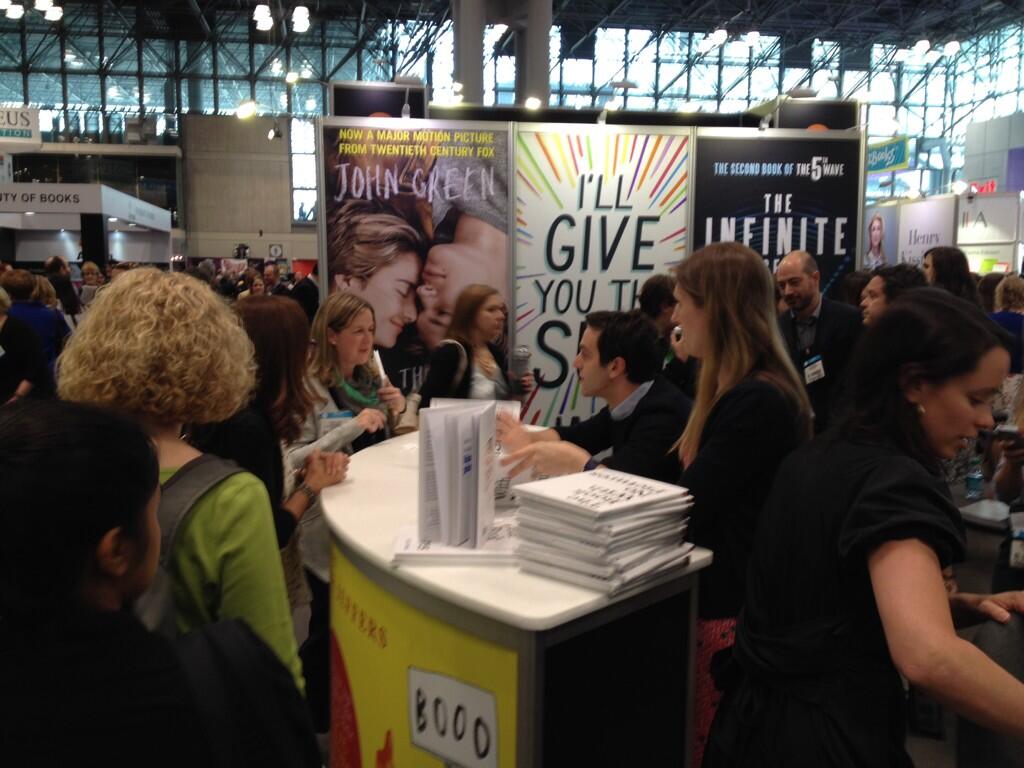
The past couple of years I’ve waited to get signed books from children’s authors, and last year I scored a big one with a special BEA edition copy of B.J. Novak’s THE BOOK WITH NO PICTURES. One of my colleagues saw me and took a picture when I was getting it signed.

BEA BJ Novak

And then of course, there are the parties that precede and follow BEA. Many publishers host parties at their offices, and some rent out space at local restaurants. Last year’s Harper party was epic, and not just because they were promoting their epic reads teen website!

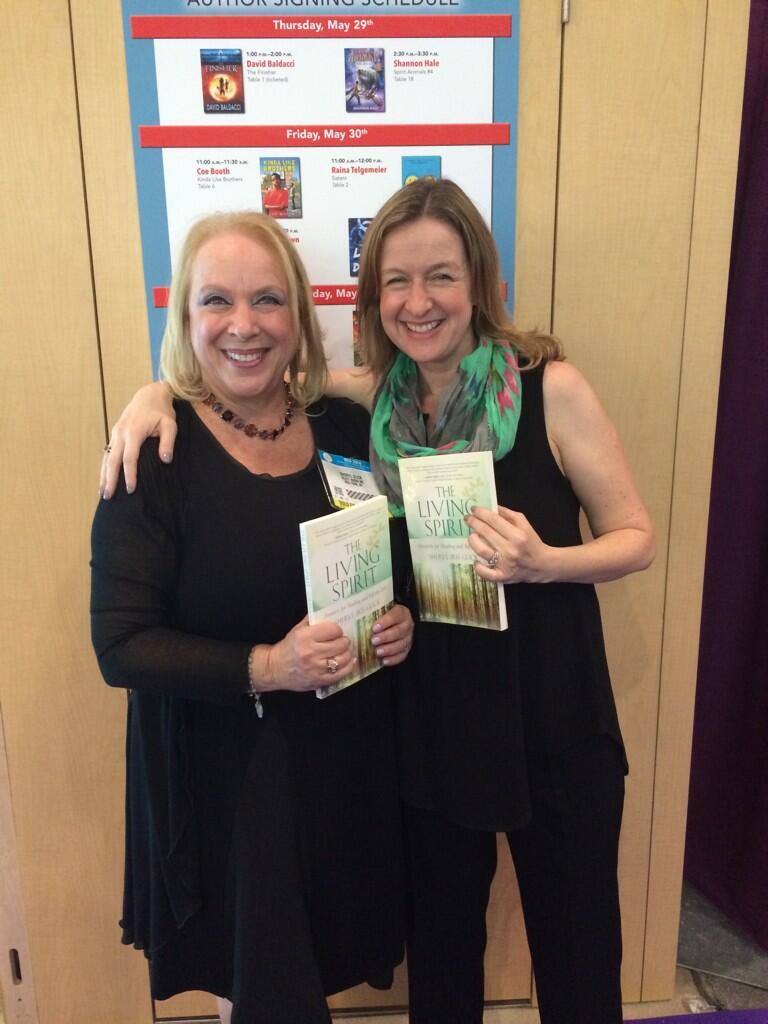
Last year, I even got to see my mom doing an event for her own book at BEA, a fun first.

BEA Mom

The past couple of years they’ve also included a consumer post-BEA event called Bookcon, which has generated enormous interest and huge bestselling authors come to events where the public can buy tickets, meet the authors and get books signed. This year the lineup is pretty outstanding, and I suspect it’s going to continue to be a big draw in the years to come.

Thought you might enjoy a sneak peek at what we’re all focusing on this week. If you can’t find us, now you know why!

Take a look at the website links, and let us know what events you’d be most interested in attending, and which authors you’d love to see at BEA. Maybe next year, you can join us.


3

My love affair with Ann Patchett

I think Ann Patchett is amazing on so many levels. She’s so uniquely talented, is incredibly prolific, and writes nonfiction as well as fiction. I loved her beautiful tribute to Lucy Grealy, Truth & Beauty, as much as her wonderful novels like Bel Canto and State of Wonder.  And I’m a bit biased at the moment because she recently made a large donation to my small town library, which I talked about recently on this blog.

I was pleased to find an article on writing based on her book, This Is the Story of a Happy Marriage, for brainpickings.org that offers such interesting and lovely advice for writers from one of the masters of her craft. In it she talks about how writing nonfiction for her has been easy, while writing fiction has always been more challenging. She talks about the importance of learning to forgive yourself in creating art, which she feels is critical. She uses metaphors that resonate, even if they initially feel a stretch of the imagination.  Why do writers so often feel they can send early work to The New Yorker when musicians would never think they could play at Carnegie Hall after just a month of practice!

Words of wisdom here from a magnificent and gifted writer who not only writes beautiful books, but is so open to sharing her knowledge and skills with other writers. She’s a true gift. Enjoy!

5

My small town wins big!

I live in a small town in New Jersey called Haworth (pronounced Haaworth). Like just over 3,000 people small. 1,100 households small. Most people have never heard of it, even people who grew up in NJ. I love my little town. Even more so because they recently raised almost $300,000 for a major library expansion that was facing a large funding deficit. Of course, I did my share. I donated money to buy a brick that will decorate a patio outside the entrance. And I offered to give a literary consultation to an aspiring author for a library fundraiser. But I was blown away when I saw this article about the fundraising efforts in a local paper, northjersey.com.

The time and energy these women put forth to creatively raise money for the library is nothing short of astounding. They started sending letters far and wide to anyone that had even a remote connection to Haworth.

They came up with a plan to contact the town of Haworth in England, home of the Brontë sisters, and the inspiration for our town’s name, who responded positively by buying a brick.

They got Anne Tyler and Ann Patchett, one of my favorite authors, to donate $700 between them.

Brooke Shields was raised in Haworth and bought a brick.

The SF Giants donated $500 because one of their early team members lived in Haworth.

Of course not all of their efforts were successful, but in the end they raised enough money for the expansion to go through. It was recently finished and looks amazing.

All I have to say is next time I have an author of mine in town, I am going to encourage them to come to the library for an event and get these ladies on board to sell books! If you have any great small town library stories to share, like my colleague, Eric, did last week on our blog, we’d love to hear them. This story makes me smile every time I think of it.

Writing strong characters

Many years ago, I was working with my very talented client, A.J. Hartley, and he sent me pages for a new thriller with a female protagonist, the first female protagonist he’d ever attempted. I read the opening section and tried to be diplomatic in my feedback, but I basically told him that the lead character was not likeable or sympathetic enough and that she came across as very defensive. He took the criticism graciously, went back to the drawing board, and delivered a revision that nailed the character so well that when the book was later published, Publisher’s Weekly had this to say about her: “Hartley has created an enduring heroine in Deborah, who’s courageous, loyal and smart enough to learn from her mistakes.” He has since gone on to write many wonderful books with both male and female protagonists, but that first one paved the way. See first edition cover image below.

I recently came upon a piece on Tor.com’s blog about strong female characters that I wanted to share. The author, a writer named Ilana C. Myer, brings up an important point about writing characters in general, regardless of gender. What is most important is that they have empathy. Focus less on whether they are a man or a woman and more on the character’s feelings, their pasts, their sense of humor and a fully realized character will emerge.

What are your tips for writing strong characters? Any pitfalls you try to avoid? The stereotypes are easier to fall back on, but when you get past that and create really memorable, enduring protagonists, gender can be the least important factor of all.

13

Book storage, and a giveaway!

I’ve been talking a lot about books lately, and not just because I sell them for a living, but because my vast collection almost killed me recently. Let me explain. We’ve been discussing having built-in bookshelves built in my living room since we moved into our house five years ago. We are finally ready to embark upon the project which also entails a somewhat extensive fireplace renovation so it’s not an entirely straightforward job. I was recently interviewing a contractor and when he walked into my home office, he looked at the bookshelves I have built-in above my desk (which I had a company install when we moved in) and told me that they were about to collapse, full of hundreds of copies of books I’ve represented over the years. I hate to think what might have happened if those shelves collapsed while I was working at my desk, as I do so much of the time, but it would not have been good! Here is a picture of what one of the brackets looked like which were barely holding the shelves in place:

So, I’ve been doing a lot of research on book storage, bookshelves and the like and I’m wondering if any of our readers can share pictures of their own book storage solutions, either at home or online if you have an aspirational shelving unit in mind. I’m thinking about fun, contemporary concepts rather than straightforward wood shelves, although we’re considering that too. Metal, distressed wood, or a combination of the two are ideas I’m considering. Meantime, I have my books displayed on our piano, which I kind of like and will probably keep newer titles there even after we get the shelves built. See pic below:

Please let me know how you like to store your books at home. As added incentive, I will offer a free book to add to your shelf, and pick the winner at random on March 25th. Thanks for your input and good luck!

2

Timing is everything

I was reading about the big auction for film rights this week in Variety.com to Lynsey Addario’s recently published IT’S WHAT I DO. It’s a memoir by the award-winning war photojournalist and has been promoted by Gwyneth Paltrow on goop.com, excerpted in the New York Times Magazine, and picked as a best book by Amazon for February. What’s interesting to me is that the book is selling pretty modestly according to Bookscan, but Hollywood jumped all over it. Why? I’d say in large part because of the recent success at the box office of another wartime memoir, AMERICAN SNIPER. This time it will be Steven Spielberg making the movie and Jennifer Lawrence starring in it. Those kinds of deals in Hollywood can take months or years to set up, but when you have a hot topic, a book like this practically sells itself, even if it’s not a big bestseller.

I see examples of the power of timing all the time in my work. I once sold a book to an editor who I met for coffee who told me she was looking for a memoir about a young person with bipolar disorder, and I happened to be going out that day with a  mother/daughter memoir about just that. That editor bought the book, PERFECT CHAOS by Linea and Cinda Johnson.

Sometimes it goes the other way too. One time I submitted a proposal for a project that I thought was unique in the marketplace but it turns out a similar book was published almost at the same time my submission went out. That one wasn’t meant to be so we reworked it and sold it as something entirely different.

When things aren’t going your way or you’re feeling frustrated by the rejection pile or low sales on your books, just remember that your time might not be now but if you keep putting yourself out there and working hard and pounding the pavement, that time will come. And when it does, it will be a good reminder that timing is everything, or at least a big piece of the publishing puzzle.

1

Cold weather books to keep you warm

For those of us on the East Coast, it has been another rough winter. I’ve started to compare being outside to spending time in a freezer. In the suburbs, everything is layers of ice on bottom followed by layers of fresh snow on top that eventually freeze because we haven’t seen a thermostat above freezing in what seems like weeks. There have been mornings where the temperature outside is zero with wind chills far below. My crazy husband is marathon training and running outside. What? This is what we call a different kind of slush pile (#publishingpuns)! All I want to do is stay inside, drink hot chocolate (or wine, even better) and read books.

It got me to thinking about great books that evoke the cold. I was thinking about THE SHIPPING NEWS by Annie Proulx, a favorite of mine where the weather is a lead character. Or SMILLA’S SENSE OF SNOW (one review on Amazon highlights “the language of snow and ice”) or the Laura Ingalls Wilder books. The seventh book in the series is called THE LONG WINTER! How did people live back then with no heat?

So, I’m wondering what your favorite cold weather books are. Or just your favorite books that you like to snuggle up with on a cold winter’s day. Please share, and stay warm!


0

Some thoughts on article pitching

How and when to pitch to magazines is a question that comes up often, from both my fiction and nonfiction authors so I thought it was worth a blog post to give some thoughts on the subject.

As with many things we do in book publishing, there isn’t always a right or wrong answer and each situation is uniquely individual. That said, having your work published in magazines and/or newspapers and/or reputable websites can be very helpful when it comes to both selling your book to an agent, publisher, or the general consumer. If you notice the authors who are the most successful are widely published across multiple media channels. Getting and keeping your name out there is useful.

Writer’s Digest brought up this topic recently, and it prompted the idea for this post. They were talking about whether or not to pitch word counts, which is a very particular subcategory, but it made me think about the idea more generally and what it means for writers in all different categories.

Short form writing is very different from book writing, but in terms of the number of people you can reach, sometimes it can be an effective bang for your buck. Whether you’re not yet published and looking to get some credits under your belt (and some better Google searches to come up, which can be important for agents and editors reviewing your work), or you’re already published and looking to expand your reach, there are many outlets to pursue, and you might even earn a few bucks in the process.

Key is to do your research and make sure that whatever you are pitching is appropriate for that publication’s audience. And you should explain why in your pitch. I have a client with an upmarket commercial women’s fiction novel forthcoming and we’re working on articles for her to pitch, to women’s magazines and Modern Love in the New York Times, not necessarily the most obvious places to target for what she writes, but certainly reaching a similar audience to what we hope to find for her book.

I did a further search and found an appealing article by a writer who decided in the UK to pitch every magazine listed in a market guide for writers he found – 642 total. I don’t recommend you do this, but there were some learning tools to take away here. I liked that he suggests “shaking oneself out of one’s comfort zone can be an incredibly good practice.”

Indeed, there was more to enjoy here: “One way to stand out is to pitch 642 magazines. Another is to develop your own voice—something that editors will recognize amongst all the other thousands of voices clamoring to be heard. Perhaps a way of developing this voice is to spend your time writing about things you don’t want to write about—until you realize what it is you do want to concentrate on.” This reminds me of the advice I give my kids. You have to try everything until you (hopefully) find something you enjoy.

Let us know where you’ve had success being published in these areas, and how you got there.