
 June 06, 2016
  Jane
Jane 
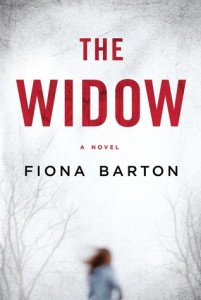 There are times, lots of them I think, when a publisher decides to totally get behind a book in order to make it a bestseller. That happened with a novel, a thriller, published by NAL last February entitled THE WIDOW. Everyone at the publishing house was asked to read the book and start a real buzz about it (when I asked an editor colleague there for a suggestion on what to take with me on my February vacation, she readily recommended this book).
The publisher compared the novel to GONE GIRL and GIRL ON THE TRAIN and everything possible was done in promotion and advertising to put THE WIDOW on the bestsellers list. And it worked. The book made The New York Times list and remained on it for several weeks.
I read THE WIDOW—though several weeks after my vacation—and I was thoroughly disappointed. It simply did not live up to the hype it had been given. I did a survey of those in our company who had also read it and everyone agreed with me. The book simply didn’t deliver what had been promised—a page turning psychological thriller. (I even asked my colleague who had recommended the book in the first place what she thought and it turned out that she too was disappointed.)
In May of this year, Berkley, the sister company of NAL published another psychological thriller titled I LET YOU GO. But this one didn’t get the same kind of support in house. For some reason—though it too was compared to GONE GIRL and GIRL ON THE TRAIN—the powers that be decided not promote it in the same way as they had done for THE WIDOW.
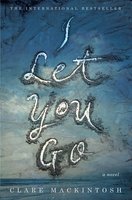 I finished I LET YOU GO last week and it is one of the best books I have read in a very long time. It delivers on all fronts—solid writing, great story telling and characters the reader really roots for. Again I surveyed my company colleagues who had read the book to see what they thought. Everyone agreed that this book really delivered.
So my question is why was the decision made to support one of these books and not the other? Why, in the end, did one become a bestseller and the other not? For those of you who have read both—or who have an opinion on how these decisions are made—I would love to hear your thoughts.
It would be interesting to see what they paid for each book as far as advances go. I don’t pretend to know very much about it, but I’ve seen this sort of thing happen with writers I know and the books they paid a lot for are the ones they choose to promote for obvious reasons. I bet sometimes publishers pay a lot for a book that doesn’t end up delivering, but they have no choice but to pretend it works and get behind it.
Actually, I’d be interested to hear your thoughts on this theory.
You make an interesting point and I think you might well be correct in many cases.
1. I’m amazed that a publishing house can create a buzz that would make a novel a bestseller. 2. I’m amazed a publishing house wouldn’t do that for every novel they publish.
I completely sympathize with your sense of foul play that the good book should be the bestseller instead of the bad one. When I run across such a book, first, I wonder what is wrong with me that I love a novel that no one else loves. Then, I wonder what’s wrong with everyone else who doesn’t love the novel. LOL. Subjectivity is absolutely maddening and we’re not left with much else. When I find novels I love, like The Fault in Our Stars or Eleanor & Park given 1 star by reviewers, I realize how dumb, er, I mean, diverse all of us are. But am I still surprised that novels I don’t like become bestsellers? Every time. Am I surprised that awful movies get made? Every time. The one thing those bestsellers and movies have in common is that someone at some time thought their publication was a good idea. And unless we figure out how to tap into the collective unconscious, I guess that’s the best we have to go on.
GH
Buzz is like the classic good news/bad news phenomenon: It can be influenced, like blowing on a fire to make it grow, but if the wind shifts, all you’ve got is a faceful of smoke. I’m actually a fan of left-field bestsellers that come out of nowhere, thereby proving that most buzz arises from the readers-something a lot of handlers in this field tend to lose sight of. I most definitely was not a fan of BRIDGES OF MADISON COUNTY a few years back, but I got no end of fun out of watching the Conventional Wisdom crowd rave and throw furniture because it burned straight to the bestseller list. Also, virtually nobody on the grownup end ever expected the Lemony Snicket series to take off; the Edward Gorey-ish weirdness of the whole thing was just something they’d forgotten how to deal with, (if they ever did) although they lost no time trying to knock the idea off once it got airborne. 90% of this game is, and always will be, getting actual merchandise into the hands of Interested Parties and making them glad you did. Still very much an experimental science, admittedly………………
Wasn’t GIRL ON THE TRAIN also a “manufactured” bestseller?
I believe it was, yes.
Why don’t publishers “manufacture” success for every novel they publish?
I had never heard of this book (I LET YOU GO) until earlier this morning, when a friend posted about it on Facebook, singing its praises. Weird.
They don’t have the resources.
After reading some of the hype about \\”The Widow\\” I got a sample on my Kindle. It didn\\’t grab me at all; in fact I thought it amateurish and boring. But as the buzz went on I wondered if I\\’d missed something about the book, perhaps had only skim-read the sample. To my regret, I finally bought the book. I found it without merit, and certainly unable to hold its own with real \\”psychological thrillers\\”. (Compare, e.g., to Michael Robotham.) In fact I can\\’t remember a single thing about it, not a thing. I also found \\”Girl on a Train\\” so boring and trite I couldn\\’t read more than a few chapters, and \\”Gone Girl\\” was terrible. I\\’ve been caught before by publisher-led hype, and the only comfort is that word-of-mouth often kills off these allegedly great books.
Try this acid test: (which I use for all my stuff-if if doesn’t pass, into the recylatron it goes) open the book to any random page; if, notwithstanding your cluelessness of what’s gone before the action/dialogue/story ON THAT Page doesn’t grab your interest and make you want to keep reading, well, try,try, again. If it fails 3 tries running, let the next sound be of your own fleeing feet. Even so, I’m all for publisher push, even if a lot of it is for holiday fool’s gold.