Category Archives: literacy

1

#GivingTuesday

Today is Giving Tuesday, a five-year-old movement launched as an antidote to the commercialism of Black Friday and Cyber Monday at the start of the holiday season.

There are many fine organizations you can give to, and this year ones that work in immigration advocacy, women’s issues, LGBTQ rights, racial equality, and other human rights issues seem more worthy than ever. But because we’re in the business of stories, I wanted to take a minute to mention a few groups I admire that work to make sure folks of all ages can enjoy the power of reading and all the doors it opens–and are free to make their own voices heard.

 Girls Write Now https://www.girlswritenow.org/

Girls Write Now mentors underserved high school girls from throughout New York City’s five boroughs — over 90% high need and 95% girls of color — who must rise above the race and income-based inequalities of the city’s public school system and the nation’s workforce. Through one-to-one mentoring with professional women writers, writing and technology workshops, and leadership, college prep, and professional development opportunities, we inspire women to share their craft and empower girls to find their voices and tell their stories.

United Through Reading http://www.unitedthroughreading.org/

In more than 200 locations worldwide, United Through Reading offers military service members the opportunity to be video-recorded reading books to their children at home. Our program creates emotional connections between parents and their children, encourages literacy, and makes homecomings easier.

 PEN America https://pen.org/

PEN America stands at the intersection of literature and human rights to protect open expression in the United States and worldwide. We champion the freedom to write, recognizing the power of the word to transform the world.  Our mission is to unite writers and their allies to celebrate creative expression and defend the liberties that make it possible.

If you’re looking for more giving ideas, Book Riot offered a round-up with many more literacy organizations. And Electric Lit put a great list of places to volunteer your time and talents!

Do you have a favorite reading/writing non-profit that you support? Tell us about it in the comments or head on over to Twitter and share there!
3

Required Reading

In high school, I usually finished out the school year by going home with a list of required reading for my English classes the following school year. Most were typical reading assignments—Catcher in the Rye, Ethan Frome (still my least favorite book to this day), Lord of the Flies —but my junior year, my English teacher surprised me with a mix of contemporary and classics for our summer reading list. I remember reading Extremely Loud & Incredibly Close by Jonathan Safran Foer and The History of Love by Nicole Krauss that summer, as well as Heart of Darkness  by Joseph Conrad.
 
Eight years later (yes, I’m a baby), some of my teacher friends are puzzling over their assigned reading lists and wondering how they can introduce diverse and more contemporary books into their required reading. Given our discussions, this is a conversation I’ve been hearing a lot about and mulling over myself. Some other friends have said that required reading in high school and college turned them off to reading in general. I understand—to a degree—the importance of reading classics, but I do have to wonder about our staunch adherence to the Western canon—which tends to be primarily full of white male authors. Our society is rapidly diversifying and I wonder what it might do for teenagers and young adults and reading culture in general to also see literature taught in schools that reflects their experience or culture.
 
Nicholson Baker’s article in the New York Times Magazine was an interesting read that ties into this conversation. He writes that, “All teaching takes a toll on what’s taught, but high school is wondrously efficient at making interesting things dull.” I slogged throughEthan Fromeas a sophomore in high school, but loved the more contemporary Foer that I was assigned junior year—I had never encountered writing quite like that before. There are so many things available that could spark a love of reading past the classroom, which can help raise reading assessment scores, among other things.
 
One of my friends who works for Teach for America shared that his high school kids were reading at a way lower level than they should be, with no school library, and only the curriculum reading to really foster their reading habits. He gave one girl the first Harry Potter book and she fell in love. Since then, he’s been giving her books from his personal stash at home, and she’s been devouring them. She told him she never knew reading could be fun.
 
What benefits do you think introducing more contemporary or diverse literature into classrooms could have? What is something you wish you’d read in high school? What books are, in your opinion, integral to the high school reading list?
2

Keeping Libraries Open

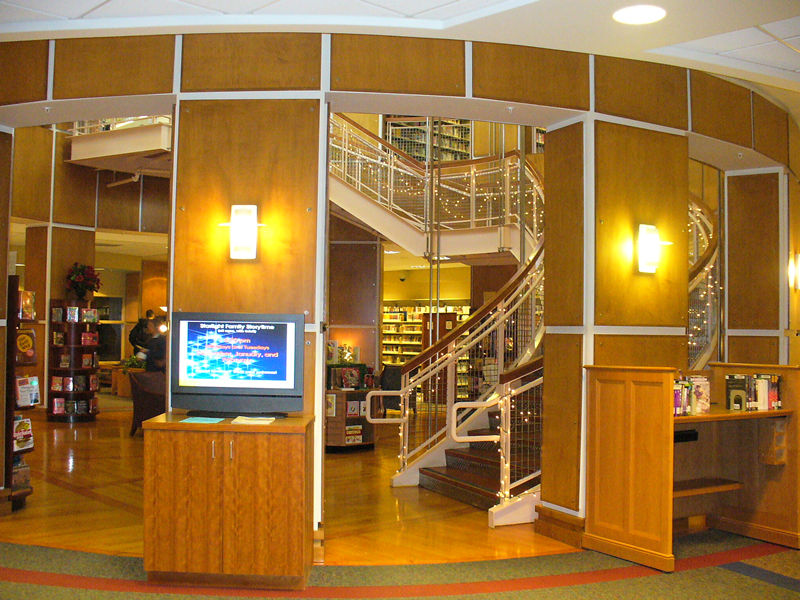
Libraries have always been my sacred ground. I can still remember the tiny public library of my childhood, which I proceeded to read from end to end between the ages of four and twelve and the grander, newly renovated Frederick Public Library with a sweeping spiral staircase, bright patterned carpeting in the children’s section, and new checkout machines that you scanned your library card and then your books at. 

CBA001

So it’s saddened me to read article after article about libraries closing over the years. And although many articles concerning the closing of public libraries advocate to keep their doors open for the benefit of the community, it still doesn’t seem to be helping. Funding is being yanked from them right and left, forcing closures all across the country. Libraries are often viewed as the heart of a community, providing reading and research space, countless resources, and can often help foster literacy and computer training. I wonder what the average taxpayer (and sometimes library-goer) can do to help support public facilities like this, which add value to a community.

How do you feel about libraries closing? How many of you regularly use a library? Has your library done anything creative lately to foster more relationships with the community?

1

The Blog Post with No Pictures*

Flipping through the internet today, I came across a Vanity Fair interview accompanied by a book trailer for B.J. Novak’s The Book with No Pictures, his children’s book with, well, no pictures. The video itself is completely adorable and the conceit of the book—emphasized in this interview—touches on something that though it should be obvious, gave me a bit of an “aha” moment.

Why do children’s books exist? Of course the first and most obvious answer is as a form of entertainment, as yet another vehicle to occupy a child, give them a venue for using their imagination. They are learning tools and foster creative thinking. However, children’s books are rarely without pictures—in fact you’re far more likely to come across completely wordless picture books than you are to come across anything geared toward a young child that has no illustrations at all.

Yet. That doesn’t mean that the words can’t be visual themselves. The words in Novack’s book are all different colors, sizes, fonts. Though that’s certainly an added bonus, that’s still not even the point I’m trying to get at here—and I think the point the author has as well. Reading for a young kid is about more than everything I’ve mentioned above. Reading as a child serves to foster a literary attraction that can exist and survive long into adulthood. By giving the words printed in a book an interactive agenda (and I really just mean the words—there are tons and tons of interactive Pat the Bunny style books that have their place, too), does this help to create a space where kids feel compelled at an early age to respond and discuss what they’ve read? Without the help of pictures or texture? Making adults say silly things is really fun (as the video clearly demonstrates), so does a book like this not then make the words themselves the funny part of the book, a book which in and of itself is having a conversation?

Of course, I don’t have a child and when I was little enough for picture books to be my sole literary companions, I would never have stopped to think about these things, but the idea will at least be one I’m thinking about for a little while. What say you?


* genius title credit to Sharon Pelletier

1

Reading makes you a better person. Really. There are studies.

Neil Gaiman is my favorite author…who I’ve never read.

I know, I know.  I can’t tell you how many people whose tastes I respect and generally agree with have told me that I have to read this guy.  But, well, time (as in, who has any).  He’s in that pile of books by my bedside that will one day collapse, killing me instantly  (which will serve me right for not having gotten around to reading all the tomes that made it lethal to begin with).

But, I digress.  Even though I’ve never read Gaiman’s novels, I have read enough about him and short pieces by him that I feel like our world views are eminently simpatico.  For instance, in this wonderful rumination on reading  he elegantly explains why books are necessary for not just the individual’s mental health and success but society’s as well.  The skills acquired and developed through reading are transferable ones.  They can be used to create the next iPad, social media site, or weapon of mass destruction because they involve opening up the imagination to infinite possibilities.  He argues that reading fiction is the best workout for these particular muscles and, of course, he’s right.

I’ve always had a strong, and probably  somewhat delusional, belief that anything is possible and I think that might date back to my early penchant for fairy tales and books featuring wizards and witches (Merlin was and is a favorite character).  What book or books turned on the creativity faucet for you?  And do you think that fiction is, in fact, more effective than nonfiction in this respect?

4

Redemption through Reading

Brazil made headlines yesterday for introducing a new program to reduce prison sentences, aptly titled “Redemption through Reading”. According to this article from the Huffington Post, inmates in Brazil’s federal prisons can now minimize their sentences by up to 48 days per year by reading one book every four weeks, then writing an essay on it.

While there’s no shortage of literacy programs in prisons all over the world, I thought this was the first case where it actually had a concrete impact on a person’s punishment, but I was wrong. After a little searching online, I found Changing Lives Through Literature, a rehabilitation course introduced in the early 90’s in Massachusetts as an alternative to prison. Created for repeat offenders of serious crimes, this initiative forms reading groups where offenders discuss the classics.  It has proved to significantly reduce recidivism rates and violent behavior among participants.

Avid readers know that literature has the ability to change lives, but these programs bring this concept to fruition. By reading about characters and situations they can relate to, convicts get the chance to look at their own lives, and the way they affect others, through a different lens. They also develop skills to analyze, articulate, and communicate more effectively, equipping them with the ability to make more positive contributions to society.

Does anyone here have experience working in this capacity in the penal system?

10

World Read Aloud Day

I really lucked out this week because today is World Read Aloud Day and the main event is happening at Books of Wonder just a hop, skip, and a jump away from the office! World Read Aloud Day, sponsored by LitWorld, is a celebration of the power of words, in an effort to show that the right to read and write belongs to everyone. Books of Wonder will be hosting the nine hour event, chock full of children’s and YA workshops, author signings/Q&A, and read aloud sessions. Ralph Lee will even be there to host “Bookworm Puppet-Making”!

Most of us have had the opportunity to learn in a great education system, and we usually take that for granted. In our younger days, and regretfully still in the present on occasion, we considered reading a chore. This is understandable, as homework and deadlines have been ingrained in us since day one, while television was a privilege you could never get enough of. But, what makes reading really great is the same thing that makes television so mind numbing. We use our imaginations to fill in the blanks. We identify more with the characters because it’s easier to picture yourself as the protagonist, instead of seeing the most attractive actor fill that role. What would cost you an arm and a leg in a college class, you can learn in a book for under $50.

Do you remember the first book you LOVED or if you can’t recall specifics, the first thing you learned about that you LOVED to read about? Today is the perfect time to pay it forward by donating that book! You can choose to do so locally at a homeless shelter, library, school, or hospital OR you can donate to one of the larger organizations, like BetterWorldBooks or LitWorld.

We all know somebody that doesn’t enjoy reading as much as we do: a sibling, a child, a spouse. Whatever the reason may be, even if it’s something as difficult to overcome as a learning disability, find that person a book today. Or an audio book. Something you know they will love to see or hear. It’s likely they have given up on reading by now, but that’s where you come in, you intelligent book enthusiast, you.

1

Writers Giving Back

I’m such a sap when it comes to people doing good for others. So of course I loved seeing this piece about an organization called Bronx Write Bus, which takes kids from the Bronx on cultural trips outside of the borough accompanied by volunteer writers related to the day’s cultural event. The writer works with the kids on the bus to help them take notes on their experiences. A recent example was a visit to the Anne Frank Center in Soho. Liz Welch, author of THE KIDS ARE ALL RIGHT, went with the kids and distributed to each a notebook, a pen, and a sandwich. How cute is that? A 12 year-old in attendance had never even heard of the Holocaust, but I’m sure came away with new understanding of the world outside of the Bronx.

I think it’s so wonderful to see writers giving back in this way, and helping communities where resources are limited and there is so little focus on books and literacy. Some of these kids just might wind up being writers someday, and their love of words and writing could start from an experience like this that opens up their world beyond their close quarters.

I’d like to know if you have any ideas of cultural destination spots in New York or elsewhere around the country that a group like this might visit. And appropriate writers that might accompany them there. For fun, here is a book that is full of literary destination ideas!

7

Writing well is important

You might look at the title of this post and then higher up at the masthead of this blog and think, “Duh!”  Well, yes, a literary agency blog post that states something as obvious as “writing well is important,” would seem to indicate that its author is either (a) simple minded or (b) really, really struggling to find a subject for her weekly rant.

In fact, while idly catching up on my online news, I came across this post by Kim Brooks, who teaches college composition courses.  As I read about Ms. Brooks’ frustration with the papers her students turn in, which show a complete lack of understanding of or even appreciation for correctly written English, I started musing about the countless queries my colleagues and I receive which are peppered with awkward at best, ungrammatical and nonsensical prose at worst.  Then, there are the proposals and manuscripts turned in by journalists and other professionals whose livelihood depends on their writing skills and which make us pound our heads on our desks in desperation.  One can ascribe these sloppy, sometimes undecipherable texts to laziness or haste, but perhaps, as Ms. Brooks suggests, we should be looking at how English is taught in this country and why it is that so many kids are graduating high school without knowing what to do with a comma, much less a semi-colon.

Call me old-fashioned, a geek, or a more colorful epithet, but I think it’s shameful that we are not more invested in knowing how to write well—not imaginatively, creatively, or poetically, mind you, just technically well.   Can you enjoy a piece of writing when the punctuation is off and there are misspellings or malapropisms throughout, even if the subject matter is compelling?

11

Read Argentina!

by Rachel

One of the things I love to do when I have spare time on the weekends, is to sit in cafés and read. There’s nothing quite like a lazy Sunday afternoon spent with a good book and hot coffee, surrounded by other readers with good books and hot coffee. So reading this BBC News article made me appreciate my lazy café reading time even more.

According to the article, today only 10% of Argentina’s population buys and reads books because of repeated blows to the publishing industry including the banning of books in the 1970’s, the economic crisis in the early 2000’s, and the recent boom in electronic media which has proved to be stiff competition for publishers. In contrast, a NY Times article from 2009 indicated that 50% of adults in the U.S. had read books in print or online within the previous 12 months.

Wanting to promote reading across the city of Buenos Aires, the government has set out to furnish cafés with books by great writers such as Pablo Neruda and Julio Cortazar. Other schemes are also in place to promote reading, including the giving away of books to school children so they can start to build their own collections at home, and large book purchases for school libraries. This is definitely something I like hearing about!

There’s a long list of authors I’d suggest to promote reading–perhaps Dickens? Camus? Twain?

Which books would you give to encourage new readers?