Category Archives: business of publishing

Where do we go from here?

I wasn’t sure what to write today.  After the election that has left so many people feeling angry, lost and in a state of shock, what could I share that would make a difference?

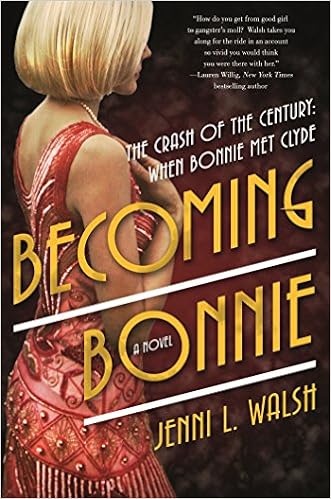
So when  my talented client, Jenni L. Walsh, shared her new blog post with me about her path to publication, I thought it was worth sharing with all of you. It speaks to the grit, determination, perseverance, and yes, setbacks, we all face in life. What matters isn’t what happens around you, it’s how you handle it to make the best life possible for yourself and everyone around you. Obviously that means very different things for different people, but in this case and for our blog where we talk about books and writing and publishing, it felt like a very applicable story to share. Jenni’s road wasn’t fast or easy, and given her many other obligations, she had decided she was going to quit writing. Maybe not forever, maybe for a period of time while her kids were small and she was working and too busy to spend the time writing books that were never going to get published, or so it seemed.

And then an amazing thing happened. The first book sold! And soon after I spoke with an editor at Scholastic who wanted to start a nonfiction series for middle grade readers about strong brave young women, and Jenni did a proposal and we sold the first two books of a new series. We’re developing other projects and Jenni’s hard work is finally paying off.

I hope you find some inspiration here, and perhaps that extra burst of motivation to help you keep going when you feel like you’ve been punched in the gut and you just can’t do it anymore. There can be a silver lining, a path to publication, a road to a better future. Let’s keep thinking about that as we navigate these new and uncharted waters ahead.
What’s trending in fiction

The annual Frankfurt Book Fair is almost upon us and even though it doesn’t actually begin until next month, there are already reports of some big deals happening. As agents, we watch what books are selling to publishers very closely, and we look at the deals coming out of these fairs as way to see what is trending in the marketplace.

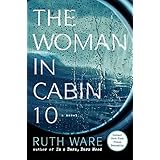
A couple of things to note about these two deals they mention. First, they’re both thrillers. Seems GONE GIRL and GIRL ON THE TRAIN’s remarkable successes have paved the way for publishers to be really excited about new thrillers. This isn’t new news, and despite an overly crowded marketplace, the books with the right combination of elements are still working. We’re reading one now for book club, THE WOMAN IN CABIN 10 by Ruth Ware, which has already sold almost 100,000 copies in hardcover, according to Bookscan, since its publication in July. Clearly, having woman or girl in your title is a sure way to the bestseller list!

Product Details

Another thing that appeals to me personally is the motherhood angle of the first book Publisher’s Weekly mentions – Gin Phillip’s BEAUTIFUL THINGS, which reportedly sold for close to a million dollars. It’s a thriller which takes place over just 3 hours about a young mom who gets trapped in a zoo with her young son and an armed gunman. I love the premise. It’s simple, but scary and high-concept, and feels original and fresh.

Something else that strikes me about the recent Frankfurt deals is that the second one they talk about, Caz Tudor’s 2-book deal with Crown here in the US, is a debut author from the UK who won a contest for the first book, sponsored by Bonnier and called Twenty7, which offers aspiring writers professional feedback on their unpublished manuscripts. It’s really amazing to see that this freelance copyeditor is now going to be a major internationally published author with sales already in 25 territories.

For now at least, thrillers are still working in the market so polish up those thrillers and send them our way; we’d love to take a look.

Will books survive if Barnes & Noble doesn’t?

There is no shortage of articles that have been written over the last few years (and beyond) about the death of publishing. There’s little doubt that the industry has changed dramatically since I became an agent in 1999. Back then we had meetings to talk about digital books, and the consensus was it was not going to happen, at least not anytime in the near future and not in a way that would have a dramatic impact on the sale of print books. Well, we all know what a big impact digital publishing has had on the book market in recent years. The good news is publishers are still finding ways to maximize print sales as well as digital sales so it’s another revenue stream to mine that has cost benefit to publishers.

This recent piece in newrepublic.com speaks to a specific, if not new, concern for publishers and the book business – the potential demise of Barnes & Noble. Bear in mind, this has been a topic of conversation for many years and despite rumors, challenges and financial constraints, B&N is still in business.

Alex Shephard mentions in the piece: “In a world without Barnes & Noble, risk-averse publishers will double down on celebrity authors and surefire hits.” That might be true, but we’ve been seeing this for a long time. Same with his assertion that “Literary writers without proven sales records will have difficulty getting published, as will young, debut novelists. The most literary of novels will be shunted to smaller publishers. Some will probably never be published at all.” This has been a refrain we’ve heard on repeat for years.

My sense about the retailer’s impact on the book business if it were to shutter its doors is that it would be a significant and negative impact, but not an insurmountable one. No question, B&N has been a wonderful partner for bringing books to a wider audience. They provide some very nice opportunities for books and authors, from in-store events to co-op advertising (front of store placement) to their now 25 year-old Discover Great New Writers program. And while publishers still rely heavily on B&N’s feedback on many things, including covers (I’ve had several covers change at the last minute because B&N didn’t like it), the truth is that the number of books they purchase for their stores has dropped dramatically over the years. Yes, they still carry lots of copies of the big bestsellers, as do all the retailers, but they take a lot fewer copies of almost everything else.

This, in part, has resulted in smaller first printings for most books from years past with the hope that if the book starts selling, publishers can quickly hit the reprint button and fulfill market demand. But that doesn’t feel like new news to me. I hope B&N can survive and find a way to thrive in a very difficult market, but I feel strongly that even if that doesn’t happen, authors, publishers and agents will figure out a way to make it work, just like we’ve always done.


6

No such thing as a free lunch (of Toast)

I had a sad Friday the 13th when a quirky website I very much enjoy called The Toast announced they are closing down. The founders of the Toast had a very frank conversation about their decision to do so; I do not know much about website monetization, but I found it a very fascinating discussion of how the websites we read every day make enough money to stay afloat (or not) and pay their writers (or not).

I wonder if the digital age has taught us to expect free content. Anytime you read (or watch or listen to) something fantastic, a lot of people were involved in creating it, from writers and editors to web designers and comment moderators. We are so used to scrolling Twitter, Facebook, and Instagram and instantly clicking through to interesting links, whether at new media hubs like Buzzfeed and Slate or traditional giants like the New York Times and Washington Post without thinking about who pays the people who make those sites interesting, entertaining, and reliable. I personally have known a moment of outrage when something that caught my attention is behind a paywall! And moving from journalism to publishing, e-book piracy is an ongoing problem for publishers and authors, as this handy infographic explores. Then following last week’s BEA/Book Con in Chicago, there was conversation on Twitter about why it’s awful when galleys intended for bloggers, reviewers, and librarians turn up for sale on eBay:

As a literary agent, I obviously think it’s important to protect authors and to make sure they, and everyone who works on their books, are paid for their hard work. But on the other hand, the internet can be an amazing equalizer, bringing resources to communities who wouldn’t have them otherwise. So maybe we need to be looking for the next frontier of the internet that will protect both its important accessibility and intellectual property!

What do you think? Is the explosion of internet content training us to think we should be able to read for free? What kinds of websites or other content would you be willing to pay for? What do you think the next frontier is to monetize our favorite sites and keep the best parts of the internet accessible to all users?

Reaching out

For most of the time that I’ve been in publishing, I’ve found clients in one of four ways: the slush pile, referrals from clients, seeking out authors for ideas I’ve come up with, or convincing a person I’ve come across to write a book. I’ve long been reflexively skeptical of supposed innovations on the query system—everything I tried for a long time turned out to be a huge waste of time that generated no better results than just letting the slush come to my inbox.

But four or so years ago, I looked at my list and my slush pile and realized how heavily they both skewed toward a narrow range of voices. And as I looked for ways to fix this problem I listened to a lot of wise people (including the fine folks at We Need Diverse Books) on the perils of any system in which gatekeepers simply wait for things to come their way.  So now I try to actively participate in things happening outside my inbox, making sure that writers know that my door is open (and my list inclusive).

Authors looking for an agent have a lot of great opportunities now not just to seek an agent, but to reach out to the best possible fit for them and their work. Many wonderful agents participate in these new ways to find clients (and quite a lot of them were on the bandwagon before I got my head out of the sand). And for me, they’re a good way to proactively seek submissions from a diverse pool of authors so I can make sure that my client list supports a wide array of voices.

TwitterLogo_#55aceeTwitter pitch parties like Brenda Drake’s PitMad still involve authors querying agents, but it means I get to find those projects that seem like a good fit for my list and invite the authors to send their queries my way.  And resources like Manuscript Wish List, co-created by Jessica Sinsheimer and KK Hendin, allow me to highlight book concepts that I’d love to see, which gives me a chance to proactively seek a broader and more balanced list, both via the Twitter hashtag and their fantastic website (for which you can find my profile here).  And I’m really excited about the upcoming Twitter event #DVPit, which Beth Phelan created to “showcase pitches about and especially by marginalized voices.”  If you’re a writer from a marginalized community looking for an agent, I strongly encourage you to check out that link before Tuesday, because it looks like it’ll be a great event!

I’d be lying if I said that I wasn’t overwhelmed by the sheer volume of emails in my Weekend Reading folder, many of which come from sources like the above. I look at my To Read list right now and tremble in fear. But I love knowing that the chances that I’ll find a gem that I have a vision for among those projects is far higher, since I’ve already done some of the work in getting authors who have written the kinds of books I’m looking for to reach my way.

Coming soon to a bus near you!

Not in a while has an article made me smile the way this one did earlier this week in the New York Times. Booksellers are getting creative in finding new ways to reach readers, and it’s working! Not only is Ann Patchett’s Nashville indie bookstore doing well, it’s expanding its storefront in addition to taking books on the road for sale on a portable bus! It seems like such a simple thing, and yet it’s innovative as well. Go to where the people are rather than waiting for the people to come into the bookstore, not such an easy sell anywhere with so much available online and for delivery in 5 minutes or less.

As if I didn’t already love every single thing about Ann Patchett, just one more thing to swoon over. The store’s name, Parnassus, actually comes from Christopher Morley’s 1917 novel “Parnassus on Wheels,” about a middle-aged woman who travels around selling books out of a horse-drawn van. So it’s fitting that they are now taking the “bookstore on wheels” concept literally.

I was thinking as I was reading this charming article about bringing books to the masses that it’s really not that different than what Scholastic has done all these years for children’s books. They schlep busloads of books and set them up in schools across the country where parents, teachers and kids can shop in the comfort of their own gym, and a portion of sales gets donated back to the school. I personally buy a majority of holiday gifts each fall at the Scholastic Book Fair, and I’m so thrilled that next year I’ll have one of my books for sale there – Cecilia Galante’s THE WORLD FROM UP HERE. And this year, they’re doing a bus tour called Summer Reading Road Trip with events all over the country so they’re getting on the “buswagon” too. Who doesn’t love a good road trip?

Scholastic Summer Reading Road Trip

Scholastic’s is a brilliant and a successful sales model that I think is unique, although are there other “bring the books to the buyer” methods I’m not aware of? What are other ways you can think of to get books into readers’ hands? Books on a bus is so fun, I’m seriously thinking about renting a bus to sell books this summer! Ok, I joke, my lifestyle so does not allow for such a thing, but I love the idea of it so much. One can dream.


3

Book publishing’s handy cheat sheet

I was doing some online research as I was vetting a recent contract and came upon a vintage blog post (originally posted in 2009, and updated in 2014) from Nathan Bransford, an interesting publishing figure who has worked in several areas of the publishing business. It gives a long list of brief digestible definitions of basic publishing terms. Many are likely familiar even to a lay person, like “hardcover” or “debut novel” or “editor”, but many are more inside baseball like “first pass pages” or “reserves against returns” or “co-op”.

Whatever your interest in publishing, how nice it is to have a free easily accessible reference page to help with your research. It’s an easy list to navigate, entries listed in alphabetical order, and some entries offer brief examples for clarification, like “Imprint” which refers to “The entity within a publisher whose name is printed on the spine of a book and which theoretically has a certain publishing “flavor.” An imprint may be a division within a publishing house (Knopf, HarperCollins, etc.), it may be based around a certain genre (Harlequin Silhouette, Harlequin Blaze, etc.) or it may be a “boutique” imprint named after editor(s) (Nan A. Talese, Spiegel & Grau, etc.). Keeping imprints straight and remembering who reports to whom takes years of familiarity with the publishing industry and gigantic spreadsheets.” While many entries just skims the surface as far as what each of these terms mean, often without using real-world examples, it’s a highly useful tool to have at your disposable.

What do you think of the list? Are there any terms you have questions about that either aren’t referenced here and/or require further explanation? Are there other resources you go to when you have questions about book publishing? I’m happy to answer any and all questions Mr. Bransford or others might not have covered.