Category Archives: historical fiction

Where do we go from here?

I wasn’t sure what to write today.  After the election that has left so many people feeling angry, lost and in a state of shock, what could I share that would make a difference?

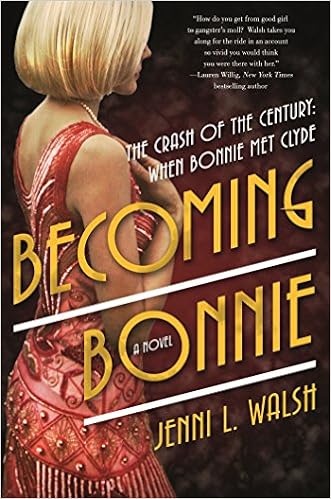
So when  my talented client, Jenni L. Walsh, shared her new blog post with me about her path to publication, I thought it was worth sharing with all of you. It speaks to the grit, determination, perseverance, and yes, setbacks, we all face in life. What matters isn’t what happens around you, it’s how you handle it to make the best life possible for yourself and everyone around you. Obviously that means very different things for different people, but in this case and for our blog where we talk about books and writing and publishing, it felt like a very applicable story to share. Jenni’s road wasn’t fast or easy, and given her many other obligations, she had decided she was going to quit writing. Maybe not forever, maybe for a period of time while her kids were small and she was working and too busy to spend the time writing books that were never going to get published, or so it seemed.

And then an amazing thing happened. The first book sold! And soon after I spoke with an editor at Scholastic who wanted to start a nonfiction series for middle grade readers about strong brave young women, and Jenni did a proposal and we sold the first two books of a new series. We’re developing other projects and Jenni’s hard work is finally paying off.

I hope you find some inspiration here, and perhaps that extra burst of motivation to help you keep going when you feel like you’ve been punched in the gut and you just can’t do it anymore. There can be a silver lining, a path to publication, a road to a better future. Let’s keep thinking about that as we navigate these new and uncharted waters ahead.
2

Schoolday reading

With the summer season coming to a close (I know, I know, it’s a harsh reality, but we all have to accept it), I was thinking fondly on how excited I used to get to go back to school. Clean, fresh notebooks, brand new pens, new seat assignments and, of course, finding out what books we were going to be reading that year.

I remember in elementary school when there was a whole separate class called “Reading,” and that was amazing. I relished in having read a little ahead of the class and knowing what was coming next and learning about the culture surrounding each book. I think my favorite thing, however, was when we read aloud, a paragraph per student, which was excruciating when it got to those who didn’t care or couldn’t read as well (by “well” I meant with emotion as a performance because I also fancied myself a budding actress. Naturally.), but was empowering when it was my turn and I got an especially long paragraph to say.

Reminiscing about some of my very favorite books we read in grade school, my mind immediately went to Scott O’Dell’s Island of the Blue Dolphins which easily led me to the rest of the books in the series and will forever be remembered initially as the first time I learned what a cormorant was.

Number the Stars by Lois Lowry is another one that struck me hard and I think was the catalyst for my fervent love of middle grade and young adult fiction that centered on WWII, the Holocaust and wartime in general. The memories are coming back to me in floods now and my next immediate thought is of The Endless Steppe by Esther Hautzig about a family exiled to Siberia. I don’t remember too much about the plot (though I did just look it up), but I do remember declaring that it was my number one favorite book for a while…and of course it turns out that it also took place during the early 1940s.

And then there are those books that I remember pieces of, but have no idea what they might be. Struck with a thought, I just searched “wearing broccoli around your neck,” and weirdly, that worked. Apparently a fourth grade favorite of mine was called Be a Perfect Person in Just Three Days by Stephen Manes. I should have known that searching “everything you touch turns to chocolate” would provide me with a book titled The Chocolate Touch by Patrick Skene Catling. Should have figured that one out, Rachel. I think I just liked that book so much because it’s actually a dream of mine to have chocolate whenever I want it.

It’s funny the way certain parts of stories, especially stories from childhood, stick with us even if the rest of the book doesn’t. Vivid scenes, like the making a cape of cormorant feathers in Island of the Blue Dolphins or the main character in In the Year of the Boar and Jackie Robinson learning how to play stickball (also when I learned what stickball was, myself). Is it because there is so much new information that we’re learning for the first time or because a kid’s imagination works in overdrive, much more easily able to relate fantastical stories to his or her own life?

Whatever the reason, it was a nice little trip down memory lane—and a relief that my images of broccoli necklaces and chocolate mailboxes were based on something real and not a sign that I’m going insane. What books immediately come to mind for you when you think back to grade school? Were there any that you remember hating? Loving? Maybe it’ll jog my memory, too!

3

Little House in the Big City

Polar vortex, snowmaggedon, bombogenesis…whatever you call it, this has been one cold, snowy winter. Even the DGLM office closed early due to blizzard conditions last week! Well I, and anyone else who grew up reading the Little House on the Prairie series, am undaunted by this harsh winter. Thanks to Laura Ingalls and her family, I am more than ready to twist hay into braids to be burnt in the stove, and fill my pockets with baked potatoes for warmth.

Okay, so some of these measures might be unnecessary – there aren’t a lot of clotheslines to be found between my apartment and the subway line, unfortunately. But I was pleased to discover that one Little House winter delight is still alive and well: Molasses Snow Candy! You can read the recipe there on the official Little House website, and if you’re still skeptical, check out this blog post from a mom who tried it out for herself with her kids.

I can’t wait for the next big snowstorm so that I can try this out for myself! (Maybe Laura Ingalls would be brave enough to eat week-old NYC snow, but not I!) In the meantime, I’m taking this quiz to find out what Little House girl I would be, and visiting the Union Square farmer’s market to look for molasses.

Anyone else secretly wishing they could spend the winter in a log cabin? What are your favorite winter survival tips from books?

Title Help

Since I am short on time and in need of assistance, I thought I’d kill two birds with one stone, blog about what I’m working on, and enlist any help you might offer.
Right now, I am scouring the works of the Russian poets Pushkin and Lermontov in hopes of finding a phrase that might serve as a title for novel that I sold, an epic tale set in the Imperial Court of Russia. As I try out various phrases, it’s once again clear that finding a suitable title is tricky business. The book was originally published in French, but like so many direct translations, its title (All the Honor of Men), which is taken from a quote, does not quite work in English. It also sounds a bit too masculine for a work of historical fiction that has at its heart as star-crossed set of lovers as ever existed.

I’d like something that sings, zings, and otherwise announces itself as a humdinger of a title. Since I can’t ask that you read the book (well, not at this point anyway) I’d love to hear your nominations for recent terrific titles. Maybe your suggestion will inspire a breakthrough!

11

Living in the Past

When I was younger, I remember several times classifying my favorite types of books as specifically “about a girl my age during World War II.” And truly, looking at the bookshelf in my childhood bedroom, that preference is quite apparent. I’ve always enjoyed historical fiction, but it seems like I would go through phases of gravitating towards certain periods in history far more than others. In my later teens, it was Renaissance Italy and nothing else and I also remember a period of mid-1800’s frontier America. While historical fiction is in and of itself a clear literary genre, the case can be made that there are a myriad of sub-genres as well, divided up by era and place.

It’s a tricky thing, writing a story that takes place in a time no one living has ever experienced, and there are many ways to go about doing it—some more successful than others. I’ve read authors who go the route of writing the entire narrative—style, structure and language included, as if they were not writing about a long past time, but instead are living it and writing as contemporaries would. This invariably, in my opinion, comes out sounding awkward and forced, no matter how accurately the form is rendered. Maybe that’s why I stuck with 20th century histories for so long; there’s less opportunity for authors to pretend they grew up in regency England.

Reading historical fiction is where I’ve gained a lot of my knowledge of, as well as acquired an interest in, history itself. Thankfully, the latter arose or else I’m sure I’d have come to believe a number of things happened or didn’t happen due to the artistic liberties allowed to authors. Novels led me to real research, reading factual historical texts on my own volition simply because I just had to learn more about certain monarchs, historical figures or events. The advent of Wikipedia has made this all the more accessible, and I sometimes have to stop reading to run over to my computer and look up some obscure or trivial piece of information simply because it played an interesting part in the plot.

My television and cinematic historical preferences, however, are wildly different from my literary ones. Recently, I’ve taken to hours spent watching episodes of Downton Abbey, North & South and Gosford Park, though I have only a small interest in books set during the same years.  My guess is that for me, some periods can be better displayed visually and others in writing, but that’s only a rumination.

Regardless, there will always be a place for historical fiction on my bookshelves, though some eras will clearly outweigh the others as my tastes change and evolve. What’s your opinion? Do you stand for historicals at all, and if you do, do you find yourself gravitating towards certain periods in history over others?

1

“The sceptre and the isle”

This fun survey of royally bad relationships had me pondering the fate of Kate and Will once the wedding hoopla is over and done with and the reality of marriage in full public view sets in.  Having always been fascinated with British royal history (what a lot of nutters and knaves!) I’ve read a lot of fiction and some non-fiction devoted to the goings on of the English kings and queens.  From the Plantagenets to the Windsors, every generation of royals seems to bring with it its share of tragedy, scandal, and…interesting fashion choices.  As the latest royal wedding (with its attendant media frenzy) draws near, I wonder what narratives of intrigue and glory this pretty couple will inspire for future authors.  Let’s hope their marriage is more stable and happy than Henry II and Eleanor of Aquitaine’s or Henry VIII and Anne Boleyn’s, say.  But if it isn’t, I’m sure there will be many bestsellers chronicling what went wrong.

What are your favorite books about British royalty?

3

Old favorites.

In light of what Jim wrote about trends this week, I started thinking back to my favorite books growing up, trying to pick apart any trends that might have existed or influenced my reading habits. What I came up with regarding the middle grade and YA books I was reading at the time was a strong lean towards historical fiction and time travel. Thinking about it, a vast majority of the stand-alone books I read between ages 10 and 15 were historical fiction. Series are a category all on their own, and I can tell you now that I’m pretty sure I devoured every single Babysitter’s Club and Sweet Valley book I could get my hands on.

The books I turned back to time and time again, however, were always, as I remember putting it, about “girls my age living during World War II.” I got pretty specific on that one. I don’t know if it was simply because historical fiction was what appealed to me naturally or whether there was a surplus of like books at the time. Did a trend shape the way I chose and enjoyed books as a child, or did I just have such a specific taste that I found a way to pick out the books I loved? I’m certain there weren’t too many vampires or zombies populating the YA shelves at the time, but would I have been drawn to a book like this if there was?

I’m sure this is something I’ll never work out and won’t change the facts that the books with the covers taped on dozens of times and the paged curled from too much turning will always make me smile when I remember them. The most beaten up of them all, I think, is The Switching Well by Peni R. Griffin. I don’t think I’ve ever found anyone else who’s read about Amber and Ada—one from 1999 and the other from 1899 who switch places—but I assure you, I could recite the plot in intricate detail to anyone who asked. There was a trilogy about a displaced set of siblings from England in WWII by Kit Pearson called The Guests of War and another about a time traveling Irish girl named Rosie by Ann Carroll that I read time and time again.

I own nearly every book in the American Girl series (or at least those written before 1997) and had read The Endless Steppe at least twice before we were required to in school. Is it that today’s children and teenagers don’t want to read about the past or is it that they aren’t given the opportunity or push to? Whatever the impetus, I’m interested in seeing what type of literature—farther than what the next big supernatural being to hit the shelves will be—floods the market next.

2

Historical fiction

by Stacey

I came across this list of favorite historical novels compiled by Seattle Times readers , and thought I’d share it for those of you who enjoy a good piece of historical fiction, or for those of you who write in this category. I tend to do better with contemporary novels, but this is a varied and eclectic list that looks like a lot of fun, and I’m reading The Help now for our next DGLM book club, so I’m looking forward to weighing in on that book’s amazing commercial success and positive reader response. If you have any favorites (this batch focuses only on those set in the U.S.) that are note on the list, please share.