Category Archives: inspiration

0

Fall fiction, and a few debut author stories

Not that I want to rush summer, which is my favorite time of year, but I did get a little excited when I saw this roundup of big fall fiction in Publisher’s Weekly, which really is right around the corner. Fall is always the time when big books are released, in both the nonfiction and fiction categories.

The list is pretty eclectic but the one common factor is that all the books are debuts. Someone took a chance and felt that these books could stand out in a very crowded and difficult marketplace. I’m always eager to get a sense of what publishers are excited about in terms of not only plots, but also writer backgrounds and pedigrees. Has their short fiction been previously published? Do they have an MFA from a prestigious program?

In the case of this list, it’s a mixed bag. There’s a lawyer from Reno, an MFA from NYU, and a former magazine book editor. But my favorite story is about an author who had been rejected by 60 agents (and that’s after getting her MFA from Columbia, people!) before sending her novel to a few independent publishing houses. Eight months later, a fellow student from Columbia was working as an editor at Soho Press and asked her if the manuscript was still available. INTO THE VALLEY by Ruth Gahm will be published this fall.

Check out all of these stories. They are interesting and fun, and look for the books this fall. If PW is profiling them, there’s a good chance at least a couple of them will do really well. Which ones do you want to read? Any other books you’re excited about for fall?
Unexpected authors

You know how I love to inspire our blog readers with success stories. After all these years, I still enjoy learning about how writers began their publishing careers because unlike doctors and lawyers and the like which require an advance degree and extensive training, writers can pursue their craft from anywhere at any time.

I was reminded of this from reading a few relevant stories recently. Publisher’s Weekly has a series called Flying Starts where they interview various (published) writers who share their stories of getting started.

So, speaking of doctors, this Flying Start looks at the debut of Pennsylvania surgeon Ilene Wong (pen name I.W. Gregorio). She fit her writing into her schedule in blocks while she worked full-time and her first novel about an intersex teen was recently published by Balzer + Bray, a division of HarperCollins. A dream come true for her!

MOSQUITOLAND is a recent YA novel by David Arnold that got a ton of great reviews and attention, and the author talks about how he was a freelance musician and stay-at-home dad before he wrote this book. How cool is that?

My own client, A.J. Hartley, is a renowned Shakespeare professor in his day job who in his other life writes highly commercial fiction across a myriad of categories. And Deborah Lytton was an actress and musician turned lawyer before she became a children’s author.

These stories give me hope that if you are destined to become a published author, you can achieve your goals no matter what else you are doing in your life. So, soldier on, keep writing and persevering and you will find your way. If you have any great publishing stories to share here, please do so in the comments.

The art of storytelling

The story matters. But so does the way you tell it. Just learn from this 23-year-old who has been writing a memoir on Instagram.

There are so many great things to love about this story. Sure, I appreciate the beautiful photos and well-written captions, but I admire the sheer ingenuity most of all. Fact: a new memoir is published every 38 minutes. Don’t fact-check me on that, just trust me. There are a lot of memoirs out there. Another fact: not many of them are written using the medium of a photograph social media platform, with carefully curated shots posted a year later, a completely different practice than the usual immediacy and spontaneity of picture posting.

Short stories and even entire novels have been written on Twitter too, but what technology gives, technology also takes away. Algorithms generate news stories and a scary amount of written content that you would never suspect. Don’t believe me? Then take this test.

The point is this: technology has changed everything and will continue to change everything, for better or worse. There are an unimaginable number of ways to spread stories now. Get creative and find a way that is uniquely you. Otherwise computer algorithms may as well write your story for you.

Also, I just wanted to include a quick update on one of my earlier blog posts. In March 2015, I posted a blog about censorship and China being named the guest of honor at BEA 2015. Want to see what that all amounted to? This was the result.

2

The Tempest in a tempest

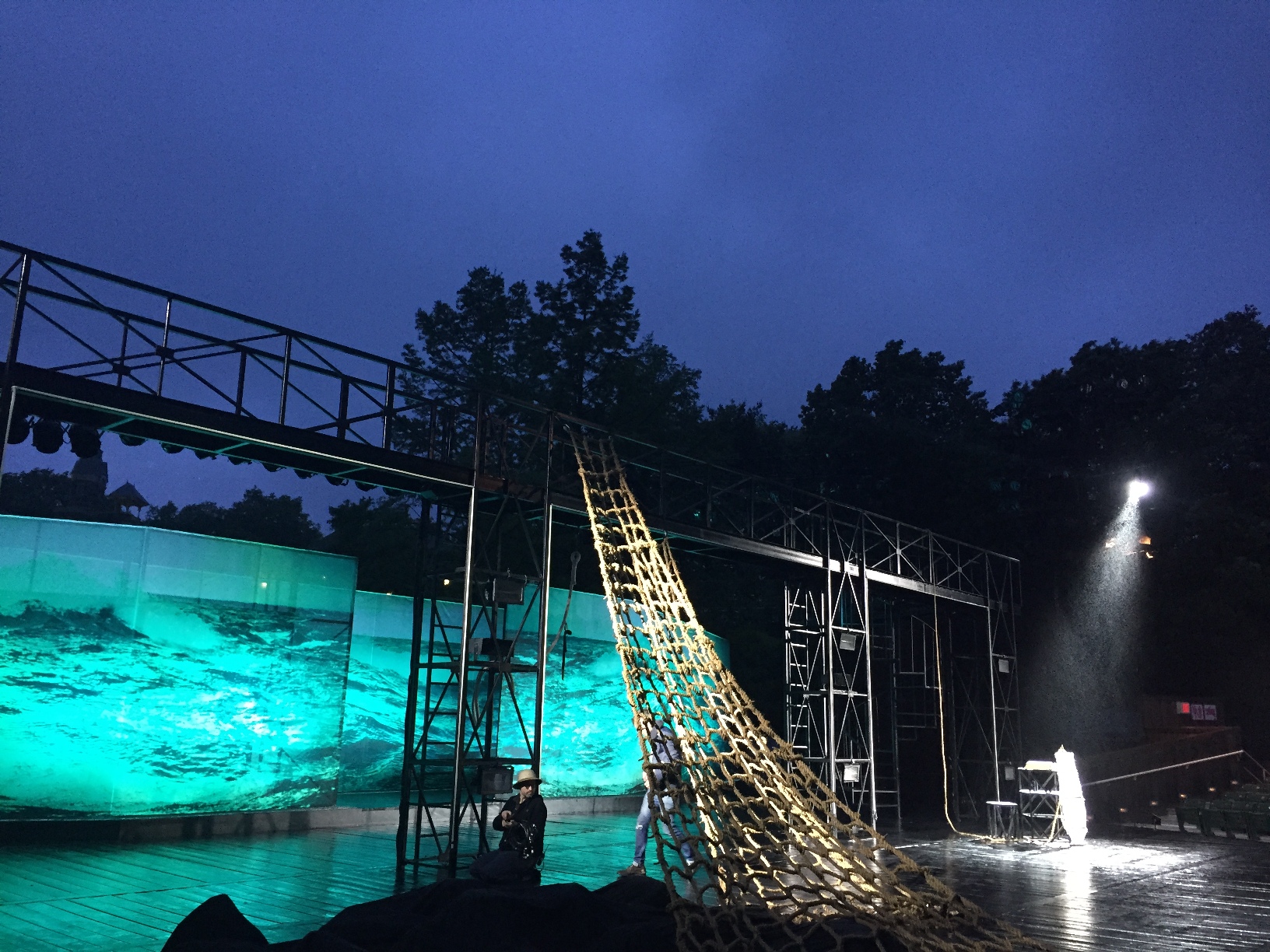
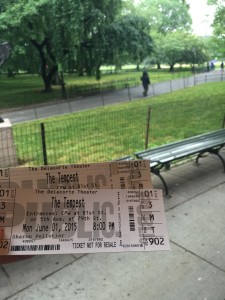
Last night I attended the Shakespeare in the Park production of The Tempest – well, part of it at least.

In case you aren’t familiar with Shakespeare in the Park, it’s one of the most amazing things about New York City. Every summer since 1954, The Public Theater presents two productions of Shakespeare in an open-air theater in the middle of Central Park, with tickets free by lottery or by waiting in line. I was lucky enough to get a pair of tickets in yesterday’s lottery – I’m guessing the entry pool was slim thanks to all-day rain and temps in the 50s. But I was not scared off! In fact, I thought it would be a lot of fun to see The Tempest in the midst of an actual tempest, and I was not wrong. Thanks to a hasty purchase of trusty emergency ponchos and a cozy blanket, my friend and I were ready to brave the elements and hoped the actors were as well.

tempest2

And they were! For at least the first act. And what a first act it was! The play opens with a fearsome shipwreck scene, and the scenery and special effects would no doubt have been impressive in any conditions; experiencing it with nature contributing her own genuine rain and blustery winds made Shakespeare’s gorgeous lines, and the fine work of the hardy actors, truly exceptional. It was a show to remember even though they decided to close the performance after the first act. (I was soaked and shivering, though intellectually elated, so it wasn’t a complete disappointment.)

tempest1

And it got me thinking about the way the weather influences fiction, for readers and maybe for writers as well! This weekend I was reading Neal Stephenson’s excellent Seveneves and thunder boomed outside just as I read an account of the moon exploding into pieces – quite a startling moment! On the other hand, fiction can be escapism – read a beachy book on a frigid winter day, or vice versa, to forget the miserable weather report.

I wonder if the same goes for writers as they create the fiction we love to readDo they have to work a little harder on a blizzard scene if they’re writing on a gorgeous spring day? Or can the creative imagination do its thing regardless of what’s going on outside the window?

What do you think? Do you match your book to the weather, or the opposite? Do you find the weather creeping onto the page when you write? 


0

Plausibility

As devoted DGLM readers know, we run an in-house book club here to broaden our horizons and keep abreast of categories we might not otherwise investigate. This month, we’re doing thrillers, and while I enjoyed my book—fast-paced, good characters, lots of practical information—ultimately it bugged me because the central premise was totally unbelievable. While there’s eventually a plot-twist that tries to explain away the implausibility of the concept, it doesn’t pass the smell test.

Yet without naming names, the book came from a Big Six house, edited by a top editor, and was the author’s tenth novel. It came armed with tons of blurbs from major authors, and I could find only one review that took issue with the premise. To which I say… really? But while I sit here feeling like I’m taking crazy pills with Mugatu from ZOOLANDER, the book did make me think about plausibility in general.

I’m sure plausibility is a question  for all writers, but especially ones who write in plot-heavy genres like thriller, sci-fi, fantasy, kids books, etc. It’s hard enough to come up with inventive plots, character and voice, yet do it in a way that readers will buy–even if your story is about, say, zombie kittens from Mars. So if you’re wrestling with plausibility issues, check out this essay from Steve Almond in Writer’s Digest, which ably dissects the various plausibility traps writers often fall into (I’d say the premise of my Book Club book falls under the Factual/Logistical umbrella). Or, for an elegant summation of how to think about plausibility, it’s hard to beat this letter from Ursula K. LeGuin.

How many of you have run into problems with plausibility? And how have you found your way out of the traps?

3

Weather or not…

This piece in Salon about how rain is often used in literature and film to create or punctuate a mood, advance the story, or simply provide an arresting backdrop to the goings-on, tickled me because it immediately led me to run a mental list of rain-filled books and movies.  And, sure enough, rain as metaphor and plot device is everywhere, in ways big and small.

Of course, I’ve been railing for years about weather.com writing, imploring authors not to open their work with long descriptions of weather or geographic conditions.  While I get how irresistible it is to set about capturing in words/images the awesome power of nature, very few authors can make non-catastrophic meteorological events compelling over a large span of narrative. 

That said, there’s no denying that weather is great for atmosphere (tautological pun intended).  From the foggy moors of Emily Bronte’s Wuthering Heights, to the feverish heat of Lily King’s Euphoria, skillful depictions of weather conditions help make literary works unforgettable.  Many years later, you may not remember other details of a story, but you probably recall the sense of humid discomfort in the bayous or the crispness of a spring day in southern France. 

What are your favorite weather sequences?  And, which authors do you feel use weather most effectively?

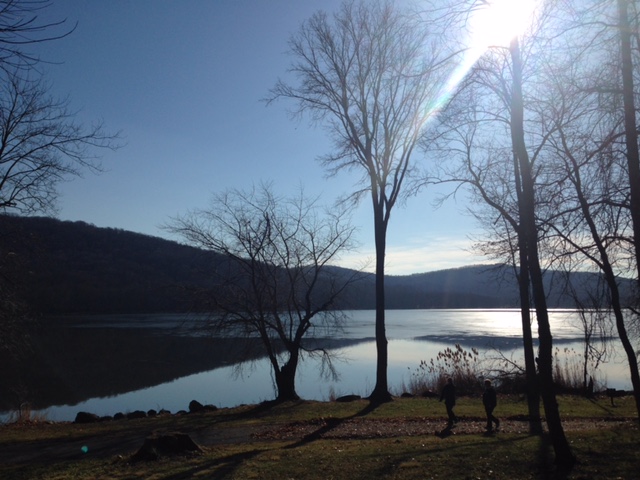
Lake

5

My small town wins big!

I live in a small town in New Jersey called Haworth (pronounced Haaworth). Like just over 3,000 people small. 1,100 households small. Most people have never heard of it, even people who grew up in NJ. I love my little town. Even more so because they recently raised almost $300,000 for a major library expansion that was facing a large funding deficit. Of course, I did my share. I donated money to buy a brick that will decorate a patio outside the entrance. And I offered to give a literary consultation to an aspiring author for a library fundraiser. But I was blown away when I saw this article about the fundraising efforts in a local paper, northjersey.com.

The time and energy these women put forth to creatively raise money for the library is nothing short of astounding. They started sending letters far and wide to anyone that had even a remote connection to Haworth.

They came up with a plan to contact the town of Haworth in England, home of the Brontë sisters, and the inspiration for our town’s name, who responded positively by buying a brick.

They got Anne Tyler and Ann Patchett, one of my favorite authors, to donate $700 between them.

Brooke Shields was raised in Haworth and bought a brick.

The SF Giants donated $500 because one of their early team members lived in Haworth.

Of course not all of their efforts were successful, but in the end they raised enough money for the expansion to go through. It was recently finished and looks amazing.

All I have to say is next time I have an author of mine in town, I am going to encourage them to come to the library for an event and get these ladies on board to sell books! If you have any great small town library stories to share, like my colleague, Eric, did last week on our blog, we’d love to hear them. This story makes me smile every time I think of it.

0

Real live agents!

Last week I had the pleasure of meeting with students at the University of Tulsa. The screenwriting program organizes this Agents’ Summit biannually to give students, faculty, and interested community members the chance to meet agents  – real live agents! – and learn about the ins and outs of finding representation for your book, screenplay, or theatrical play.

IMG_3261

It’s the most important part of any conference…the COFFEE

Or, as the coordinating professor told me, “Now our students get to see that you aren’t scary!”

He continued, “We want them to take their work seriously and understand its potential. We want them to realize they can apply for internships! We want them to keep writing!”

The visit was a very inspiring experience – the campus was beautiful, downtown Tulsa is full of amazing coffeeshops and interesting museums, and most importantly, the students were so bright, interested, and creative. They asked smart, thoughtful questions, like “What one quality are you looking for most in a query?”* and “How much should I change my book to fit what is popular right now?”**

It was a great reminder that in the daily grind of answering emails, reviewing contracts, and evaluating proposals, I also get to work with gifted writers who love putting stories on paper and sharing them with readers. Even when it’s hard or lonely work, even when they have to be brave enough to share the results of that work with “not scary” agents like me! And it’s exciting to know that there are a bunch of young writers out there getting ready to follow in their footsteps.

What questions have you always wanted to ask a “real live agent”? What keeps you motivated to work on your writing when you get discouraged? 


*We all said things on the variety of “Voice!” and “Characters we can’t forget about.” 

**Not at all! It’s important to be familiar with your category and think about where you would find your readers…but it’s also important to write the best book you can write, based on the inspiration that’s driving you. Don’t chase the market – it might be gone by the time you get there, and then you’ll be stuck with a book you aren’t invested in. 

2

Why I love picture books

B9316753363Z.1_20150326172715_000_G9RAB7N6A.2-0

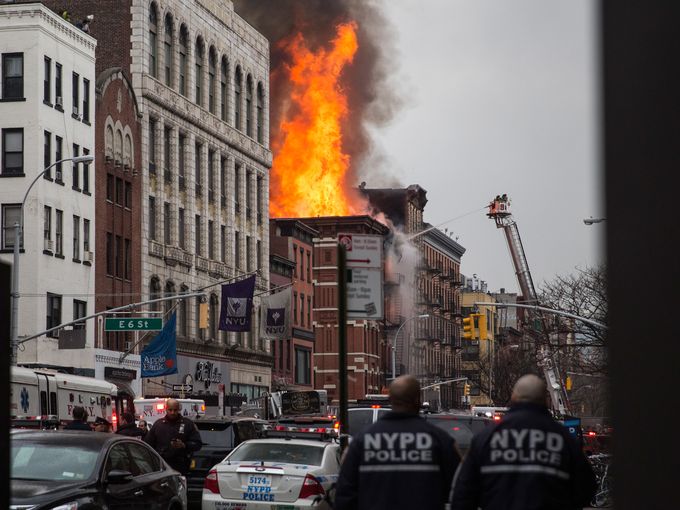
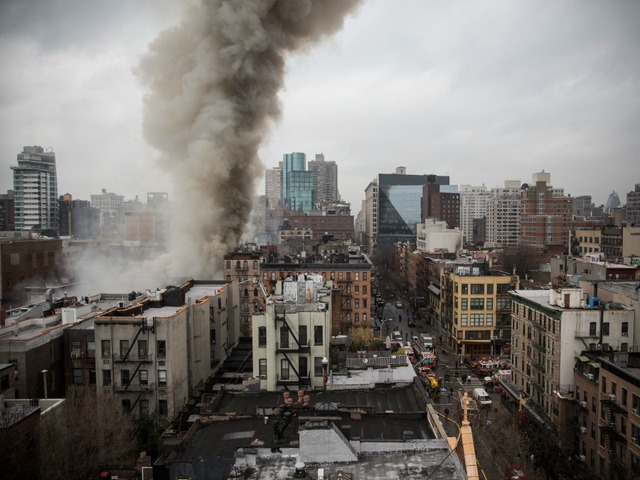
As I’m sure you heard, there was a massive fire here in New York yesterday afternoon, and it happened just seven blocks away from our office. From our windows, we could see the huge cloud of smoke it produced–it looked something like this:

<> on March 26, 2015 in New York City.

And when I walked out the door of our office at 5, the hallway by the elevator had the telltale chemical aroma of a building fire. I have to say it freaked me out a little—the smell immediately brought me back to 9/11, when I lived downtown and woke up to that smell for a couple weeks.

But when I got home and told my 3-year-old son George about the fire, the first thing he asked was to read one of his favorite picture books, MY FIRE ENGINE by Michael Rex. And that, in essence, is one of the reasons I love picture books. There’s something amazing about a toddler’s ability to relate to the real world and make sense of it through the pictures and story of a book, and through them that view of the world becomes remarkable positive. While we adults worry about the safety of the victims and firefighters, or how a gas main might blow up our own building, a toddler sees only the bravery and camaraderie of the fire squad. Not to mention all the cool gear they get and the awesome trucks they ride…

It’s thanks to books like MY FIRE ENGINE and FIREFIGHTER FRANK that George tells us he wants to be a fireman when he grows up—and I’d be willing to bet that plenty of actual firefighters were inspired to some degree by the books they read as kids. While not every picture book is blatantly inspirational, it’s rare to find a picture book that doesn’t have some positive takeaway. They’re healthy for grown-ups, too—while I wallow in the darkness of my musical tastes (thanks, Uncle Lou) and fret over death and taxes, a picture book read with George always brings me back into the light.

5

My favorite New Year’s resolution

So it’s a new year and rather than making a list of virtually the same resolutions I made in 2014, I started to think about what my all-time favorite one is.  I thought back through this year, which was, in fact, a difficult one for me for a number of reasons and what comes to mind is:

“Never give up!”

Indeed, my father, whom I lost last May, taught me that perseverance is one of the most important qualities a person can have.  I listened to him carefully, watched as he led by example and have learned through much trial and error that not giving up is incredibly important.

In my career, as in my personal life, I have always tried to achieve my best.  I have also always stuck with clients whose work I absolutely knew would find a home and just two weeks ago I learned again the real value of perseverance.

I had tried to sell a new client’s novel beginning in the fall of 2012 and finally had to acknowledge that it wasn’t going to happen about four months and dozens of rejections later.  He came back to me with a new manuscript in the spring of 2014 and finally, after submitting to 30 publishers  and on the last day I was in the office before our holiday break, I found him a home…I think a good one.  He didn’t give up and neither did I.  There were times along the way when we both thought about giving up and moving on, but instead we just kept moving forward.

So I am hoping that in 2015 we will all continue to persevere in whatever we choose to do.  That really is my favorite New Year’s resolution.