Category Archives: reading

10

There are no rules…okay, maybe just one

Ask weary DGLMers  how I felt about The Goldfinch by Donna Tartt and they will tell you about the whining, screeching, streams of invective, and endless tiresome commentary  I inflicted on them in the roughly two years it took me to finish that unfortunate doorstop of a book (spoiler alert: I didn’t like it). I won’t go into the details here.  Let’s just say, I had issues.

That unhappy reading experience, however, led me to think quite a bit about the things writers do that drive me absolutely batty—from the macro (indefensible plotting and character choices) to the petty (starting a sentence with a numeral)—and about all the rules we inflict on the process of fiction writing which, really, are mostly discretionary.

As nitpicky as I can be when I line edit a proposal or a manuscript to get it ready for submission, and as much as it annoys me to find typos or anachronisms that momentarily stop you cold during an otherwise pleasant reading experience, my one hard and fast, inviolable rule is “Don’t bore your reader.”

Ethan Hauser, writing in The Millions, seems to agree.  As many rules as everyone, from your first grade teacher to your fellow novelists or journalist colleagues, throws at you, the only real literary crime is boring your reader silly.  So, knock yourself out ending sentences with prepositions, sticking a digital clock in a 19th century drawing room, or opening your magnum opus with five pages of landscape descriptions.  Whatever!  Just don’t bore me, I mean, your reader.

What are your favorite rules to ignore when you’re writing?

7

Trains, planes, reading and writing

I love long train trips almost as much as I hate flying.   To me, there is something both soothing and exciting about zipping across a changing landscape in a powerful machine that hasn’t lost contact with the ground.  Whereas planes are claustrophobic, uncomfortable (unless you don’t need to put your kid through college and  you fly first class), and occasionally panic inducing, trains are throwbacks to a slower, more genteel age when no one expected you to get to where you needed to be so fast that you had to fight jet lag for days once you got there.

I also love reading on trains.  One of my fondest travel memories is of racing through Look Homeward, Angel in a mostly empty compartment on a trip from Zurich to Bruges.  Not that I’m such a seasoned world traveler, but I really enjoy the vaguely surreal dislocation of reading about America while traveling abroad.  And this feeling, I find, is heightened by the foreign and sometimes oddly familiar scenery you glimpse when you’ve snagged a good window seat.

I’m not a writer, but I can only imagine that the sensations and emotional states I’ve experienced while riding railroads in the U.S. and around the world are fairly common and that they might serve to rev up the creative process.  That’s why I dig the idea of Amtrak offering a writing residency for writers.   If I were writing a novel, I’d book my ticket to California, pack up my laptop, a copy of Elizabeth Gilbert’s new book, and hit the rails.

What about you guys?  Do you think you could write on a train?  Would you want to?

1

Embracing Valentine’s Day for all its corniness

I’ve always liked Valentine’s Day. I liked it in first grade when we spent the day making cards from construction paper for our parents, I liked it throughout elementary school when the holiday meant bringing in cards and cupcakes for everyone in your class and I’ve liked it every year since then, getting cards and hugs and silliness from friends and family is one of my favorite things anyway, so it’s nice to have a day when everyone does it all over the place and you have an excuse to be extra lovey to the people in your life who mean something to you.

I know there are plenty of people out there who disparage the day as a “Hallmark holiday” or some kind of “Singles Awareness Day” and approach February 14th with fury and bitterness unmatched on any other day of the year and this is something I have never understood. Yes, I’ll concede that giant white teddy bears holding hearts and the like do make me roll my eyes, but regardless of the actual token of affection, can’t we just ignore all of that and have fun with cheesy emotions? No?

For Valentine’s appreciators and condemners alike, but for readers only (new members welcome), Buzzfeed has put together a list that pretty much covers all the bases of a romantic evening…only with books instead. If you’re determined to shield yourself from any and all human interaction tonight, then I suggest you buy yourself some chocolate, draw a nice bath, light some candles and have a romantic evening all to yourself. Well. Yourself plus all the characters racing across the pages of an old favorite or an exciting new read.

Besides, I think we can all agree that the best part about Valentine’s Day is that candy is going to be so very cheap tomorrow.

5

Audiobooks, who knew!

As everyone in the office can tell you, I’ve been sick this past week, though thoroughly denying it every morning and trying to pretend I can work anyway. Thankfully, I’m better now because even lying in bed all day can get pretty boring after a while. When I’m not in a right enough mind to focus on a screen to watch or a page to read, what else is there to do?

I keep meaning to start in on audiobooks as I think it’s a great way to pass the time hands-free and a nice alternative to listening to music. As a kid, I spent nearly every night being read to sleep by my dad, and I don’t just mean picture books or short stories. I “read” the whole Lord of the Rings trilogy that way! I’ve got a history with listening to long books being read aloud…just not recently, and it’s something I’d like to start getting back into, but I don’t know where to begin!

What kinds of books do you feel work best as an audiobook? Personally, I would think more fantasy, adventure, exciting exploration stories would work well, but I think that’s just because I’m imagining a narrator with an elastic voice (possibly accented) telling a story to children. Have you read any excellent audio adaptations of novels you’d like to recommend?

I’m all ears…literally! (Give me that joke, please, I’ve been sick).

2

The old man and the lists

Because of a client’s Facebook post, last week I ordered a copy of The Hemingway Cookbook by Craig Boreth.  Now, most everyone who’s known me for a week or twenty years knows that my devotion to Papa Hemingway started early and has never really wavered.  It has survived the bad publicity, the parodies, the mediocre later works, the disdain of my feminist friends who think of him as a sexist blowhard who could write a little….

Thing is, I still find that despite the reams written by and about him, this author continues to surprise and delight.  Every once in a while I’ll read a book (The Paris Wife) or an article about Hemingway and his intimates and cronies that makes me think, “Man, those people lived large!”  And despite the tragic ending and the many missteps I’ve always felt that he possessed great generosity of spirit.

Many years ago, I read in the local paper about a young man who wanted to be a writer and went to Hemingway for advice.  He was given two lists of books to read.  I dimly remember that both lists contained classic titles, but one featured books Ernest considered masterpieces and the other those he considered terrible.  He suggested that the young author become familiar with both, the logic being that you can learn a lot even from a bad book.   This notion has served me well professionally and so I’m always thrilled when I come across stories of Hemingway’s reading lists, like this one.

I think great writers learn to write by learning to read and I think a properly curated list is an invaluable tool.  Do you agree?  And, what books would be on the list you make up for someone looking for advice?

BTW, the cookbook is a treasure.  I’m gonna try the burger recipe this weekend.

0

“Why are librarians so lonely?”

“They’re always by them shelves…”

Sorry about that. I thought I’d start this blog off with a little joke to break the ice, because what I’m about to write is a little nerdy—and to be honest, I’m a little nervous.

I love libraries.

Some people can read anywhere. In the subway. Walking down the street. Even at the gym while taking a stroll on the treadmill. I can’t. Or to be more accurate, I can—I just prefer not to.

Reading can be a powerful thing. Stories have the ability to transport us to a different place, a different time, allow us to experience life through the eyes of another and make us see the world in a whole new way.

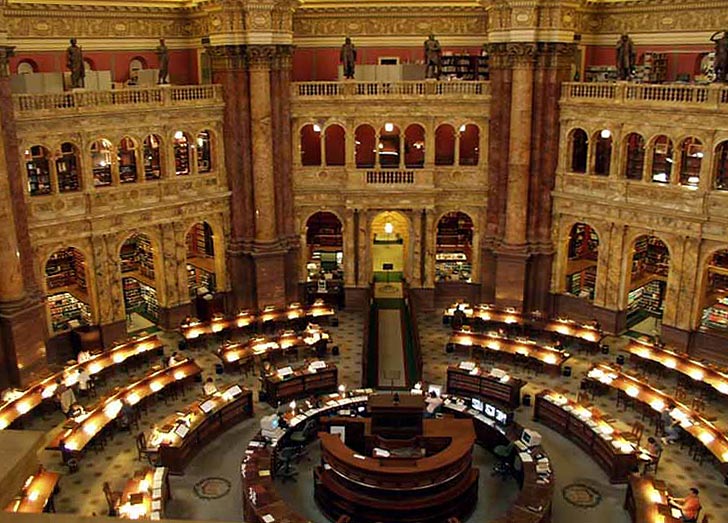
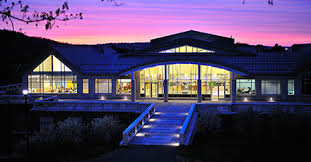
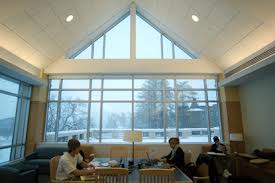
And where we read has an impact as well. The world around us influences everything we experience, and in some of the more beautiful libraries, surrounded by rich mahogany and windows that let the sunlight of the world beyond slip through, in that quiet stillness, we are at peace and can truly absorb the words on the page in front of us.

Here are some snapshots of that type of elegant serenity I’m talking about:


Some more of the world’s most beautiful libraries: http://www.lovethiscitytv.com/top-10-most-amazing-libraries-in-the-world/


Oh, and on a lighter note, some more jokes for your reading pleasure: 

“Want to hear a joke about a library?”

“Sur-”

“SHHHH!”


“Why did the librarian slip and fall?”

“Because she was in the non-friction section.”


So, I was working in a library and this guy comes up to me and asks, “Do you have a bookmark?”

I said, “Yes, we have hundreds…but my name’s Mike.”

7

Slow reading

Now that New York State schools have adopted the Common Core curriculum, a lot of us parents are mystified by the new rules for academic success as determined by the educational powers that be.  One of the things that my husband and I keep getting stuck on is how much of an emphasis is now placed on speed.  Our third grader must answer math problems in less than four seconds per problem, for instance.    Given that most of my math is done either on my iPhone calculator or my fingers, I have no moral authority to speak about that one, but when they tell me that eight-year-olds have to read a certain number of words in one minute in order to establish reading “fluency,” well, that’s when the tic  in my left eyelid becomes pronounced.

Which, as many things do on this blog, leads to a shameful confession:  I am a slow reader.

Given the thousands of pages I read in the course of a typical month, people assume that I took that speed reading course they used to advertise on television back in the day.  I did not.  I am the kind of reader who compulsively reads every word and who pauses often to swirl a particularly juicy adjective around or take loving note of an exceptionally well turned phrase.  When it comes to work, I sometimes hate that I am so slow–my manuscript piles reproduce like Tribbles, after all.   On the flip side, I think I am a much more insightful reader and editor as a result of my tortoise-like approach to the material in front of me.

Thing is, I read books the way  I eat dessert.  I want both experiences to last as long as humanly possible so the enjoyment derived from them will be prolonged as well.  What good is a bowl of ice cream if the primary experience is brain freeze from slurping it down too quickly?  Similarly, what’s the point of speed skating through a great novel or non-fiction narrative only to be done and on to the next?  Don’t we already live our lives doing constant hamster sprints as we struggle to keep up with the masses of information being thrown at us?  Shouldn’t we take a stand and force ourselves to read deliberately, thoughtfully, patiently, discerningly…slowly?  Wouldn’t that be better for our intellectual development as well as our souls?

I think the world needs less fast tracking and more thinking it through.  And, I’m not the only one.  Hopefully, my kid will learn that writing can be savored, not just devoured, that it is not just a means to an end but an end in itself.

What say you?  Is fast reading an important skill in the internet age or is there more value in the slow(er) processing of information?  And, how long does it take you to read an average book?


3

A book can change your life

The title of this post might be overly dramatic, but if you look hard enough you will find some pretty incredible stories about people whose lives were changed by books and reading.

One of those amazing stories comes from YA author Matt de la Peña, whose piece this week in NPR is well worth your time. He touches on so many moments in his own life that were altered by books, and then when he goes into talking about his dad and how his life was changed by reading, well, I was in tears by that point so that tells you what kind of piece this is. In simple prose, he taps into why words and books and reading matter, and how the power of the written word can literally change your life. And I believe almost always for the better.

A love of reading doesn’t have to start early, either. Matt’s life-changing moment came in his second year of college. And you know what else I love about this article? That teacher. That amazing teacher who saw something in this young man and knew he had potential and needed a nudge so she gave him a copy of The Color Purple and asked him to read it before he graduated and then come talk with her about it.

I’m sorry for the way things go for Joshua, a tough young kid profiled here with a secret writing habit, and I hope that de la Peña or someone else can help him find his way through his writing, and through books. When I read pieces like this, it’s so validating to think that the work that we are all doing can make a difference, and in some cases, all the difference.

Do you have any stories to share about how a book changed your life, or the life of someone you know? Please share. And pass this article on too. It’s a great read, and an inspiring one.

18

A book for all seasons

Over the last several days I have found myself thinking a lot about picking up Donna Tartt’s new novel, The Goldfinch.  I’ve been debating the notion of downloading it or walking over to B&N at the top of the park and buying the hardcover.  I even tried to get our DGLM book club to choose it for our next gathering (I was shot down).

“So?” you might be thinking, “You work in publishing.  You read a lot.  It’s a bestseller with a slew of enthusiastic reviews and miles of buzz behind it.  Why wouldn’t you want to read it.”  Seven hundred and eighty-four pages is why!  The thing is a doorstop.  I’ve got a mountain of manuscripts and proposals, a backlog of magazine articles fading in relevance as I type this, a full inbox, and an eight-year-old with more homework every night than I had class work as an undergrad at Columbia.  When, for Pete’s sake, am I supposed to fit in an almost eight hundred page book?

But, still, I’m drawn to it like I’m drawn to pumpkin doughnuts and stews in the fall.  Because it’s the season for big, important books that you can curl up with in your favorite arm chair on a chilly day—wrapped in a warm cardigan, sipping some warm apple cider as you turn the pages—and lose all track of time.  Something about the dip in temperatures and the fact that it’s twilight at 3:30 PM  makes me want to read long and complicated works. 

Clearly, I’m not alone in this.  The publishing world has traditionally scheduled big, important titles in the fall/winter season and beach reads starting in late spring.  And, when I googled “seasonal reading” to see if it’s already been classified as a disorder in the DSM, I came across this piece in the Guardian which…yeah…it seems I’m not at all original (or unique) in my fall reading needs.

What about you?  Do you get all nostalgic for War and Peace or Dune once the flip flops are put away and the jackets come out?


1

Arrogant liars and emotional ninjas

Sharon and I were discussing our taste in books earlier today (shocking, I know) and both confessed to a fondness for unreliable narrators.  Likewise I have a real soft-spot for any protagonist I love in spite of myself.  Clever, wry, horrible jerk I’d never want to know in real life?  Sign me up!  I’m the type of person who loves Lucifer in Paradise Lost more than any other main character in classic lit.  But I know it’s not everyone’s cup of tea—and I think it’s harder to do it well than to write a likeable protagonist well (though that’s not always an easy feat either).  I’m no fan of gimmicks, in general, but if you try something that seems like it can’t possibly work and actually win, you get my undying devotion in return.  I don’t advise authors to stack the odds against themselves, because I’m a fairly risk averse person, but the ones who do and actually pull it off are my gods.

My pet peeve: writers I can see trying to pull my heartstrings.  I described myself earlier as unmovable, which is an exaggeration, but I definitely have more of a heart of stone than the average reader.  I’m all for something that does move me, but if you try too hard to do it I am going to check out.  I need to be lulled into a false sense of security and then wham! tears out of nowhere.  Can you make me cry on the subway* when I’m tired and grumpy?  If so, I’m in.  But if I see it coming, it’s never going to happen.  The icy walls clamp down around my heart, and I start rooting against the hero or heroine.  (Told you I was naturally contrary.)  Chances are the author is trying no matter what, but I need stealth emotion, not transparent manipulation.

I’m just all about any book that can best my natural tendencies.

But we all have our things: the quirks that we look for even though we know they drive others nuts and the things we can’t stand even though everyone else is enthralled.  What draws you in, and what do you tune out?

*Making me forget I’m on the subway is inevitably going to be worked into my pitches. Three real world examples off the top of my head:

“There’s a point in the book where everything just clicks into place, and I actually yelled ‘Holy shit!’ out loud on the train when I read it.  But I was so excited I didn’t even have time to be embarrassed or see how my fellow commuters reacted, because I needed to find out how it was going to go down.”

“I was so wrapped up in what was happening that I completely lost track of time and tuned out everything else.  Even when I finally realized I had missed my stop, I got off the train and walked home while still reading, in the rain, holding my arm across the top of my e-reader so it wouldn’t get wet.”

“I didn’t even know that I was afraid of being forgotten, but the next thing I know I’m just bawling on the subway, imagining what it would be like if my family and friends couldn’t remember I had ever existed.”