
 September 16, 2013
  Jane
Jane 
As many of my colleagues and clients know, as much as I enjoy reading, I absolutely hate writing. When I am required to write something, however, I have learned to be as brief and concise as possible–for me this works better, enabling me to get my point across without committing dozens of literary mistakes.
Now, my client Roy Peter Clark has published a book that tells us just how to do this effectively:
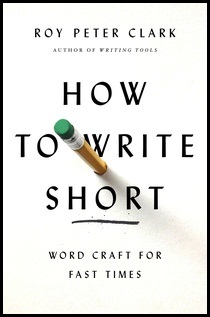
Ever since he came up with this idea, I have been excited – finally a book that I can use to improve whatever writing skills I have.
Writing short is what is happening these days, what with Twitter and all of the other social media messaging. But doing so effectively is definitely a different skill—especially for those who haven’t done it before. I think this piece by Roy which the New York Times published last week really says it all.
Certainly, following Roy’s advice has made me more confident in my writing skills. I am curious how other writers feel about the phenomenon of “short writing” given the growing importance of social media.
I would not say “writing shorter is better”. I would say, “Get to the point”. Short sentences are not better per se. Avoiding unnecessary detail is.
The better writing lesson I ever had was in the Army. Army correspondence is simple. Here’s a description of the standard arrangement:
Para. #1 — This letter is about [subject].
Para. #2 — This is the situation or problem.
Para. #3 — This is how we need to fix it. (This includes either your plan of action or a request for assistance.)
Para. #4 (if necessary) — These are the consequences of not addressing this issue.
Para. #5 — If you have questions, contact [name and phone].