Category Archives: Stacey

0

Why we’re thankful

It makes sense since we’re counting down the minutes until Thanksgiving when we can indulge in a year’s worth of turkey, stuffing, and mashed potatoes to think about things we are thankful for.

Jane shared her thoughts on the subject earlier this week, and I found this piece from writersdigest.com with writers weighing in on why they’re thankful to be writers. There’s some humor to be found, but I also think that Brian Klem sums it up pretty nicely when he talks about his passion for writing (I wish I could say I leap out of bed every morning and rush to my computer!).

We’re all fortunate to work in a business where we can flex our creative muscles, be inspired each and every day by something new and exciting, develop long-term relationships with clients and editors who often become friends as well as colleagues, and for me personally, have the opportunity to do a job I love with the flexibility that a large young family requires.

So, I have a lot to be thankful for this year. And look forward to what tomorrow brings, and not just for the copious amounts of food I’ll be consuming. Happy Thanksgiving to all of you!

How would you save the book biz?

We’ve all heard the horror stories over the last couple of years about the end of publishing and books basically becoming obsolete and going the way of the VHS tape.

Those of us who work in publishing do our part to help keep the business afloat. Writers by writing, where it all begins; agents by selling writers’ works; publishers by publishing and getting the books to the consumer. We work hard, despite the changing landscape and gloom and doom mantras, to get our books into the marketplace, especially those hard-to-sell titles that fall into the “labor of love” category, of which I can list my fair share from over the years.

Now bestselling author Ann Patchett has made the front page of the New York Times (rare for a publishing story at all, and a positive one at that) talking about opening an independent bookstore in her hometown of Nashville. I loved Ann Patchett before (State of Wonder was definitely one of the best books I read this year) and now I love her even more for using her own time and resources to help give back to her community, and by extension, to the publishing industry.

I can’t think of a quick-fix to transform the biz, but new successful indie stores will help, and as Patchett notes in the piece: “If you like this thing, it’s your responsibility to keep this thing alive.” Meantime, I will be continuing to try and sell books that make a difference in people’s lives, and I will be more mindful of supporting my local bookseller as we approach the holiday season.

If you could do one thing to help save the book business, what would it be?

1

Rejections can be fun too

I just found out a book I passed on sold to a publisher I do a lot of business with. I was on the wrong end of that judgment call, but it happens and I know how important it is to learn a lesson from it and move on. As we’ve discussed on this forum before, rejection is part of the business. Unfortunately for all of us, writers and agents included, it’s a bigger part than we’d like it to be.

So when I came across this clever column from writersdigest.com about a contest for faux rejection letters created by readers, it made me laugh. Think about books you love and books you hate and what you might say if you had the chance to reject them when you received the submission. The possibilities are endless!

Why not take a stab at it and see what you come up with? Put your editor’s hat on and send your pitches over to Writer’s Digest. If anyone gets picked for publication, let us know. Have fun, and look forward to reading your rejections!

3

Biographies to inspire kids

We’ve all been talking a lot about Steve Jobs and the impact he had on our world, so it’s no surprise that PW announced recently that Feiwel and Friends is doing a quickie bio of him for kids.

I think it’s important for kids of all ages to be exposed to greatness and to learn about influential people outside of their own often sheltered lives who forged their own path to success. He’s the kind of person I’d like my kids to emulate (well, maybe not the dropping out of college part).

It got me wondering about other leaders of industry or culture I’d like to see profiled in book form for kids. Adults seem to have their bases pretty well covered. Some days it seems that anyone who has ever appeared on television has a book deal, but I don’t think the same is necessarily true for the children’s market.

Is there anyone you’d like to see written about in this way for children? There are a few who come to mind for me. Oprah Winfrey has already been done, for several ages. And I love the cover illustration on this Hillary Rodham Clinton book for kids. Dorothy Rodham, Hillary’s mom, just died at 92 so perhaps there is a book in that. Michael J. Fox continues to inspire in his fight against Parkinson’s. Lucille Ball, followed by Gilda Radner, showed that women can be smart, and funny, even when faced with adversity. And J.K. Rowling proved that with the right combination of talent, persistence, and imagination, anything is possible. I’d like to teach my kids about all of these amazing people who helped to change the world for the better.

I know there are countless others. Let us know your ideas and maybe we can find a way to make it happen!


6

Halloween reading treats for kids

In my house right now, let’s just say there is a lot of prepping and planning going on for Halloween. Samantha, my first grader, has brought home Halloween-themed library books the last 3 weeks. They must have a section dedicated to the holiday! I’ll take it, as will our dentist. Reading books about Halloween is definitely preferable to eating all the candy associated with it, although we’re working through our fair share of that too.

So in anticipation of the big day, I thought I’d share this piece from The Seattle Times about some new books for this scary and fun time of year. It’s amazing that these are all new titles; they just keep coming. It seems this time of year brings a lot more than just tricks and treats (can’t help the puns, it’s that kind of thing). Last year, we really enjoyed Scaredy-Cat Splat! by Rob Scotton, who visited the school and signed a copy for my daughter.

I’d love to know which are your favorite spooky, scary, or funny Halloween books for kids, ones that you loved growing up or newer ones that you enjoy reading to your kids now. Because I suspect that Halloween in our house is going to continue long past October 31st, and that next year we’ll start getting ready even sooner, like right around Labor Day.

9

Let’s think about place

I saw this review in The Seattle Times for the new David Guterson novel. The book is set in Seattle, and it sounds from the description that it’s an important part of the book. It got me to thinking about settings and the inherent importance of where a novel takes place.

So much of the best fiction has a strong sense of place. Think The Help or Gone with the Wind. Could you imagine them set anywhere but the South? And what about Carl Hiassen’s books set in Florida, where he has lived all his life? Or Annie Proulx’s excellent The Shipping News, which is like taking a trip to Newfoundland.

Even on my own list, Amy Plum’s Die for Me takes place in Paris, as advertised on the cover with a gorgeous image of the Eiffel Tower in the distance. And the just-released middle grade fantasy Darwen Arkwright and the Peregrine Pact by A.J. Hartley is set in Atlanta. I recall when I sold the book that one of the conversations with his publisher was about how few books are set there, and how that fact was one of the things that set the book apart.

So, for those of you writing fiction, how do you decide where your novel will take place? And is it one of the first things you think about when you start writing? Or do you think of the setting before you even begin?

I think it’s as important as plot or character development to have the right atmosphere in which to tell your story. It’s the finer details of place that really bring a novel to life, and that makes for the best kind of fiction. What are your favorite books that feature a strong sense of place?

12

To beta or not to beta, that is the question

I recently received a first draft of a manuscript from one of my clients. She’d been promising it to me for a little while and kept giving me updates about her beta readers weighing in on the material before she shared it with me. I was encouraged by this news because it tells me that she has taken the time to not only complete the entire manuscript, but get feedback on it from readers who she presumably trusts and make revisions accordingly.

It also tells me that she is focused on delivering to me a draft that is in good shape, has been read and re-read, and has been edited or revised to make it as complete and ready-to-go as possible. I often work with my authors to develop projects from idea stage to publication, so don’t assume this means you have to send me a manuscript that’s been copyedited and is ready to go into production! But with the market being so difficult, I really appreciate this time and effort spent to deliver a clean manuscript so I can focus on the larger issues of plot and character development rather than fine tuning more benign early draft issues.

So it was with interest after getting the manuscript this week (which I’ve not yet had a chance to read, but plan to very soon!) that I found this article on the topic of beta readers that I thought was worth sharing with our blog readers.

It gives the basics of what a beta reader is, and how you might look for your own group of beta readers as you develop your novel. I think it’s important, as the author Joe Moore notes, to seek out readers who understand and can relate to your category. If you’ve only written thrillers and your new book is a YA, then it’s probably best to find additional readers who know that category and can give you feedback that is specific to your intended audience.

I’d love to know if you use beta readers, and how you go about this process. How do you find your beta readers? Do you find it helps your work, and do you wait to share your first draft with agents or publishers until you’ve heard from all your beta readers and made any suggested changes? Let us know if you are a fan of the beta!

1

Baby pictures of your favorite authors

It’s fall in New York (my favorite season), and my obsession with pictures, especially of my kids (first day of school, with pumpkins, in costumes!), continues as I start to think about holiday cards.

This won’t get you published, but I thought it was worth sharing this fun link tweeted by a client of mine that shows baby pictures of a number of famous authors. It’s kind of neat to see writers like Salinger and Fitzgerald (looking like an adorable baby girl!) captured in images of their youth.

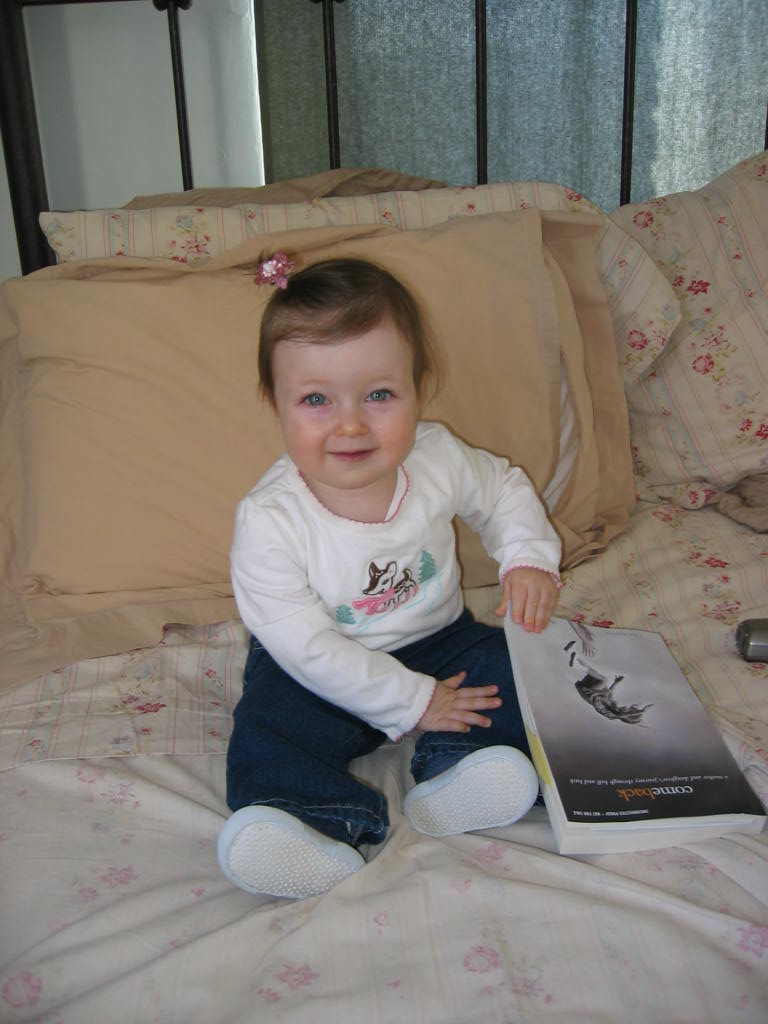
If any of you aspiring authors achieve this level of fame and success, do you have a picture from your childhood you’d like to share with your fans? Send them our way. I’m conjuring images of my own kids captured in photos when they were small glancing at their books, sometimes staged with my authors’ books, sometimes upside down, but at least we are trying to encourage a love of reading and books at a young age!

My oldest daughter with a galley of one of my books in 2006

2

Tips for tone

One of the things we talk a lot about is tone. I see it broadly as how the writer portrays the message he is trying to send to the reader. It usually has a consistent style running through it that sets the stage for the narrative flow of the book. It can be dark, condescending, or quiet. Upbeat, authoritative, or funny. It’s sort of like when you talk with someone and you can tell from their tone what kind of mood they’re in. When you’re reading a book, the writer sends that same message but with their words instead of their voice and facial expression, and without those more obvious cues, it can be very challenging to get it just right.

For fiction as well as nonfiction, a writing sample that shows the reader what the tone of the book will be is a very valuable part of the reading process. For agents, it’s essential that a project we are trying to sell has a tone that hits the right marks. You can have an interesting untapped concept that never gets off the ground if the tone is off (for example, who wants to read about a new fascinating groundbreaking medical advance if the doctor describing it is a pompous, unlikeable narrator?), or on the other side a book idea that might not be obvious, but the sample writing hits the right tonal elements and convinces the reader it’s worth the endeavor (think something like Tuesdays with Morrie).

I found this piece on tone from Writer’s Digest that speaks to this topic in a way that offers some guidelines worth noting. The examples, like the Jeannette Walls one in point 6, are helpful to illustrate how the concepts translate to the page.

There is something quite subjective about when a writer gets tone right, or wrong. Getting feedback from readers is a good way to educate yourself about how your work is being perceived. You might think the tone of your work is pitch-perfect, but others might think it’s cloying, or whiny, so it’s still important to work it through, and if necessary, break down the elements that might help to get the tone just right.

How do you feel tone affects your work, and are there any tips on tone that you apply to your writing that you’d like to share? One of my clients reads her middle grade works-in-progress to her kids to see how they react, and if they like it, she knows the tone (among other things) is working!

9

Does your YA character need a therapist?

I studied psychology in college, and have a strong interest in the subject still. I always joke that if I didn’t become a literary agent, I’d be a therapist. My eclectic list includes a number of dark, psychological memoirs, in several cases written by mothers and daughters (an odd hybrid that really resonates with me). I’m not sure what this says about my psyche, but I am drawn to deep, painful, emotional stories that explore the inner depths of human suffering, and then highlight the amazing strength people possess to overcome adversity.

For all of you YA authors out there thinking of having your young characters visit a therapist, here’s an interesting piece that talks about just that topic in current YA fiction. Given how many kids today are being medicated for various reasons, it’s refreshing to see in fiction so many talking through their problems. As a literary device, it seems more effective to set a scene in a therapist’s office where dramatic dialogue and action can unfold rather than describing the inherently nondramatic act of taking a pill.

For those of you writing in this category, what do you think of teenagers and therapists? Is it a good idea to open up their world in this way, or do you prefer an interior dialogue and thought process for characters to work through their issues? And have you read any books other than the ones Kabi Hartman discusses (it’s a good list) that effectively implement therapy or therapists into their plots of teenage angst? Since I have 4 girls who will be teenagers in the blink of an eye (ok, I know my oldest is only in first grade, but still), I’d like to know personally as well as professionally!