Winner of the 2012 Los Angeles Times Book Prize

A.S. King’s ASK THE PASSENGERS

king_askking_ask

YOGALOSOPHY by Mandy Ingber

ingber_yogaingber_yoga

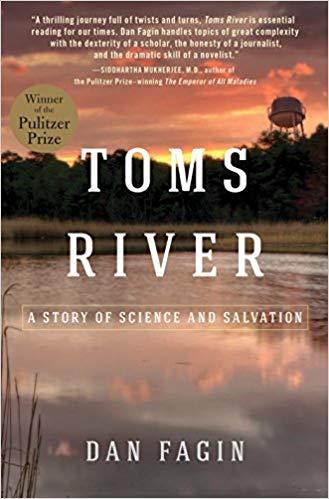
TOMS RIVER by Dan Fagin

fagin_tomsriverfagin_tomsriver

MURDER AS A FINE ART by David Morrell

morrell_murdermorrell_murder

USA Today Bestseller

THE VINCENT BROTHERS by Abbi Glines

glines_vincentglines_vincent

USA Today Bestseller

CRASH by Nicole Williams

williams_crashwilliams_crash

New York Times Bestsellers

WEEKENDS REQUIRED, NOT PLANNING ON YOU, and FALL FOR ME by Sydney Landon

landon_serieslandon_series

Wall Street Journal Bestseller

WAR BRIDES by Helen Bryan

bryan_warbridesbryan_warbrides

New York Times Bestsellers

Raine Miller’s NAKED and ALL IN

miller_seriesmiller_series

#1 New York Times Bestseller

Rhoda Janzen’s MENNONITE IN A LITTLE BLACK DRESS

janzen_mennonitejanzen_mennonite

New York Times Bestseller

Lisa McMann’s THE UNWANTEDS

mcmann_unwantedsmcmann_unwanteds

New York Times Bestseller

Richelle Mead’s BLOODLINES

mead_bloodlinesmead_bloodlines

New York Times Bestseller

Tammara Webber’s EASY

webber_easywebber_easy

New York Times Bestsellers

Tina Reber’s LOVE UNSCRIPTED and LOVE UNREHEARSED

reber_lovereber_love

New York Times Bestseller

Samantha Young’s ON DUBLIN STREET

young_dublinyoung_dublin

New York Times Bestseller

Tracey Garvis Graves’ ON THE ISLAND

garvis_graves_on_the_islandgarvis_graves_on_the_island

2012 Ken Purdy Award Winner

Bill Vlasic’s ONCE UPON A CAR 

vlasic_once_upon_a_carvlasic_once_upon_a_car

Independent Literary Award for Fiction and Grant Winner from the National Endowment of the Arts

SILVER SPARROW by Tayari Jones

jones_silver_sparrowjones_silver_sparrow

IACP – Cookbook Award Winner (Baking) and Finalist (Single Subject)

CHEWY GOOEY CRISPY CRUNCH MELT-IN-YOUR-MOUTH COOKIES by Alice Medrich

medrich_ftmedrich_ft

2011 Coretta Scott King Honor Book

NINTH WARD by Jewell Parker Rhodes

Ninth Ward by Jewell Parker RhodesNinth Ward by Jewell Parker Rhodes

New York Times Bestsellers

James Dashner’s THE MAZE RUNNER, THE SCORCH TRIALS, THE DEATH CURE, and THE KILL ORDER

dashner_series_2dashner_series_2

Soros Justice Fellow and Image Award Winner for Outstanding Literary Work

A QUESTION OF FREEDOM: A MEMOIR OF LEARNING, SURVIVAL, AND COMING OF AGE IN PRISON R. Dwayne Betts

R. Dwayne BettsR. Dwayne Betts

New York Times Bestseller

YOUR INNER SKINNY: FOUR STEPS TO THIN FOREVER by Joy Bauer

Your Inner Skinny: Four Steps to Thin ForeverYour Inner Skinny: Four Steps to Thin Forever

New York Times Bestseller

Carrie Ryan’s THE FOREST OF HANDS AND TEETH

The Forest of Hands and TeethThe Forest of Hands and Teeth

New York Times Bestseller

MENNONITE IN A LITTLE BLACK DRESS: A MEMOIR OF GOING HOME by Rhoda Janzen

JanzenJanzen
2

Survey says

There is nothing I like better than a survey. I mean it. When I was younger, we would get these big consumer packet surveys mailed to our house once or twice a year and I couldn’t wait for my dad to get home so we could fill it out together. Answering really cool and interesting questions about things like what brand of paper towels we preferred and how often the family went grocery shopping. I’m not kidding, I lived for those.

So, when Publishers Weekly posted their Great Big Reading Poll yesterday, you can bet that contributing my answers was the highlight of my day. (Okay, now that might be a bit of an exaggeration). In any case, surveys are super fun and no matter the subject, the results are always interesting on some level. When you combine surveys with things about books, though, then, well, you’ve got me hooked.

While the questions PW poses aren’t revolutionary, they are indicative of the types of things that set readers apart from one another. One thing about surveys that’s a bit frustrating (and the reason I always hated multiple choice tests in school) is that you don’t get the chance to explain yourself. So, below are some of the questions I wished I could have explained to PW when I was answering!

Do you write in your books?
Generally, I do NOT—though I always wished I was the person who did. There’s something romantic about the image of the intellectual, dreamy reader who is so inspired by their books that they can’t help but get physically involved. There are a few books I have with half-hearted underlines, hearts, stars and exclamation points, but they are far and few between. The only book I have that is thoroughly marked up (and helpfully so) is my copy of Ulysses—it’s the notations that let me read and re-read it to my heart’s content without any confusion.

How do you save your place?
I was a dog-eared girl growing up, occasionally a face-down-on-the-table kind of lady, but now it’s strictly bookmarks. I have no idea what prompted the change in ideology, but now, though I harbor no ill-will or disdain towards anyone who is a page-folding, spine-breaking reader, I can’t bring myself to do it.

My bookshelf is…
Hah! I would say arranged by a method only known to me (and my roommate), but that only happens when we get in a crazy “let’s organize all these darn books!” mode and then, active readers that we are, constant taking out and putting back of books kind of messes up every single system we’ve ever come up with.

How many books do you read at once?
Counting only books read for pleasure, I’m definitely a one book and only one book kind of reader. I’ve tried reading more and sometimes it works, but I just start to feel bad for whatever book I’m not reading at the moment. Like I’ve hurt its feelings. Okay, let’s stop talking about this now.

Do you read used books?
A no-brainer. This isn’t to say that I don’t love a good brand new book all crisp and just mine, but guys, books go out of print all the time. Sometimes the only option is a used book, sometimes they’re just cheaper, and used bookstores are treasure troves of exciting things you never would have looked for on your own. There’s nothing better than buying a good book with a personal inscription in it, either, in my opinion.

I’d love to know what questions you liked best as well as those that could have really done with an “explain here” box below them. Tell me in the comments!

7

Writer’s block

I’ve been bad. About blogging. I haven’t blogged in quite some time. I don’t want to say how long, because it’s embarrassing, even to me. I could blame computer woes–it’s been fun! Or the fact that I’ve been really busy with work work. I could pretend I’ve made up for it by being very active on Twitter, but you’d find me out. So what gives?
I would blame writer’s block, but it’s not something I believe in. Because the truth is, it’s not that I can’t write about things. It’s that I don’t want to write about things. Call it a crisis of confidence if you will, but I can’t imagine there’s anything left to blog  about that either 1) I haven’t already blogged about or 2) someone hasn’t said better than I ever could.
I’ve been feeling pretty overwhelmed lately, but not by work–busy though that has been. I’m feeling overwhelmed by the constant stream of information: the RSS feeds, the news, TV, texts, movies, IMs, music, Twitter. It’s a cacophony, and I’ve been feeling especially mindful of my part in it. Am I just adding to the noise? Does what I say actually benefit anyone or add to their existence/knowledge/growth? Am I listening and learning? Why am I blogging and tweeting? Am I carrying on a meaningful conversation?
I’m not sure I have the answers. Sometimes I feel like I’m talking into the wind, and there’s no point in that. Other times, I feel like I’m making a real human connection, and I cherish the contacts I’ve made through social media (many of whom are now people I know in real life).
I hope my quietness or silence isn’t misinterpreted. I want to connect. I want to learn. I want to grow. But I also want to make sure that what I’m putting out there isn’t just for the sake of putting something out there. Bear with me?
6

Eleanor & Park & Lauren & Jim

For anyone who was unaware, Lauren Abramo and I decided some weeks back to do our first ever online book club. We went with Rainbow Rowell’s delightful novel ELEANOR & PARK which, disappointingly, we both enjoyed. As such, no one was treated to watching two terribly opinionated agents facing off against each other.


For anyone who wants to see how the action went down, go to Twitter and check out #eandpdglm.


Here’s a confession: I’ve never taken part in a normal bookclub. We have one in the office where we all read different books and pitch them to each other, but that’s obviously different. With this one, though, I got to see what it was like to join with other people to chat about the same reading experience. Obviously I talk about books every day, but there was something so refreshing about doing it in a setting where nothing was at stake.


But as a newbie to the world of the traditional bookclub, I was a bit disappointed that no fights broke out and no names were called. I have to ask those of you who do this more regularly: are these events more fun when there’s someone to argue with? Or what about when a book is complicated and you really need to hash out some points?


And on a more selfish level, I’m curious—we know how many people were actively involved in our Twitter chats, but we don’t know how many people followed along later or what people thought about the format. So here’s a question: should we do it again? If so, should be keep it on Twitter? Do a different genre? Pick something more controversial? Add in a pie tossing at whoever makes the least popular comment?


Let us know! Inquiring minds, and all that…

Why buy?

For all the time we spend talking about marketing and social media and discoverability, we don’t necessarily have much more than gut instinct to go on.  X works, Y doesn’t, prevailing wisdom says, but do we really even know?  The one thing we’re all confident of is that word of mouth is effective, probably so much more so than everything else.  But every once in a while, I like to stop and think about why I’ve chosen to read something.

The other day a client of mine got a not-yet-revealable blurb that made think, “Huh.  I think I’d actually buy a book with that blurb on it.”  Which underscores just how little they impact my choices.  I think I once bought a book because an intern recommended it to me and it had a blurb by an author I love, but blurbs alone don’t do it for me.  I still think they’re incredibly valuable for a million other reasons (the blurber might mention the book later, it helps to grab the attention of people along the chain between editorial and the customer, lends credibility, etc.).  But I don’t typically buy because of them.

I do buy books because of Twitter.  Usually it’s a critical mass question.  If everyone in publishing is reading something, I buy it (and eventually read it, though I’ll admit not always speedily).  Gone Girl; The Fault in Our Stars; Code Name Verity; and Where’d You Go, Bernadette? all made it to my house on the strength of the wisdom of the masses/fear of being left out.  Occasionally, one tweet reveals a book so perfect for me that I’ll rush out to get it, like My Beloved Brontosaurus, which I came across in a tweet from its editor Amanda Moon (@amsciam).  By title alone I knew it was for me.  My favorite dinosaur is still the Brontosaurus, and Pluto’s my favorite planet, and no lousy scientists with their knowledge are going to change that.  I not only bought it, I pre-ordered it (which I never do out of a combination of cheapness and impatience), and ordered one for a dino-obsessed friend’s upcoming birthday.

As someone who used to license first serial (periodical excerpt) rights for the agency, I always wondered how well magazine coverage translated to sales.  The trouble is the newspaper or magazine wants something that works in its own right.  But recently I read what was either an excerpt or an article referencing The Age of Edison, and I was really intrigued.  When I spotted the book at B&N the next day, I grabbed it.  Conveniently, it turned out to be my book club book for DGLM’s next book club meeting.

I do sometimes read the books that hit all the best of lists at year end, but I will admit that it’s an imperfect source for me.  It brings books to my attention, but I judge them with a critical eye before deciding whether to buy.  I’ll be reading Just Kids this weekend, which I kind of sort of thought about buying when everyone was talking it up, but never did till it became the selection for my book club.  Likewise, Beautiful Ruins abounded on the lists in December, but I didn’t read that till my book club decided I had to.

Incidentally, I adore the cover of Beautiful Ruins.  It called to me from everywhere.  But I resisted buying it because it didn’t sound like a book I’d like so much as it looked like a book I’d like.  So I’ll pick a book up for its cover, but it’s not a guarantee that I’ll actually take it home.  Until I had to, I just didn’t.  And for what it’s worth, I thought it was wonderful and well worth the read.

Word of mouth is really hit or miss for me.  It depends entirely on the mouth.  And there are recommendations I’ll take from someone and others I’ll disregard, if I think it’s clear the book doesn’t fall in the center of the Venn diagram of our tastes.  I have definitely at times chosen not to read something, based on who I know who loves it.

So I guess in the end I’m much more about critical mass than anything else.  Given enough reasons, I’ll pick something up, even if I’ve previously decided not to read it.  Why do you buy?  What works for you, and what decidedly doesn’t?

1

Good advice from a cheapskate!

Those of you who read our blog regularly know that I often share articles from Writer’s Digest. I was so pleased  when I saw my own client, Jeff Yeager, aka The Ultimate Cheapskate, show up in my inbox!

I think the advice he offers in his piece to writers about questions to ask before quitting your day job is worth sharing with our readers. For many aspiring writers, writing remains a hobby for an often lengthy period of time until you break through to the next level. Even after th are published, there are many writers who still maintain a day job (including  bestselling ones like Jane O’Connor and Colin Harrison, both of whom are editors at major publishing houses).

Jeff interviews many writers and the anecdotal support he shares is educational and enlightening. I particularly like Ellyn Spragin’s comment that she is a full-time entrepreneur whose business is built around writing. Because writing in this market really is now about so much more than writing.

And even if you do not have the luxury of being able to choose to write full-time, Jeff’s advice is as always sound, accessible and practical which offers valuable food for thought. And much of it can be applied to anything you do, like coming up with a Plan B. That’s always a good idea, no matter what your job or financial situation!

4

The Synopsis Snare


A friend at Random House sent me a galley of the forthcoming Margaret Atwood novel (happy Mother’s Day to me). It is the third in her Maddadam trilogy that takes place in a post-apocalyptic world in which most humans have succumbed to a plague. Those who remain are not having such a good time of it.

I loved the first two novels; the second more than the first. I read them out of order because when the first book, Oryx and Crake, was published (despite my admiration for the Atwood oeuvre, and despite my adoration of The Handmaid’s Tale) I did not think that a dystopian novel would be my cup of tea. As a grown-up, it seems that I’m more inclined toward bleak cautionary tales with real-world settings. Of course I was wrong, as I often am, about my teacup. The Year of the Flood won me over and sent me to the library the next day in search of the previously passed-over Oryx and Crake, and I’ve been waiting for book three ever since.

Even so, I nearly did not make it past the second page of Maddadam. Upon opening the book, I found a detailed, multi-page synopsis of the first two books—ostensibly provided as a service to get first time readers up to speed. I dutifully started on my refresher course and found it such hard-going that I began to doubt that I’d ever liked volumes 1 and 2 in the first place. Eventually I gave up and just started the novel—which had me spellbound in no time. But even the august and somewhat offbeat Margaret Atwood is not especially good at crafting a compelling plot summary.

I relate this as a cautionary tale of the non-apocalyptic variety. Authors, do not attempt a comprehensive summary of your project in your query letters, especially if your book involves genetically modified beasts like wolvogs or pigoons or fantastical names/kingdoms of any stripe. Instead, think about hooking your agent, hooking your editor—and then include a terrific first chapter. I guess there are agents out there who don’t want a sample chapters along with the query, but rest assured that I (and my DGLM colleagues) do.


9

What should I read on my vacation?

Finally, our vacation is in sight.  It’s  been a long  time since we’ve been away and it’s been a long winter of recovery from emergency surgery (for my husband, Steve) and lots of hard work for us both.  But our trip to Australia to spend my son  Zach’s twenty-first birthday with him is almost here.  As these will be the longest  flights we’ve ever taken, I am wondering what great suggestions our blog followers will have for me to read.

Yesterday, one of my clients asked me if I still enjoyed reading for pleasure because I review so many flawed manuscripts.  I answered that, indeed, I am able to put my “agent’s hat” aside when reading for my own enjoyment (other than, of course, to wish that the book I am loving had been one I had represented).  The problem is that I have so little time to choose what I read and so many books to choose from.

So, I am very eager to have your suggestions.  Not only would I like to know the titles and authors of the books you single out, but also why you think they are great reads.

I very much look forward to hearing from you.

2

Perfectly worded snark

When it comes to the perfectly worded, well-thought out and perfectly, bitingly delivered insult, there’s no one who can do it like a writer. That’s pretty much their schtick, saying things well, in a way that will provide the most impact—whether it’s quiet and unassuming or straight talk in your face.

Of course, we should all learn to play nice, but whether or not we should doesn’t always matter. And it’s hard to deny the entertainment value in a good sparring with words—especially when the insults fall on those far away from ourselves. When the L Magazine posted this slideshow of some of the most delightful author-on-author barbs, I couldn’t help but giggle.

Who’d have thought Charlotte Bronte had thoughts as snarky and as vicious as:

“Why do you like Miss Austen so very much? I am puzzled on that point. What induced you to say that you would rather have written ‘Pride and Prejudice’…than any of the Waverly novels? I should hardly like to live with her ladies and gentlemen, in their elegant but confined houses.”

I’ll admit, this one is my favorite, just because it seems so unexpected.

Pro tip: it’s best not to think about how the authors on the receiving end might have felt after reading these comments. As tough as Hemingway made himself out to be, I can’t help but think he’s also a bit of a softie (I read The Paris Wife, okay? I know these things) and feel a little sorry for poor Papa getting all this flack for his writing.

So, while I’m not condoning flinging insults at our peers, per se, perhaps once in a while, it’s okay to appreciate the occasional carefully worded (and sometimes accurate) put-down. Especially when they’re just so colorful!

The longview…

It’s probably the worst kept secret in publishing that DGLM has been successfully repping a lot of Indie authors.  In fact, the recent RT conference was filled to the rafters with our clients (prompting a delightful voicemail message from Larry Kirshbaum of Amazon to Jane…but more on that in another blog post or over drinks at BEA).

We’ve learned a tremendous amount from these authors about how to successfully self-publish and these lessons have  direct and significant application to traditional publishing.  The smarter houses have committed to a partnership with us and our clients, showing tremendous vision and flexibility in the way they have modified their systems to accommodate the special needs of people who can sell oodles of books on their own, thank you very much.

Simon & Schuster, HarperCollins, Grand Central, and PenguinUSA have all been aggressive in offering huge deals that are enticing to our authors not just because of the money involved but because of their afore-mentioned flexibility in terms of publishing schedules, contractual terms (including options and non-compete clauses), marketing and promotion, and their genuine desire to help grow these writers’ careers.  And, here’s where the partnership aspect is important.

Some Indie authors are looking at what these publishers are offering and scoffing, especially if the advances being discussed are less than seven figures.  They think, and rightly so in most cases, that they can make that money themselves without giving such a huge percentage to a third party.  They also feel (again, rightly so in most cases) that they can market themselves more effectively than a house that is publishing hundreds, if not thousands, of books per year.   But, as we’ve often discussed on this blog, that’s a shortsighted view because of the intangibles.

The beauty of and frustrating thing about publishing is that it has never been an exact science—and given how many English majors work in this business, that’s hardly surprising.  So much of what succeeds in our world is due to serendipity and that most fickle of all phenomena, taste, that it’s impossible for a publishing “formula” to  show  a higher rate of success than, say, Derek Jeter’s batting average.    But, despite that, publishers offer a wealth of intangibles that are actually quite measurable over the course of a career, among them editorial support, an understanding of the book buying marketplace that is more macro than micro, a team of professionals whose job it is to make the author look good, a belief in books that is almost evangelical, and a brand identity that has evolved over centuries and that will continue to do so.

So, when an Indie client says to us, what can Publisher X do for me that I can’t do for myself, my answer would be, they can help you establish and grow your career with a goal toward longevity.  Given our success with negotiating non-compete and option clauses that allow Indie authors to continue to self-publish while they are working with a traditional house, I honestly don’t see the downside to also having a publisher’s imprimatur as an adjunct to your own publishing efforts.  I do, however, see how having books published by S&S or HC or GCP can enhance your brand and raise your visibility among readers.  Given how crowded and competitive the Indie marketplace has become, I would be heartened to see that an author has been or is published traditionally when deciding whether to buy his/her book.  I think many readers feel the same.

The bottom line, of course, is that as with all of our clients, we want our Indie authors to have long, prosperous publishing lives and we feel that, under the right conditions, a trade house can be an invaluable partner in achieving that goal.    I’d love to hear what you all think about this because it is a subject that I’m becoming very passionate about.


4

Revising Literature

In T.S. Eliot’s poem, The Love Song of J. Alfred Prufrock, he writes:

Time for you and time for me,
And time yet for a hundred indecisions
And for a hundred visions and revisions
Before the taking of a toast and tea.

I always associate these lines with any sort of creative process, none so more than writing. Although not a writer myself, aside from some university dissertations which I dare not revisit, I become intrigued when I read this article about a collection of first edition books that have been annotated by their author and will be sold off at a charity auction. Some of the authors are rather scathing of their own work such as Yann Martel, who concedes he never completely liked the opening line of The Life of Pi. Other annotations include small details like Lynne Truss fixing a hyphen that appears on the title page of Eats, Shoots and Leaves. Despite the success that all these authors have continued to have, I did wonder if they slightly gnashed their teeth in frustration as they penned their annotations, being unable to permanently improve or alter their books.

The annotations made by these authors on their own works does speak to Eliot’s words, in that they must have pored over each page of their manuscript, made corrections, scrubbed out words only to later add them back in but at some point had to take their toast and tea and draw the line somewhere. In turn, as books now appear in digital as well as print, is there the possibility that an author could endlessly tinker with their work? This piece in the Christian Science Monitor a number of years ago pondered the very question with its author concluding that this could very well be a ‘doomsday scenario’. In journalism, it is not infrequent to have articles amended, so can the same opportunity be afforded to authors who may wish to use the malleability of an e-book to tinker with their own work as time goes by? Or once published, should they be left untouched? I would love to hear your thoughts on this.